
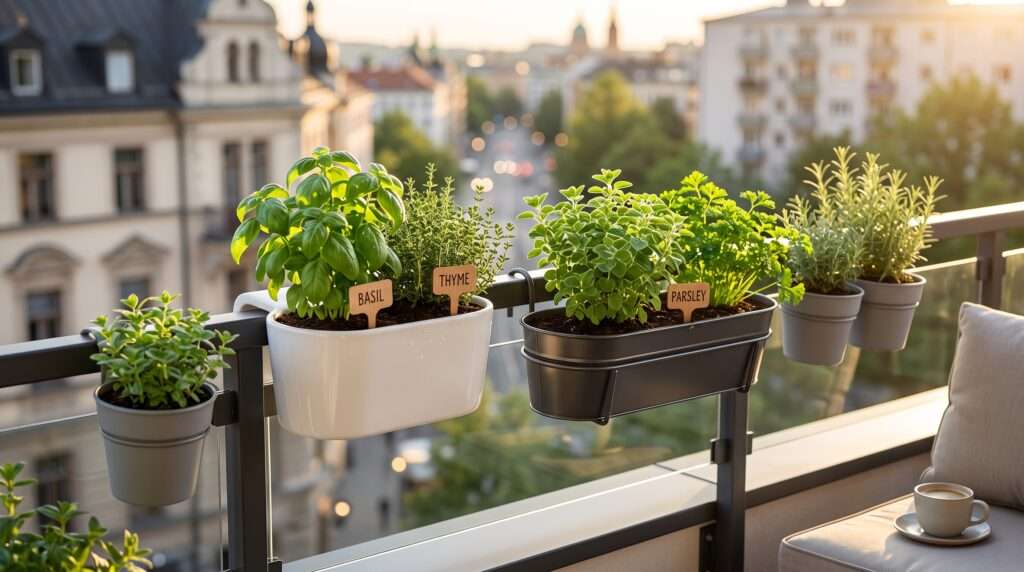
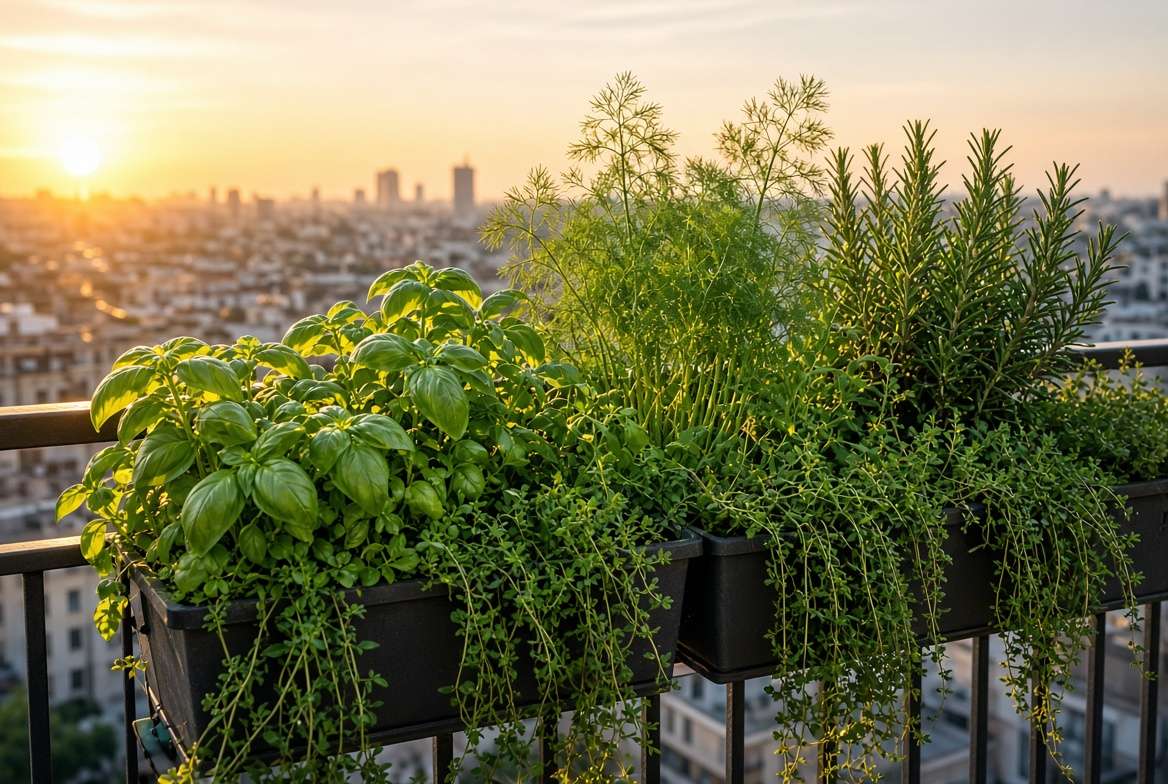
Urban living usually comes with a frustrating compromise: sacrificing green space for city convenience. But a concrete jungle doesn’t mean you have to give up the aromatic, fresh flavors of a home garden. If you have a few feet of railing, you have a garden waiting to happen. Utilizing balcony rail planters for herbs is the ultimate small-space hack, instantly transforming empty, unused railings into productive, photogenic green walls that are as visually stunning as they are delicious.
For urban apartment dwellers, vertical and container gardening isn’t just a trend; it’s a necessity. However, growing plants suspended on a railing comes with unique environmental challenges. Balcony microclimates are notoriously harsh—they often act as wind tunnels, bake in reflected afternoon sun, and cause potting soil to dry out at an alarming rate. Through extensive plant diagnostics and soil health management in container environments, it is clear that success requires more than just throwing dirt into a plastic box. It requires the right equipment and a thorough understanding of elevated plant care.
In this comprehensive guide, we will break down the absolute best railing planters for maximizing your harvest, alongside expert techniques to optimize your soil microbiology, ensure proper drainage, and keep your herbs thriving all season long. Let’s elevate your gardening game. 🪴
The Best Balcony Rail Planters for Small Spaces 🪴
When evaluating planters for a railing, aesthetics matter—a beautiful, well-arranged herb garden makes for incredibly captivating visual content and a relaxing outdoor oasis. However, functionality, safety, and root health must come first. Here are the top types of railing planters designed to support robust herb growth.
1. Self-Watering Saddle Planters 💧
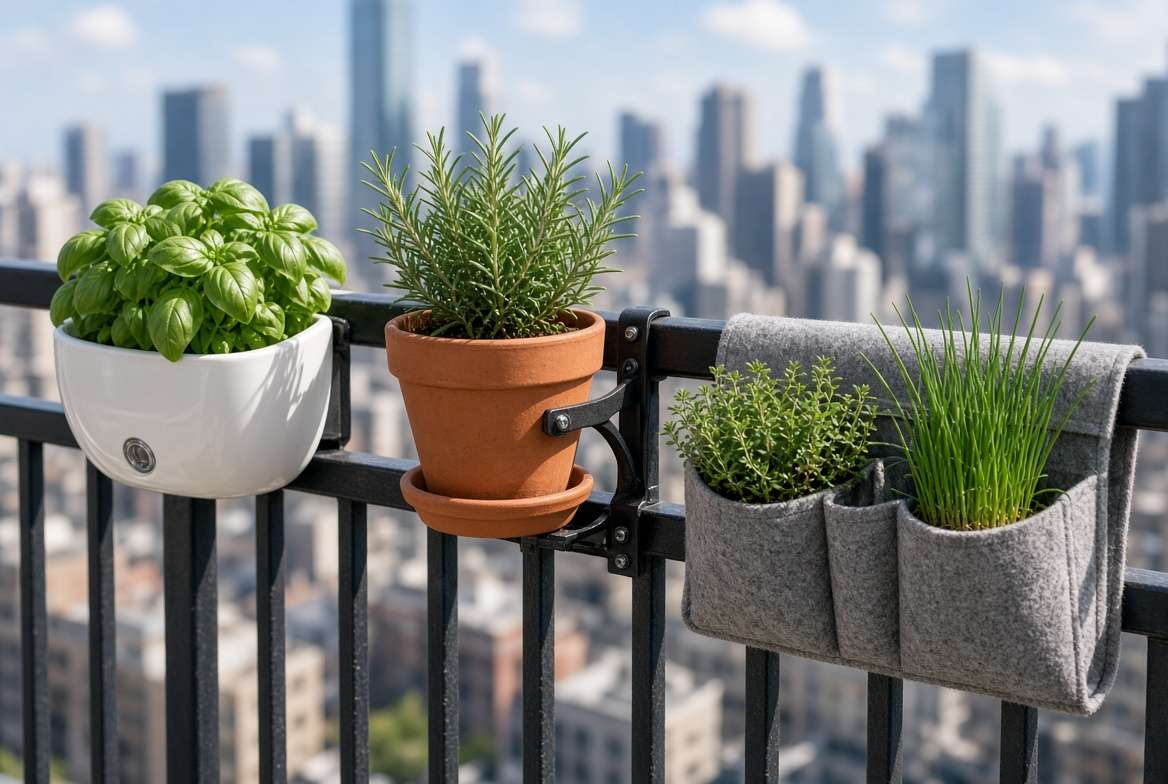
Saddle planters are ingeniously designed to straddle your railing, dropping down on both sides to lower the center of gravity and prevent tipping during high winds.
-
Why They Work for Herbs: Herbs like basil, parsley, and cilantro are notoriously thirsty and can wilt in a matter of hours on a hot balcony. Self-watering saddle models feature a built-in reservoir at the base. A wicking mechanism draws moisture up into the root zone exactly as the plant needs it.
-
The Soil Health Benefit: Consistent moisture prevents the extreme wet-to-dry fluctuations that stress plant roots and disrupt the soil microbiome. By utilizing a self-watering system, you reduce the risk of hydrophobic soil (where dry potting mix repels water) while simultaneously preventing the root rot commonly caused by heavy top-watering.
-
Best For: Standard metal or wooden railings (check the width specifications carefully before buying).
2. Adjustable Metal Trough Brackets 🛠️
For those who prefer the classic, rustic look of terracotta or glazed ceramic pots, adjustable metal trough brackets are the gold standard. These heavy-duty brackets hook securely over the railing and cradle individual pots or long window boxes.
-
Why They Work for Herbs: Terracotta is porous, allowing oxygen to reach the root zone and naturally wicking away excess moisture. This breathability is perfect for Mediterranean herbs that demand exceptional drainage and dry feet, such as rosemary, thyme, and oregano.
-
Safety & Aesthetics: High-quality wrought iron or rust-resistant galvanized steel provides peace of mind. Aesthetically, a row of identical terracotta pots nestled in black iron brackets creates a highly photogenic, classic European balcony vibe.
-
Expert Tip: Always ensure your brackets feature a bottom support bar. Never rely solely on tension to hold heavy, wet soil suspended over a sidewalk or neighbor’s patio.
3. Fabric Over-the-Railing Pouches 🧵
Fabric grow bags have revolutionized container gardening, and railing pouches bring this technology to the balcony. These heavy-duty, felt-like pouches drape securely over the rail, offering multiple pockets for individual plants.
-
Why They Work for Herbs: The primary advantage of fabric is “air pruning.” When herb roots reach the edge of a plastic pot, they circle endlessly, eventually choking the plant. In a breathable fabric pouch, roots are exposed to air at the edges, causing them to branch out and create a denser, healthier root mass.
-
The Microclimate Advantage: Fabric allows excess heat to escape the root zone during the peak of summer, keeping the soil cooler than dark plastic alternatives. Furthermore, they are lightweight and can be easily taken down, folded flat, and stored during winter months.
-
Best For: Shallow-rooted herbs like chives, thyme, and creeping mint varieties.
4. Stackable Vertical Rail Planters 🏙️
If you only have two feet of railing but want to grow ten different herbs, stackable vertical rail planters are the solution. These systems use a sturdy base mounted to the rail, with modular, interlocking tiers building upward.
-
Why They Work for Herbs: They maximize yield per square inch. This system allows you to create customized sun zones on a single railing.
-
Strategic Planting: You can place sun-worshipping herbs (like sage and rosemary) on the top, exposed tiers, while shading delicate, cooler-weather herbs (like cilantro and mint) in the lower tiers.
-
Drainage Note: Look for systems with a cascading drainage design, where water from the top tier trickles down to water the plants below, preventing nutrient runoff and messy spills on the balcony floor.
Expert Care: Keeping Your Herbs Thriving in Elevated Spaces 💧
Selecting the perfect balcony rail planters for herbs is only half the battle. The unique environment of a balcony—suspended in the air, often exposed to intense elements, and entirely reliant on containers—requires a specific approach to plant care. The rules of traditional ground gardening do not apply here. To keep your balcony harvest lush and productive, you must master soil optimization and microclimate management.
1. Soil Health Optimization in Containers 🪱
The biggest mistake urban gardeners make is filling their expensive railing planters with standard garden soil or cheap, heavy topsoil. In a container, heavy soil compacts rapidly, suffocating roots and creating a muddy, waterlogged environment that invites disease.
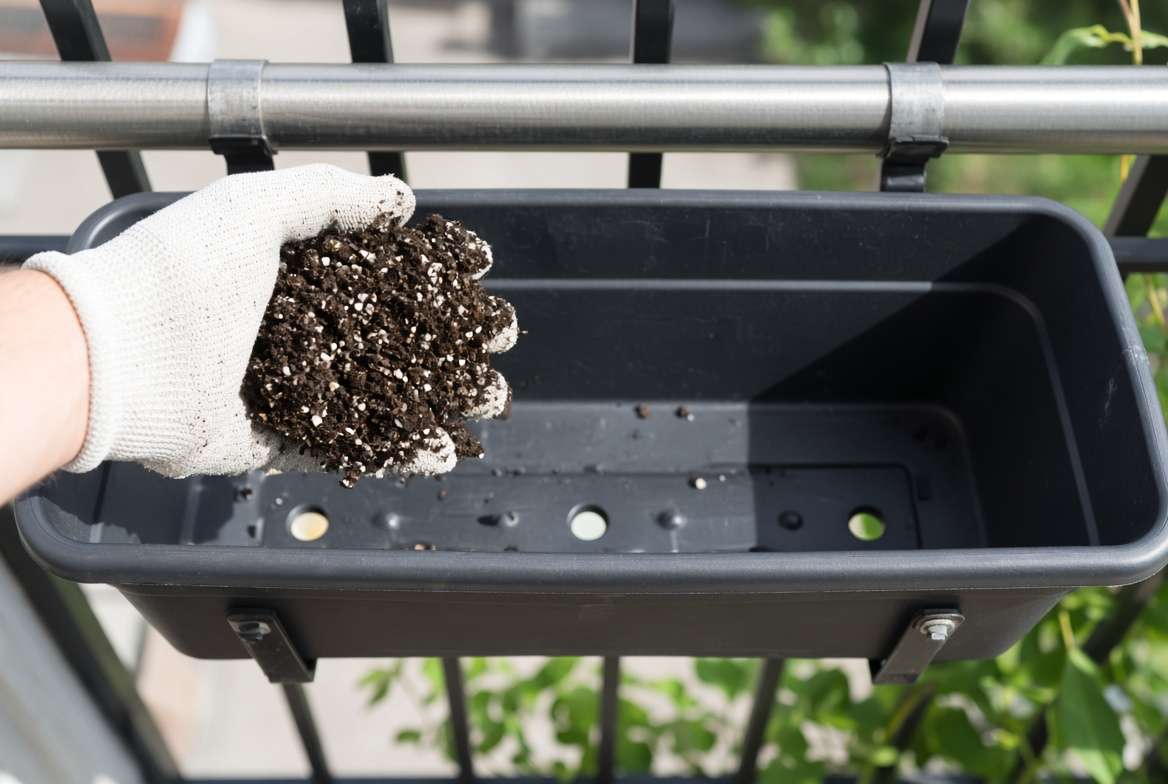
For herbs, the goal is a loose, well-aerated, and nutrient-rich potting medium that drains quickly but holds just enough moisture to sustain the plant during a hot afternoon.
-
The Ideal Potting Mix Recipe: Do not rely on bag mixes alone. Create a custom blend tailored for container health:
-
60% High-Quality Organic Potting Soil: This acts as the base, providing structure and initial peat or coir for moisture retention.
-
20% Perlite or Pumice: These volcanic rocks are crucial. They create tiny air pockets in the soil, ensuring water drains freely and oxygen reaches the root zone.
-
20% Organic Compost or Worm Castings: Because herbs in containers cannot draw nutrients from the deep earth, you must provide them. Worm castings provide a slow-release, gentle source of nitrogen that promotes leafy green growth without burning the roots.
-
-
The Importance of Drainage: No matter which planter you choose, ensure it has unobstructed drainage holes. If water pools at the bottom of a non-draining container, the soil will become anaerobic, leading to root rot—the number one killer of balcony herbs.
2. Mastering the Balcony Microclimate ☀️🌬️
A balcony can feel like a gentle breeze to you, but to a delicate basil plant, it can be a harsh wind tunnel. Understanding how to mitigate these environmental stressors is key to keeping your herbs alive.
-
Wind Management: High winds strip moisture from leaves incredibly fast (a process called transpiration) and can physically snap fragile stems.
-
The Fix: If you are on a high floor or face strong prevailing winds, opt for low-profile, woody herbs like creeping thyme, oregano, or rosemary. For taller herbs like basil or dill, use small bamboo stakes to provide structural support, or position your planters near a corner wall to create a windbreak.
-
-
Heat & Sun Exposure: Balcony railings often bake in the sun, and heat reflecting off concrete walls or glass windows can fry tender foliage. Furthermore, dark-colored plastic or metal planters can heat up significantly, effectively cooking the roots.
-
The Fix: Monitor the actual hours of direct sunlight your railing receives. Most herbs need 6-8 hours, but if you have a blazing afternoon sun exposure, consider moving delicate herbs (like parsley or cilantro) to the shadier side of the railing, or opt for light-colored planters that reflect, rather than absorb, heat.
-
-
The Watering Protocol: Because elevated containers dry out much faster than ground soil, you must be vigilant. Use the “finger-deep test”: push your finger one inch into the soil. If it feels dry, it is time to water. Always water in the early morning. This ensures the plant is hydrated before the heat of the day and allows the foliage to dry completely before sunset, drastically reducing the risk of powdery mildew and other fungal diseases.
3. Strategic Harvesting for Bushier Growth ✂️
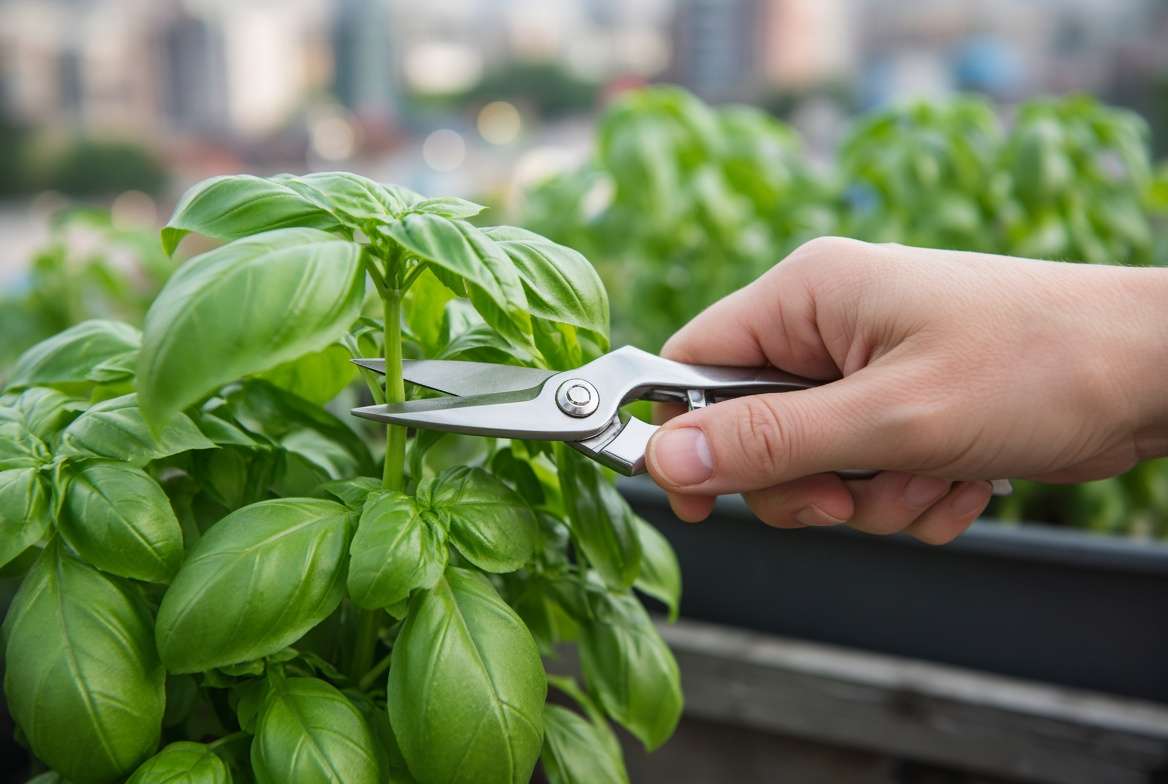
Harvesting isn’t just about collecting ingredients for dinner; it is a critical pruning technique that dictates how your plant will grow. Proper harvesting encourages dense, bushy growth, which is exactly what you want in a small, wind-exposed railing planter.
-
The “Cut and Come Again” Method: Never pluck individual, large leaves from the bottom of the plant. This leaves a tall, spindly stem that is easily broken by the wind.
-
Pinch from the Top: Always harvest from the top down. Identify a node (the point where a set of leaves branches off the main stem) and use sharp, clean snips to cut just above it. This signals the plant to send energy to the dormant buds below the cut, forcing it to branch outward and grow wider, rather than taller.
-
Preventing Bolting: Frequent harvesting also delays flowering (known as bolting). Once herbs like basil or cilantro send up flowers, the leaves often become bitter and tough as the plant shifts its energy toward seed production. Pinch off flower buds the moment you see them to extend your harvest season.
The Urban Gardener’s Etiquette: Being a Good Neighbor 🤝
When you garden in the sky, your watering habits can directly impact the people living below you. One of the most critical aspects of balcony gardening is mastering proper drainage without creating a nuisance.
-
Containing the Runoff: Muddy water staining the balcony below is a fast track to neighborhood disputes. To prevent this, always select balcony rail planters for herbs that feature integrated drip trays or self-watering reservoirs that capture excess moisture.
-
The Double-Potting Method: If you fall in love with a decorative railing planter that lacks a drip tray, use the double-potting (or “cachepot”) method. Keep your herbs in their standard plastic nursery pots with drainage holes, and place those inside the decorative railing planter. When it’s time to water, lift the nursery pots out, water them in your sink or shower, let them drain completely, and then return them to the rail.
Styling Your Railing Garden for Maximum Visual Impact 📸
A thriving balcony garden isn’t just a culinary asset; it is a stunning visual feature. Arranging your herbs with aesthetics in mind transforms a basic railing into a lush, vibrant focal point.
When positioning your plants, think about contrasting textures and growth habits. Pair the broad, smooth leaves of Genovese basil with the delicate, feathery fronds of dill or fennel. Place trailing herbs, like creeping thyme or trailing rosemary, at the front edges of your saddle planters so they can gracefully spill over the sides. Creating these striking, high-contrast compositions yields incredibly photogenic results—perfect for capturing eye-catching vertical pins or vibrant, wide-angle video thumbnails if you document your gardening journey online. The visual appeal of healthy, well-styled greenery is universally captivating. ✨
FAQs for Urban Herb Gardeners 🌿
Q: Will high winds damage my railing herbs? Yes, if they are unprepared. As mentioned earlier, high floors can experience severe gusts. Stick to low-profile, sturdy herbs like thyme, oregano, and chives if your balcony is very exposed. For taller herbs, consider planting them in heavier terracotta pots secured with adjustable trough brackets, and weave a small trellis or bamboo stakes into the soil for added support against the wind.
Q: Can I leave my planters on the railing during winter? It depends entirely on your climate and the planter material. Terracotta and thin plastic can crack when wet soil freezes and expands. If you experience hard freezes, empty your planters at the end of the season. Fabric over-the-railing pouches are excellent for this, as they can be emptied, folded flat, and stored in a closet until spring.
Q: What are the absolute easiest herbs to grow on a balcony for beginners? If you want guaranteed success, start with mint, chives, and oregano. Mint is famously resilient (though it should strictly be kept in its own isolated container, as it will aggressively take over and choke out other herbs). Chives thrive in shallow soil and bounce back quickly from harsh conditions, while oregano is a drought-tolerant powerhouse that loves the exceptional drainage a balcony rail planter provides.
Conclusion: Your Sky-High Harvest Awaits 🌇
Transforming a bare, metal railing into a vibrant, aromatic herb garden is one of the most rewarding projects an urban dweller can undertake. By choosing the right balcony rail planters for herbs—whether you opt for the low-maintenance brilliance of self-watering saddle planters or the breathable magic of fabric pouches—you instantly conquer the space constraints of city living.
Remember that success lies in the details: crafting a lightweight, nutrient-dense soil mix, anticipating the intense microclimate of an elevated space, and harvesting strategically for bushy, resilient growth. With the right tools and a bit of expert care, your balcony will no longer be just an outdoor sitting area. It will become a thriving, beautiful, and delicious extension of your kitchen. Happy planting! 🌱🪴💚











