
Imagine stepping into your backyard on a late summer afternoon, reaching into a lush canopy of broad, tropical-looking leaves, and plucking a warm, jammy fig straight from the branch. It is a gardener’s dream! But before you rush to the nursery, a very practical question usually brings that dream to a screeching halt. If you’re planning your garden layout, you are probably wondering: exactly how big do fig trees get? Will this beautiful Mediterranean addition eventually swallow your entire yard, shade out your vegetable garden, or overtake your patio?
Here is the quick answer:
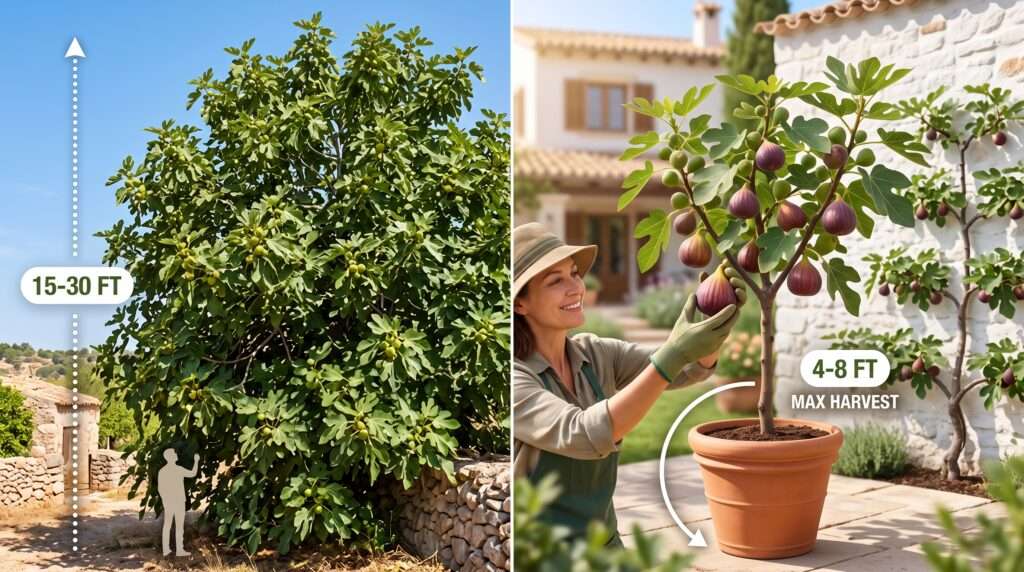
Unpruned fig trees planted directly in the ground can reach towering heights of 15 to 30 feet tall and equally as wide. However, with the right variety selection and expert pruning techniques, you can easily keep a fig tree happily producing massive amounts of fruit at a highly manageable 4 to 8 feet tall.
Whether you have a sprawling quarter-acre homestead or a tiny urban balcony, growing a fig tree is entirely within your reach. In this comprehensive expert guide, we will break down the natural growth habits of the Ficus carica (the common fig), explore the best dwarf varieties for small spaces, and walk you through professional size-control techniques like root pruning, espalier, and summer pinching. Let’s dive in and learn how to master your tree’s size while maximizing your sweet harvest! 🍯
The Short Answer: Just How Big Do Fig Trees Get? 📏
When we talk about the mature size of a fig tree, we have to distinguish between a tree left to its own wild devices and one managed by a home orchardist. Figs are incredibly vigorous growers, and their final dimensions depend heavily on their environment.
Mature Height and Spread in the Landscape 🏡
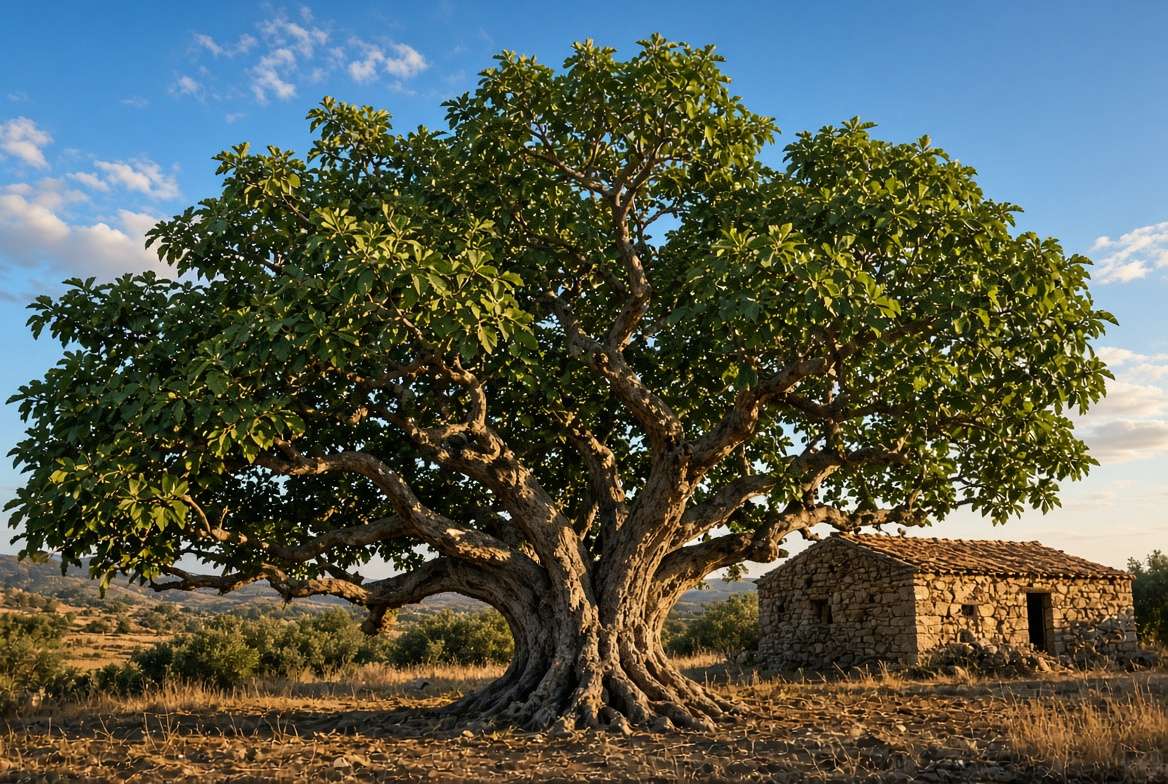
In their native Mediterranean habitat, or in warm climates like California and the southern United States, an unhindered common fig tree will easily grow between 15 and 30 feet tall.
More importantly, fig trees naturally want to grow wide. Rather than forming a single, straight trunk like an oak or a pine tree, figs naturally develop into large, multi-trunked, bushy shrubs. If left completely unpruned, their canopy spread can easily reach 20 to 30 feet across. This dense, sprawling canopy provides fantastic shade, but it can quickly overwhelm a standard suburban backyard and make harvesting the topmost fruit impossible without a tall orchard ladder.
Ground Growth vs. Container Growth Limits 🪴
One of the greatest secrets to fig tree cultivation is understanding how root space impacts canopy size.
-
In the Ground: When fig roots have limitless access to deep soil, water, and nutrients, the tree will prioritize explosive vegetative growth. It will continuously stretch its branches upward and outward.
-
In a Container: When you plant a fig tree in a pot or container, a natural “dwarfing” effect occurs. Because the root system is physically confined, the tree chemically signals its canopy to stop expanding.
-
Expert Botanical Note: Fig trees actually love having their roots slightly restricted! Being slightly pot-bound stresses the tree just enough to shift its energy away from growing leaves and branches, forcing it to focus heavily on producing fruit. This means a 5-foot potted fig can often out-produce a 10-foot ground-planted fig in its early years.
4 Key Factors That Determine Your Fig Tree’s Size 🌱
If you want to accurately predict and control the ultimate size of your tree, you need to understand the four primary factors that dictate its growth.
1. Fig Variety (Cultivar Genetics) 🧬
Just like dogs come in Great Danes and Chihuahuas, fig trees come in massive landscape trees and tiny dwarf bushes. Genetics play the most significant role in your tree’s baseline potential. Planting a naturally massive variety like a ‘Black Mission’ in a small space will lead to a constant, exhausting battle with your pruning shears. Choosing the right genetics from day one is your best defense against an overgrown tree.
2. Climate and USDA Hardiness Zones 🌍
Your local climate acts as a natural growth regulator.
-
Zones 8–10 (Warm Climates): Fig trees here rarely experience freezing temperatures. They grow vigorously for 8 to 10 months out of the year, quickly reaching their maximum genetic size.
-
Zones 5–7 (Cold Climates): In colder northern zones, fig trees often experience “winter dieback.” Freezing temperatures may kill the above-ground branches back to the roots. When spring arrives, the tree regrows from the base, acting as a natural, extreme form of pruning that keeps the plant more like a medium-sized bush than a towering tree.
3. Root Space and Soil Quality 🪨
Rich, loamy soils packed with nitrogen will result in massive, rapid branch growth. Conversely, figs planted in poorer, rocky soils—much like their native rocky hillsides in the Middle East—will grow much slower and stay naturally more compact.
4. Pruning Habits ✂️
Human intervention is the ultimate size-control tool. Fig trees are incredibly resilient and respond wonderfully to heavy pruning. You can literally chop a 15-foot fig tree down to a 3-foot stump in the winter, and it will aggressively bounce back in the spring. Your willingness to prune dictates your tree’s size.
Popular Fig Tree Varieties & Their Mature Sizes 🌿
To save you from future headaches, here is an expert breakdown of popular fig cultivars categorized by their natural mature size. Choosing a variety that fits your available space is step one to gardening success!
| Variety Name | Natural Mature Height | Best Growing Environment | Fruit Flavor Profile |
| Black Mission | 15–30+ feet | Large Landscapes (Zones 7-10) | Rich, earthy, berry flavor |
| Brown Turkey | 15–25 feet | Standard Backyards / Shade | Mild, sweet, classic fig |
| Desert King | 15–20 feet | Cool summers / Coastal areas | Strawberry jam center |
| Chicago Hardy | 8–12 feet | Colder climates (Zones 5-7) | Sweet, complex, dark berry |
| Celeste | 7–10 feet | Humid South / Medium Yards | “Sugar fig” – very sweet |
| LSU Purple | 8–10 feet | High heat / Nematode resistant | Sweet caramel notes |
| Little Miss Figgy | 4–6 feet | Patios / Balconies / Pots | Intense dark berry flavor |
| Fignomenal | 2–3 feet | Small indoors/outdoors pots | Ultra-sweet, rich |
| Violette de Bordeaux | 6–8 feet | Premium Container Growing | Unmatched complex berry |
Large & Vigorous Varieties (15–30+ feet) 🌳
Varieties like Black Mission, Brown Turkey, and Desert King are heritage trees. They are aggressive growers meant to anchor a landscape. Only plant these in the ground if you have ample space, want a beautiful shade canopy, and are prepared to harvest fruit using a ladder.
Medium & Compact Varieties (8–12 feet) 🌳
For the average suburban backyard, varieties like Chicago Hardy, Celeste, and LSU Purple strike the perfect balance. They produce massive harvests but naturally max out around 10 feet. With just one annual pruning, you can easily keep them at a 6-foot height, allowing you to harvest every single fig while standing flat on the ground.
True Dwarf Varieties for Small Spaces (3–6 feet) 🪴
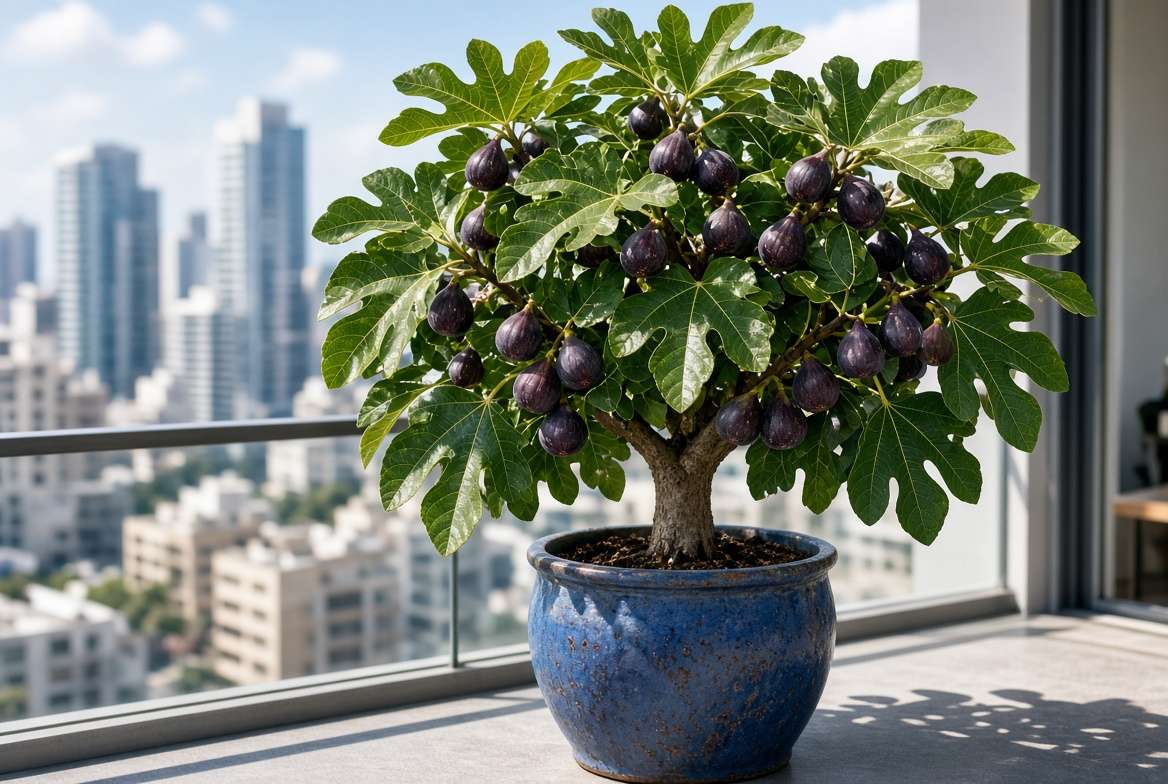
If you are strictly container gardening on a patio or balcony, you must look into true dwarf cultivars. Little Miss Figgy (a dwarf mutation of Violette de Bordeaux) and the newly popularized Fignomenal are genetically programmed to stay tiny. They feature shorter internodes (the space between leaves on a branch) and fruit prolifically at just 2 to 4 feet tall!
Fig Tree Growth Rate: How Fast Do They Grow? ⏱️
Fig trees are notoriously fast growers. In optimal conditions with plenty of sunlight and water, a healthy fig tree can easily push out 12 to 36 inches of new growth in a single growing season.
However, newly planted figs generally follow the classic perennial rule: “Sleep, creep, leap.”
-
Year 1 (Sleep): The tree focuses its energy on establishing a robust root system in its new soil. Above-ground growth is minimal.
-
Year 2 (Creep): You will notice moderate branch extension and leafy growth, perhaps 6 to 12 inches.
-
Year 3 (Leap): The root system is now secure, and the tree explodes with rapid vertical and horizontal growth, often doubling in size and producing its first significant harvest.
Expert Insight Box: Fast growth is not always a good thing! If your tree is growing 4 feet of green wood in a summer, it is putting all its energy into leaves rather than fruit. Controlling this vigorous growth rate through pruning and feeding is the key to shifting the tree’s focus back to ripening figs.
Expert Tips to Control Fig Tree Size (Without Harming the Tree) 🛠️
If you have limited space, human intervention is required. Fortunately, Ficus carica is highly forgiving. Here are the professional techniques orchardists use to keep trees compact and productive.
Strategic Pruning: When and How to Cut ✂️
The most effective way to dictate your tree’s size is through aggressive dormant pruning. Wait until late winter when the tree has dropped all its leaves and is completely dormant (usually February or early March).
-
Remove the 3 D’s: Cut away any dead, diseased, or damaged wood.
-
Open the Center: Prune away crossing branches or branches growing inward. You want to create an open “vase” or “goblet” shape. This allows sunlight and air to penetrate the center of the tree, which prevents fungal diseases and helps fruit ripen.
-
Head Back Leaders: To control ultimate height, cut the main upward-growing branches back by one-third to one-half. Always cut just above an outward-facing bud to encourage the tree to grow wide rather than tall.
Root Pruning: The Secret to Keeping Potted Figs Small 🪓
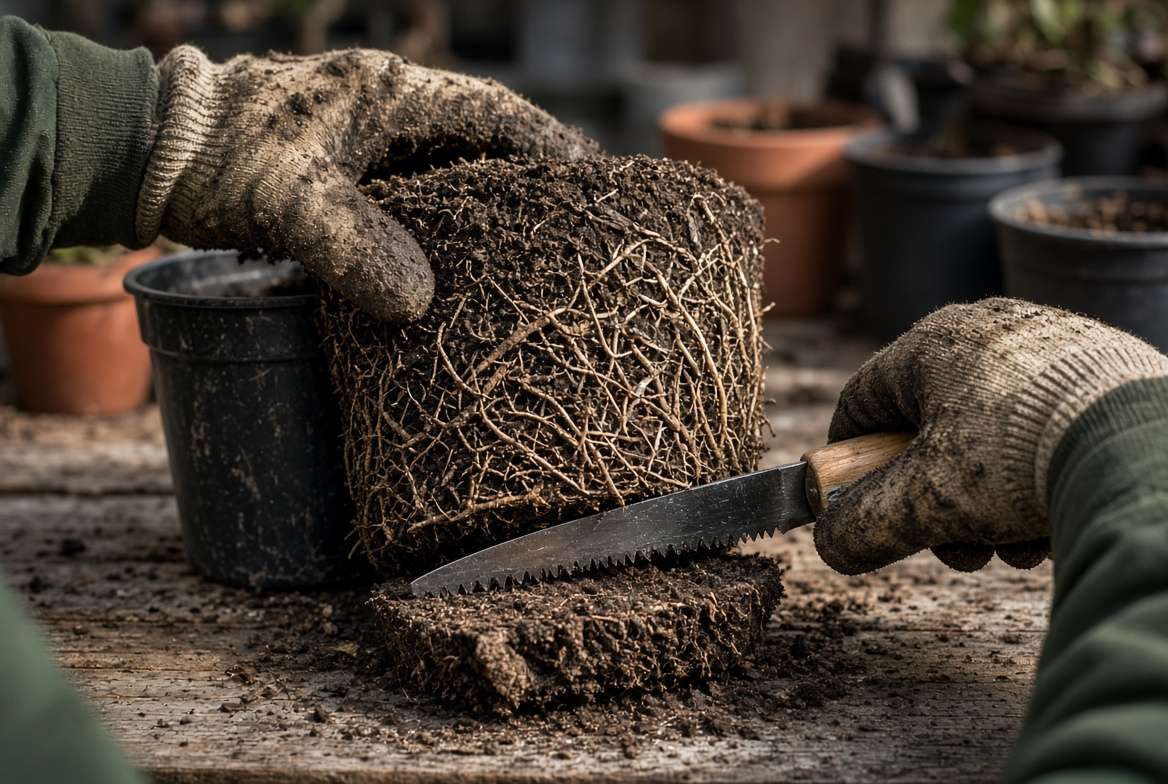
If you are growing a fig in a container, it will eventually become root-bound, which can stunt fruit production. Every 2 to 3 years during winter dormancy, pull the tree out of its pot. Using a sterilized saw or heavy shears, slice off the bottom two inches of the root ball, and shave an inch off the sides. Repot the tree in the exact same container with fresh potting soil. This advanced E-E-A-T technique rejuvenates the tree, encourages fresh feeder roots, and permanently caps the tree’s maximum size.
Espalier: Training Figs Against a Wall 🧱
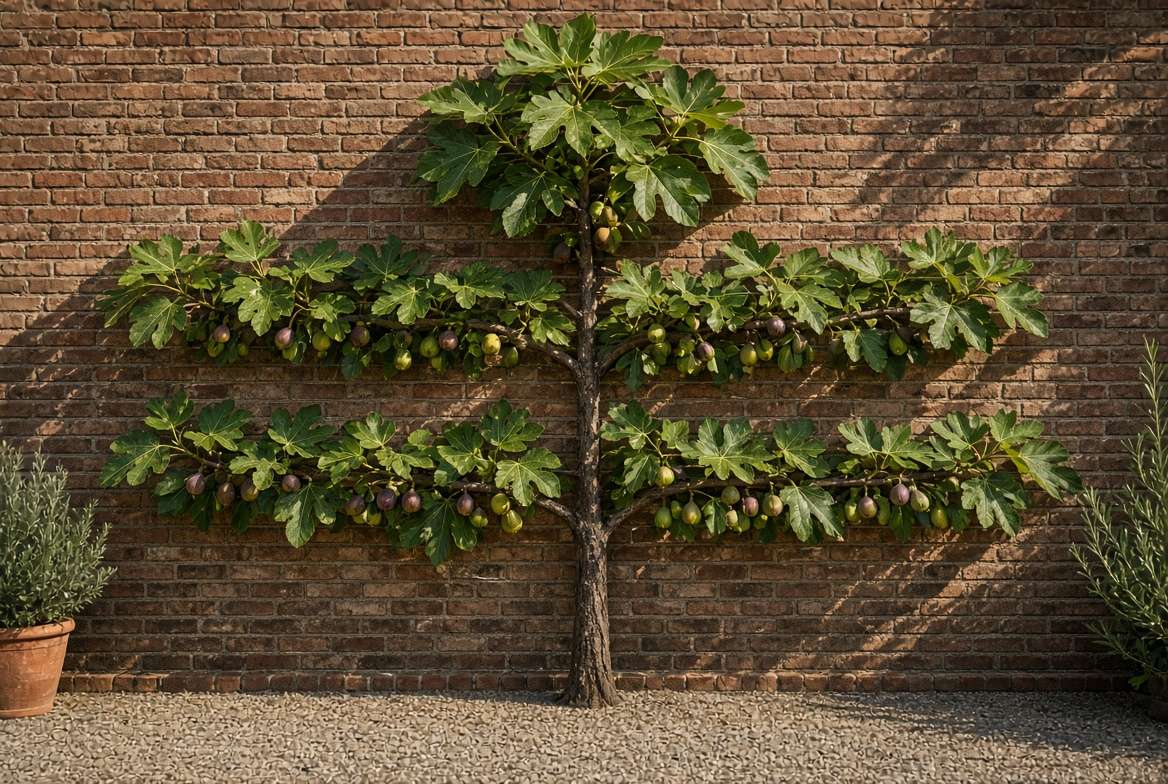
If you lack yard depth but have a blank, sunny, south-facing fence or brick wall, the espalier technique is perfect. By selectively pruning and tying flexible young branches horizontally along a trellis or wire system, you can grow a fig tree flat against a wall. This keeps the tree essentially two-dimensional, taking up zero yard space while taking advantage of the radiant heat from the wall to ripen fruit perfectly.
Container Constriction Strategy 🪴
You can trick a vigorous variety into staying small simply by limiting its pot size. Moving a fig from a nursery pot directly into a massive 30-gallon half-barrel will encourage wild growth. Instead, step the pot size up gradually (e.g., from 5-gallon to 10-gallon, then 15-gallon). A 15-to-20 gallon pot is generally the maximum size you need to maintain a highly productive, 6-foot dwarf tree for life.
Maximizing Your Fruit Harvest on a Smaller Tree 🍯
A smaller tree does not mean a smaller harvest. In fact, a meticulously pruned, 6-foot fig tree often out-produces an overgrown 20-foot tree because its energy is highly focused.
Understanding Breba vs. Main Crop 🍂
To prune correctly, you must understand how figs fruit. Many varieties produce two crops a year:
-
The Breba Crop: This early summer crop grows exclusively on old wood (the branches that grew the previous year).
-
The Main Crop: This late summer/fall crop grows on new wood (the green branches that sprouted in the current spring).
If you aggressively prune your tree every winter to keep it small, you are cutting off the old wood, meaning you will sacrifice the breba crop. However, this is usually beneficial! Sacrificing the breba crop forces the tree to push massive amounts of energy into a heavy, much sweeter, and higher-quality main crop.
Sunlight and Airflow Optimization ☀️
Figs need a minimum of 6 to 8 hours of direct, blazing sunlight to produce fruit. By keeping your canopy pruned to a manageable 6 to 8 feet, you ensure that every single leaf and developing fig receives optimal UV exposure.
The “Pinching” Technique for Faster Fruit 🤏
When your tree’s new branches have grown 5 or 6 leaves in early summer, use your fingers to pinch off the tiny, green terminal growth bud at the very tip of the branch. This stops the branch from growing longer. The tree instantly redirects that chemical energy downward, forcing the dormant fig buds at the base of the leaves to swell, develop, and ripen weeks faster than they would otherwise.
Feeding Strategies: Phosphorus over Nitrogen 🧪
Nitrogen fuels leaf and branch growth. If you use a high-nitrogen lawn fertilizer on your fig, you will grow a massive, 15-foot green monster with zero fruit. To keep the tree compact and highly fruitful, feed it early in the spring with a low-nitrogen, high-phosphorus and high-potassium organic fertilizer (look for an N-P-K ratio like 3-4-4 or a dedicated tomato/fruit tree fertilizer). Add a thick layer of organic compost as mulch to retain moisture.
🚫 3 Common Mistakes When Growing and Pruning Figs
-
Fear of Pruning (The “Let It Grow” Mistake): Beginners are often terrified to cut their trees. Letting a fig grow wild results in an unmanageable canopy where the fruit is 20 feet out of reach, mostly eaten by birds. Prune fearlessly!
-
Pruning at the Wrong Time: Never do heavy structural pruning in the spring when the sap is flowing. The tree will “bleed” milky white sap excessively, which weakens it. Always do major pruning during winter dormancy.
-
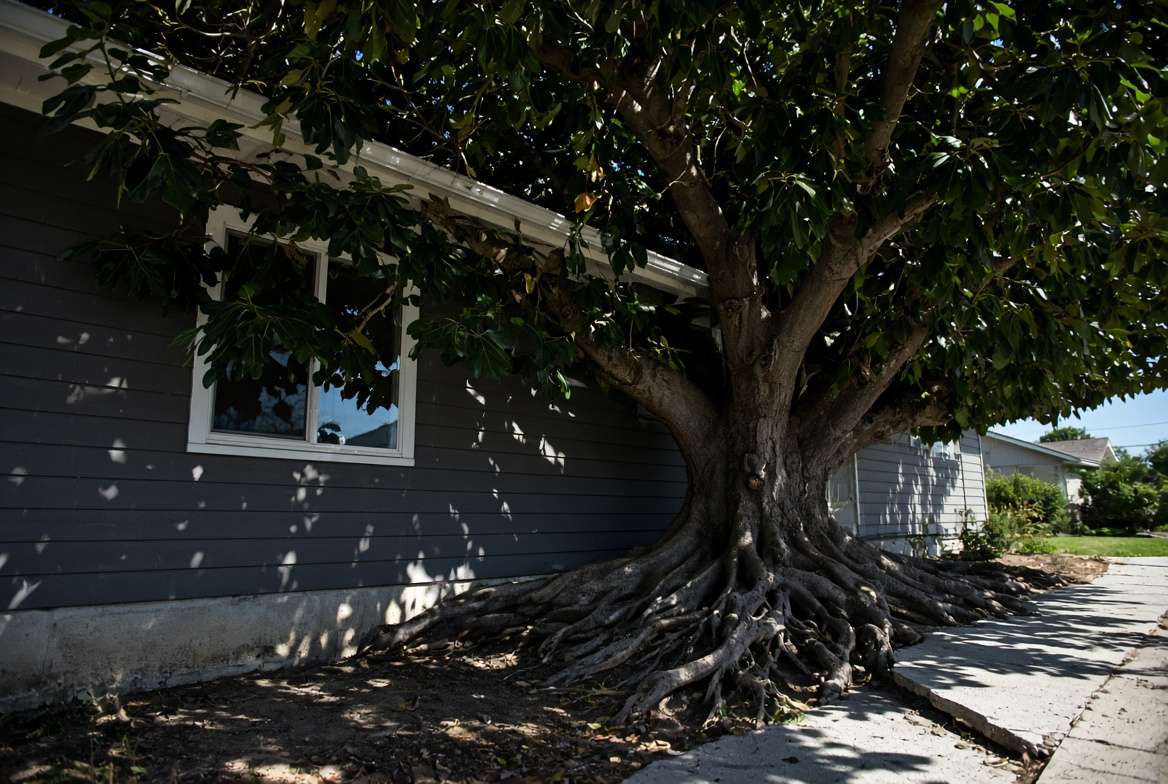
Planting Too Close to Structures: Because figs grow as wide as they do tall, planting a standard variety 3 feet from your house siding is a recipe for disaster. Keep large landscape varieties a minimum of 15 to 20 feet away from foundations and underground plumbing.
Frequently Asked Questions (FAQs) ❓
Can I keep a fig tree small permanently? Yes. By keeping the tree in a 15 to 20-gallon container, performing winter root pruning every three years, and heading back the canopy annually, you can keep any fig tree permanently small and highly productive.
Do fig trees have invasive roots? Fig roots are fibrous and highly aggressive in their search for water. While they aren’t wood-crushing roots like an oak tree, they will easily infiltrate older, cracked plumbing pipes if planted too close. Always plant large varieties away from septic systems and water lines.
How long does it take for a fig tree to produce fruit? If you purchase a nursery tree grown from a cutting, you will often see your first few figs within 1 to 2 years. By year 3 or 4, the tree should be producing a substantial, reliable harvest.
Can I grow a fig tree indoors? While possible with dwarf varieties like Fignomenal, figs are outdoor plants. They require intense direct sunlight that indoor windows cannot provide. If you must grow them indoors, you will need powerful, full-spectrum LED grow lights to produce fruit.
Big Harvests in Small Packages 🌱💚
You are the master of your fig tree’s size. You do not need a sprawling orchard to enjoy the luxury of fresh, homegrown figs. By choosing the right dwarf or compact variety, mastering the art of dormant pruning, and utilizing smart container gardening techniques, you can easily maintain a beautiful, 6-foot tree that rewards you with baskets of sweet fruit every summer.
Grab your pruning shears with confidence, pick a sunny spot on your patio or in your yard, and get planting! What variety of fig tree are you planning to grow, or are you currently battling a giant fig tree in your backyard?











