
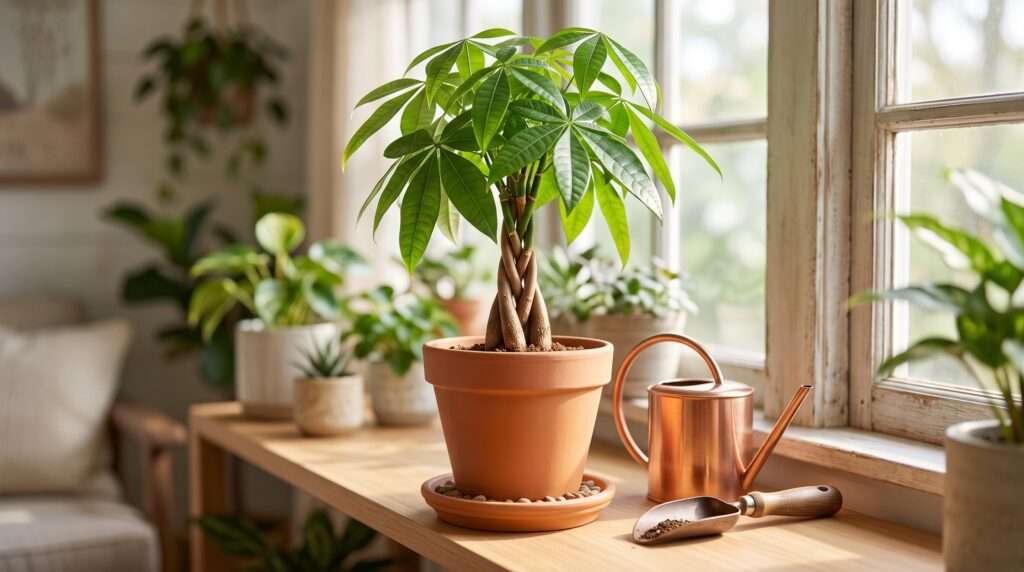
We have all been there. You bring home a stunning, braided Money Tree (Pachira aquatica) with lush green canopy leaves, hoping it will bring good fortune and vibrant energy to your living room. You give it “so much love”—watering it diligently, misting its leaves, and placing it in a beautiful decorative pot. Yet, a few weeks later, the leaves start turning a sickly yellow, developing brown spots, and dropping one by one.
What went wrong? You are likely dealing with the silent killer of indoor trees: root rot.
Overwatering isn’t just about the volume of water you pour into the soil; it is entirely dependent on where that water goes and how long it stays there. That is why choosing the best planter for a money tree is the single most critical decision you will make for its long-term health. The right pot is the ultimate defense against root rot and the secret to unlocking vigorous, vibrant new growth.
Over the last decade of working as an indoor plant specialist and rescuing countless root-bound, rotting, and struggling houseplants, I have seen firsthand that a plant’s container is just as important as its lighting or watering schedule. In this comprehensive guide, we are going to dive deep into the exact materials, sizing rules, and expert repotting techniques you need to set your Money Tree up for a lifetime of lush, beautiful growth. Let’s dig in! 🧤
H2: Why Your Money Tree’s Planter is a Matter of Life or Death 🚨
To understand what makes the perfect pot, we first need to understand the plant itself. The Money Tree, scientifically known as Pachira aquatica, is native to the swamps and wetlands of Central and South America.
This creates a fascinating paradox for indoor plant parents: these trees love deep, thorough drinks of water, but they absolutely hate sitting in stagnant, soggy soil. In their natural habitat, water flows freely around their roots. In a living room environment, water trapped in a pot quickly depletes the soil of oxygen, suffocating the roots and inviting fungal pathogens that cause rot.
The Braided Trunk Vulnerability 🪵
Most Money Trees sold commercially feature multiple individual saplings braided together to form a single, thick trunk. While aesthetically stunning, this braiding creates tight crevices near the soil line. If your planter does not allow the top layer of soil to dry out efficiently, moisture gets trapped in these crevices, leading to stem rot. Once the base of the trunk turns mushy, it is incredibly difficult to save the plant.
Expert Insight 💡: “A plant pot is not just a decorative container; it is an active ecosystem. If the vessel doesn’t breathe and drain, the roots can’t breathe either. Prioritize function over form, and your plant will reward you with foliage that outshines any fancy ceramic.”
H2: The Golden Rule: Drainage is Non-Negotiable 🕳️
If you take away only one piece of advice from this entire article, let it be this: never plant a Money Tree in a pot without drainage holes.
I cannot overstate the danger of “blind pots” (planters with completely solid bottoms). Many big-box stores sell Money Trees glued into these decorative containers. Without an escape route, gravity pulls excess water to the bottom of the pot, creating a toxic, swampy sludge that you can’t even see until the tree starts dying from the top down.
H3: The “Nursery Pot + Cachepot” Method (Expert Secret) 🪆
You don’t have to sacrifice style for plant health. The most foolproof way to display your Money Tree is using the “two-pot system.”
-
The Inner Pot: Keep your Money Tree planted in a standard plastic nursery pot with multiple large drainage holes at the bottom.
-
The Outer Pot (Cachepot): Place the plastic pot directly inside a slightly larger decorative container (the cachepot) that doesn’t have holes.
The Benefit: When it’s time to water, simply lift the lightweight plastic pot out, take it to the sink, water it thoroughly until liquid pours out the bottom, let it drain for 15 minutes, and then pop it back into the decorative cachepot. This completely eliminates the risk of standing water while keeping your living room looking stylish.
H3: How to Modify Pots Without Holes 🛠️
If you have found a gorgeous ceramic or terracotta pot that you absolutely want to plant directly into, you must add drainage. Fortunately, this is easier than you think.
-
Purchase a masonry or diamond-tipped drill bit (around 1/2 inch size).
-
Place a piece of masking tape over the bottom center of the pot (this prevents the drill from slipping and cracking the glaze).
-
Add a few drops of water to keep the bit cool.
-
Apply gentle, steady pressure until the drill breaks through. Voila! You now have a safe planter.
H2: Sizing Matters: How Big Should a Money Tree Pot Be? 📏
A very common beginner mistake is the “room to grow” myth. It is tempting to buy a tiny plant and put it in a massive pot, assuming it will grow into it over time. For a Money Tree, this is a death sentence.
When you have a small root system in a massive volume of soil, the roots simply cannot drink up the water fast enough. The excess soil acts like a giant, wet sponge wrapped around the roots, staying damp for weeks and inevitably causing rot.
H3: The 1-to-2 Inch Rule 📐
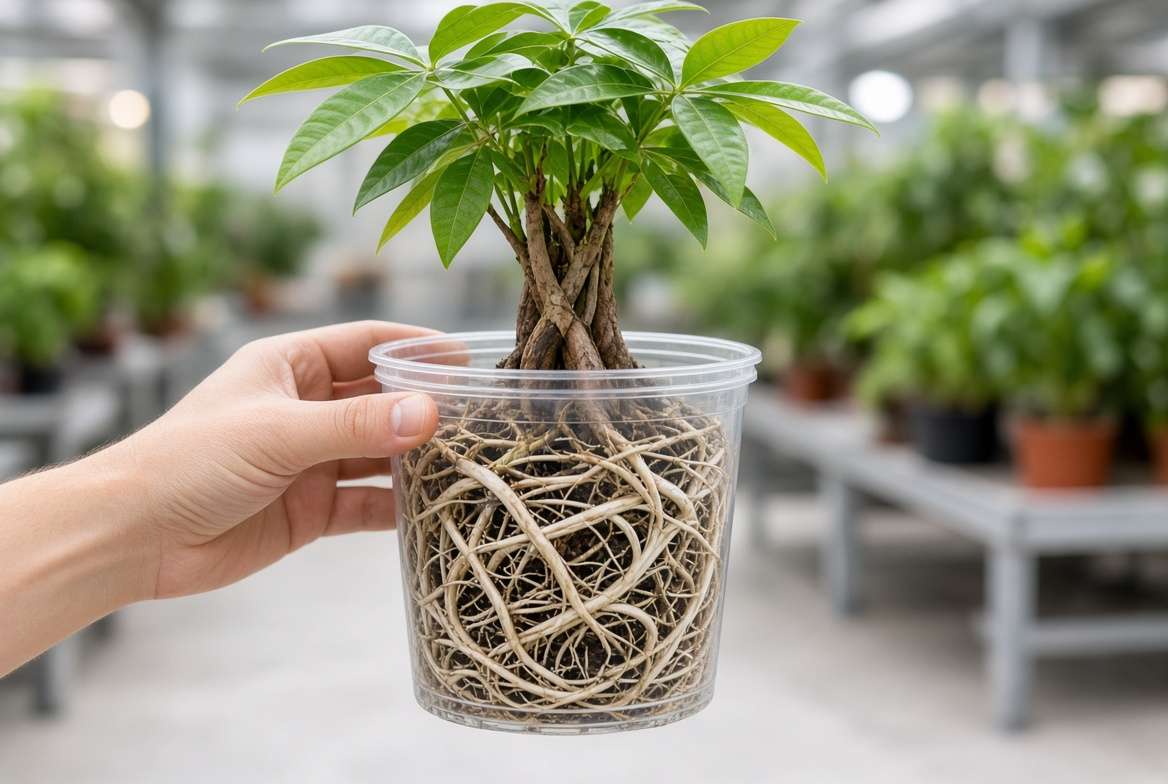
When upgrading your planter, you should only ever increase the size by 1 to 2 inches in diameter larger than the current root ball.
-
If your Money Tree is currently in a 6-inch pot, your new planter should be no larger than 8 inches.
-
This ensures there is just enough new soil to provide fresh nutrients and room to stretch, but not so much that the soil stays permanently wet.
H3: Depth vs. Width 🌳
Money Trees naturally develop relatively shallow, spreading root systems rather than deep taproots. Because of this, the shape of your planter matters just as much as the volume.
-
Avoid: Tall, narrow cylinder pots. These hold a massive amount of stagnant moisture at the bottom where the roots can’t reach it.
-
Choose: Standard or slightly shallow “azalea-style” pots. A wider, shallower bowl allows for better surface area evaporation and matches the plant’s natural root structure perfectly.
H2: Comparing Materials: What is the Best Planter for a Money Tree? 🧱
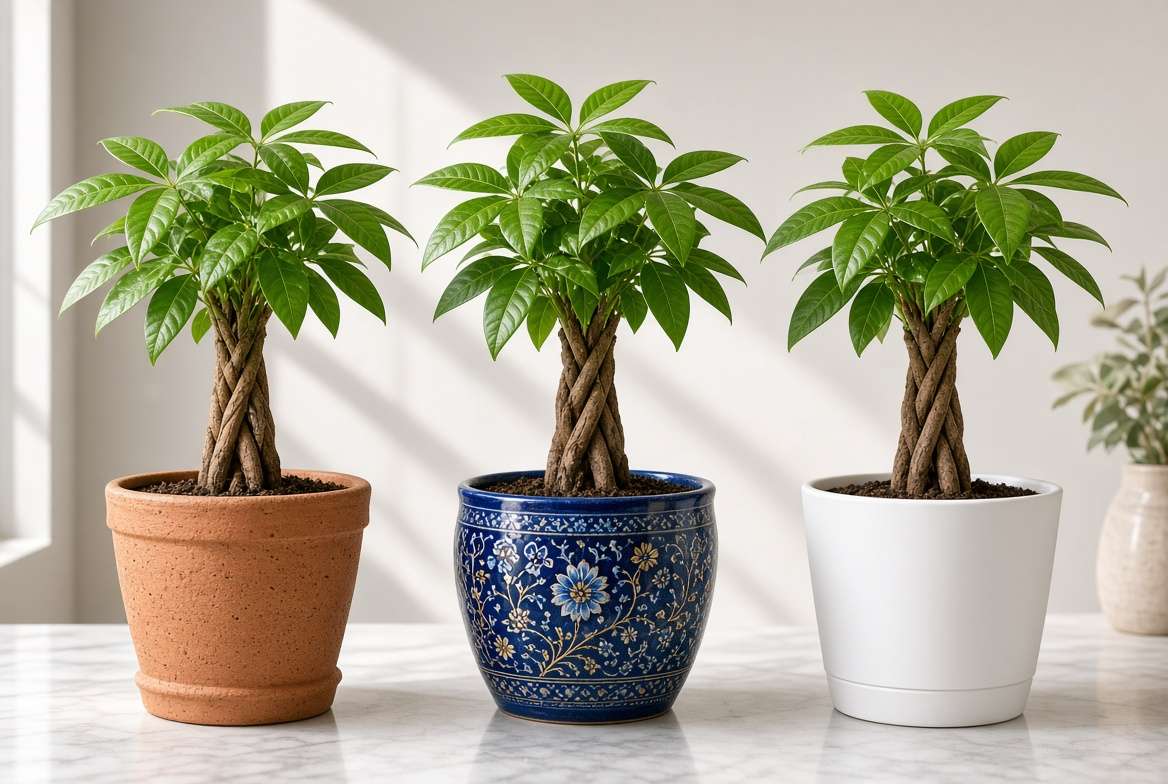
When it comes to selecting the best planter for a money tree, the material of the pot is just as crucial as its size. Different materials dictate how quickly the soil dries out, how much air reaches the root zone, and whether a top-heavy braided tree stays upright. Let’s break down the most popular planter materials so you can choose the perfect home for your plant.
H3: Terracotta (The Overwaterer’s Best Friend) 🏺
Terracotta, made from baked clay, is naturally porous. This means water and air can actually pass through the walls of the pot.
-
Pros: It actively wicks away excess moisture from the potting mix, allowing the root zone to breathe beautifully. It is also quite heavy, which provides an excellent anchor for tall, braided Money Trees that tend to become top-heavy.
-
Cons: Because the moisture evaporates quickly, you will need to water your Money Tree more frequently than you would with other materials. Minerals from tap water and fertilizer can also build up on the outside, creating a white, crusty patina (though many plant lovers enjoy this rustic look!).
-
Verdict: Terracotta is, without a doubt, the absolute best planter for money tree beginners or chronic over-waterers. It provides a massive safety net against root rot.
H3: Glazed Ceramic (Beautiful but Demands Caution) 🎨
Glazed ceramic pots are traditional terracotta or clay pots that have been coated in a liquid glass (glaze) and fired in a kiln.
-
Pros: They are stunning, available in endless colors and textures, and offer the heavy stability needed for large indoor trees.
-
Cons: The glaze seals the pores of the clay. This means moisture cannot evaporate through the walls of the pot; it can only escape through the top surface of the soil or the drainage hole at the bottom.
-
Verdict: Glazed ceramic makes a phenomenal cachepot (the outer decorative pot in the two-pot system). If you choose to plant directly into a glazed pot, you must ensure it has a drainage hole and you must use a highly aerated soil mix to compensate for the lack of breathability.
H3: Plastic and Fiberglass (Lightweight & Modern) ♻️
Modern plastic, resin, and fiberglass pots have become incredibly popular for their sleek, contemporary aesthetics.
-
Pros: They are highly affordable, easy to clean, and incredibly lightweight, making it easy to move large trees around your home for cleaning or seasonal lighting adjustments.
-
Cons: Like glazed ceramic, plastic is completely non-porous and holds moisture in the soil for a long time. Additionally, because they are so lightweight, a tall, robust Money Tree can easily tip the pot over if bumped by a pet or a strong draft.
-
Verdict: Plastic is perfect for the inner nursery pot method. If using a large fiberglass planter, consider placing a heavy rock or two at the bottom (outside the nursery pot) to act as a counterweight.
H3: Self-Watering Pots: A Warning for Money Trees ⚠️
Self-watering planters feature a built-in reservoir at the bottom that continuously wicks moisture up into the soil.
-
While these are brilliant for moisture-loving plants like ferns or Calatheas, they are generally a terrible idea for Money Trees.
-
Pachira aquatica needs its soil to dry out significantly between waterings. Constant exposure to a wicking moisture reservoir is a fast track to soggy roots, stem rot, and yellowing leaves. Unless you are an expert at managing the specific soil-wicking ratios with chunky substrates like LECA, skip self-watering pots entirely for this species.
H2: 5 Top-Rated Planters for Money Trees (Our Expert Picks) 🏆
Based on years of repotting, treating, and styling indoor trees, here are my top structural recommendations for your Money Tree:
-
The Classic Italian Terracotta Cylinder: The ultimate choice for plant health. Its uniform width provides excellent stability, and the breathable clay guarantees the soil won’t stay damp for too long.
-
The Heavy-Bottom Ceramic Cachepot: Look for a ceramic pot that is slightly wider at the base than at the top. This provides a rock-solid center of gravity for top-heavy braided trunks. Just drop your plastic nursery pot right inside!
-
The Fiberglass Mid-Century Planter on a Wooden Stand: Perfect for elevating a smaller Money Tree to catch more sunlight from a window, while the lightweight fiberglass makes assembly a breeze.
-
The Shallow “Bonsai” or Azalea Pot: For advanced growers who want to train their Money Tree, a wide, shallow terracotta bowl perfectly accommodates their natural root structure while preventing deep-moisture rot.
-
The Eco-Friendly Upcycled Resin Pot: A great, durable option for the nursery-pot method. Look for brands that include a raised interior shelf, which keeps the inner pot elevated above any excess runoff water.
H2: The Perfect Pairing: Matching Your Planter with the Right Soil 🍂
Let me share an industry secret: even the most expensive, breathable terracotta pot in the world is completely useless if you fill it with dense, heavy, cheap potting soil. The planter and the soil must work together as a cohesive drainage system.
Money Trees require a potting mix that drains rapidly but retains just enough moisture to hydrate the fine root hairs. Standard indoor potting soil straight from the bag is usually too dense and peaty.
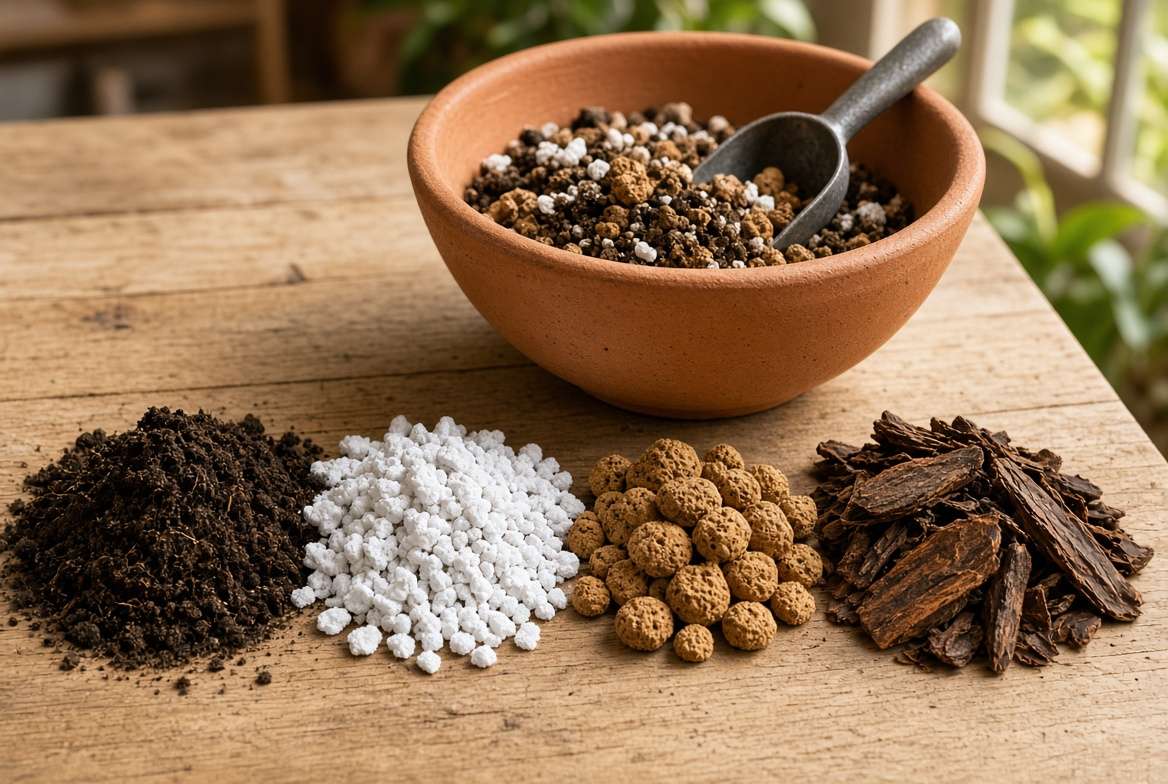
The Expert Recipe for Money Tree Success: Mix your own substrate using this simple, foolproof ratio:
-
50% Premium Indoor Potting Soil: This acts as the base, providing essential nutrients and moisture retention.
-
25% Perlite or Pumice: These lightweight, volcanic rocks create tiny air pockets throughout the soil, allowing oxygen to reach the roots and water to flow freely.
-
25% Orchid Bark: The chunky bark mimics the plant’s natural, airy environment, preventing the soil from compacting over time.
When you pair this chunky, aerated soil mix with a properly sized planter containing drainage holes, root rot becomes virtually impossible!
H2: Repotting Your Money Tree: A Step-by-Step Guide 🌱
Now that you have selected the best planter and mixed the perfect soil, it is time for the main event. Repotting can be stressful for a plant, but doing it correctly ensures a smooth transition.
H3: When to Repot 🗓️
Money Trees do not need frequent repotting; typically, once every 2 to 3 years is plenty. The best time to repot is in the early Spring or Summer when the plant is actively growing. Look for these undeniable signs that it is time to upgrade:
-
Roots are visibly poking out of the drainage holes or wrapping aggressively around the top of the soil.
-
When you water, the liquid rushes straight through the pot instantly (indicating there are more roots than soil).
-
The tree has become so top-heavy that it easily tips over.
H3: The 4-Step Repotting Process 📋
-
Massage the Root Ball: Gently squeeze the sides of the old pot and slide the tree out. Using your fingers, carefully massage the root ball to loosen the old, compacted soil. Do not aggressively rip the roots; just untangle the bottom slightly.
-
Check for and Trim Rot: Inspect the roots. Healthy roots are firm and whitish-tan. If you see any black, mushy, or foul-smelling roots, sterilize a pair of shears with rubbing alcohol and snip them off immediately.
-
Position the Braided Trunk (Crucial Step): Add a layer of your fresh, chunky soil mix to the bottom of the new planter. Place the tree inside. Ensure the tree is planted at the exact same depth it was in the old pot. Never bury the braided trunk deeper than it was previously, as wet soil resting against the exposed trunk will rapidly cause stem rot.
-
The “First Water” Technique: Fill in the gaps around the sides with fresh soil, pressing down gently but not packing it too tightly. Immediately give the plant a thorough watering until water flows out the bottom. This settles the new soil, eliminates large air pockets, and reduces transplant shock.
H2: Frequently Asked Questions (FAQs) ❓
Q: Do Money Trees like tight pots? A: Yes, they prefer to be slightly root-bound rather than swimming in excess soil. A snug fit encourages the plant to focus its energy on pushing out beautiful new foliage rather than constantly expanding its root system.
Q: Can I put rocks or gravel at the bottom of my planter for extra drainage? A: No, this is one of the biggest myths in the houseplant world! Putting rocks at the bottom of a pot actually creates a “perched water table.” Water doesn’t easily move from the fine soil into the chunky rocks, so the dampest part of the soil gets pushed higher up in the pot—right where your vulnerable roots are. Always fill the entire pot with your uniform soil mix.
Q: Why are the leaves on my Money Tree turning yellow right after I repotted it? A: A few yellowing leaves after a repot are totally normal and are usually a sign of mild transplant shock. The plant is just adjusting to its new environment. However, if the soil is soaking wet and multiple leaves are turning yellow and mushy, you may have overwatered it or chosen a pot that is too large.
Conclusion: Setting Your Money Tree Up for a Long, Lush Life 🌿
Caring for a Pachira aquatica doesn’t have to be a stressful guessing game of yellowing leaves and mysterious rot. By understanding that this tropical swamp native thrives on a cycle of deep watering followed by excellent airflow, you have already won 80% of the battle.
Remember the golden rules: prioritize drainage holes above all else, ensure the new pot is a snug fit (only 1-2 inches larger than the root ball), and choose a breathable material like terracotta if you tend to have a heavy watering hand. When you combine the best planter for a money tree with a chunky, aerated soil mix, you are creating an environment where root rot simply cannot survive.
Your Money Tree is an investment in the beauty and energy of your home. Give its roots the proper home they deserve, and you will be rewarded with a towering, vibrant canopy for years to come!
Are you currently using the nursery pot method, or did you plant your tree directly into ceramic? Let me know in the comments below, and don’t forget to check out our ultimate guide on Money Tree Light Requirements to complete your plant care setup! ✨











