
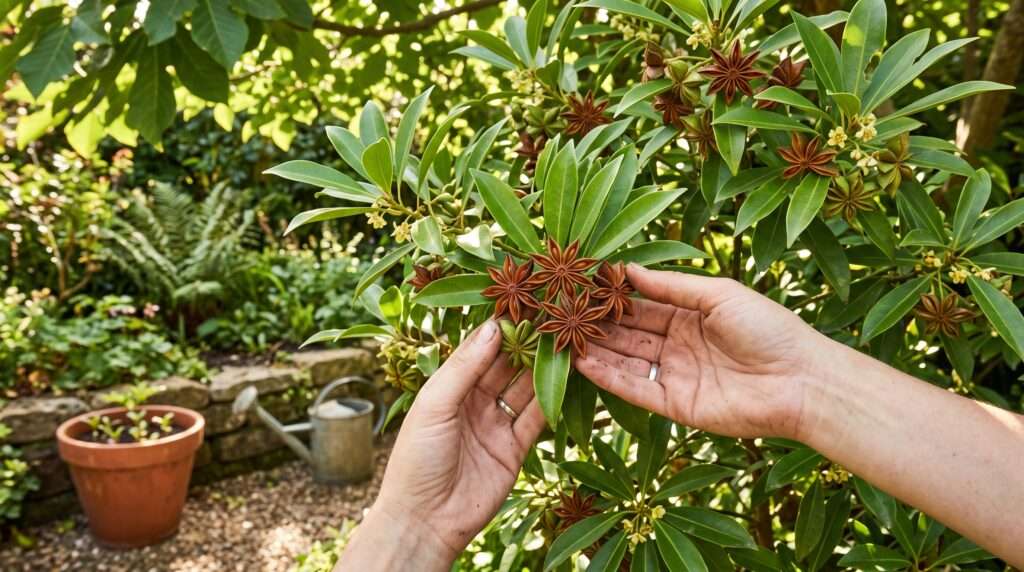
How to Grow a Thriving Star Anise Plant: The Complete Care & Harvest Guide 🌟
Imagine a cool autumn evening, a simmering pot of rich broth for pho, or a warm mug of spiced mulled wine. The crowning jewel in these culinary masterpieces is often a beautiful, eight-pointed, licorice-scented spice. Now, imagine if you could walk into your own garden or sunroom and harvest that exact spice yourself.
Cultivating your very own star anise plant (Illicium verum) is entirely possible, and it is one of the most rewarding horticultural journeys an avid gardener can undertake. While this exotic evergreen perennial requires a healthy dose of patience—often taking four to six years to produce its first fragrant pods—the result is an exquisite, aromatic tree that provides year-round beauty and a lifetime supply of a premium culinary spice.
In this comprehensive, skyscraper-level guide, we are going to walk you through exactly how to grow, maintain, and harvest a thriving star anise tree. From soil preparation and mimicking its native subtropical habitat to a crucial safety guide on plant identification, we have everything you need for botanical success. Let’s get growing! 🌱
🌿 1. Understanding the Star Anise Plant (Illicium verum)
Before digging into the soil, it is essential to understand the botanical background of the plant you are working with. Native to the warm, humid forests of Southeast Asia and Southern China, the star anise is a medium-sized evergreen shrub or small tree belonging to the Schisandraceae family.
In its natural habitat, it can grow up to 26 feet (8 meters) tall, though domestically cultivated or container-grown varieties stay much more manageable. Beyond its culinary uses, it boasts immense ornamental value. The tree features gorgeous, glossy, lance-shaped green leaves that emit a subtle licorice fragrance when crushed, alongside delicate pale yellow-green to pinkish flowers that bloom in the spring.
🚨 EXPERT SAFETY WARNING: Chinese vs. Japanese Star Anise
When discussing E-E-A-T (Experience, Expertise, Authoritativeness, and Trustworthiness) in botany, safety is paramount. If you take away just one piece of information from this guide, let it be this: You must ensure you are planting Chinese Star Anise (Illicium verum).
There is a closely related species known as Japanese Star Anise (Illicium anisatum). While the plants and their star-shaped seed pods look nearly identical, the Japanese variety is highly toxic to humans and animals. It contains powerful neurotoxins, including shikimin, and is cultivated strictly for ornamental purposes or for use in traditional incense.
-
Pro Tip for Growers: Never forage for star anise seeds in the wild unless you are with a certified botanist. Always purchase your seeds, cuttings, or nursery saplings from highly reputable, verified horticultural sellers who explicitly guarantee the Illicium verum species. 🛡️
☀️ 2. Ideal Growing Conditions & Climate
To get your plant to thrive rather than just survive, you need to replicate its native subtropical Asian environment as closely as possible.
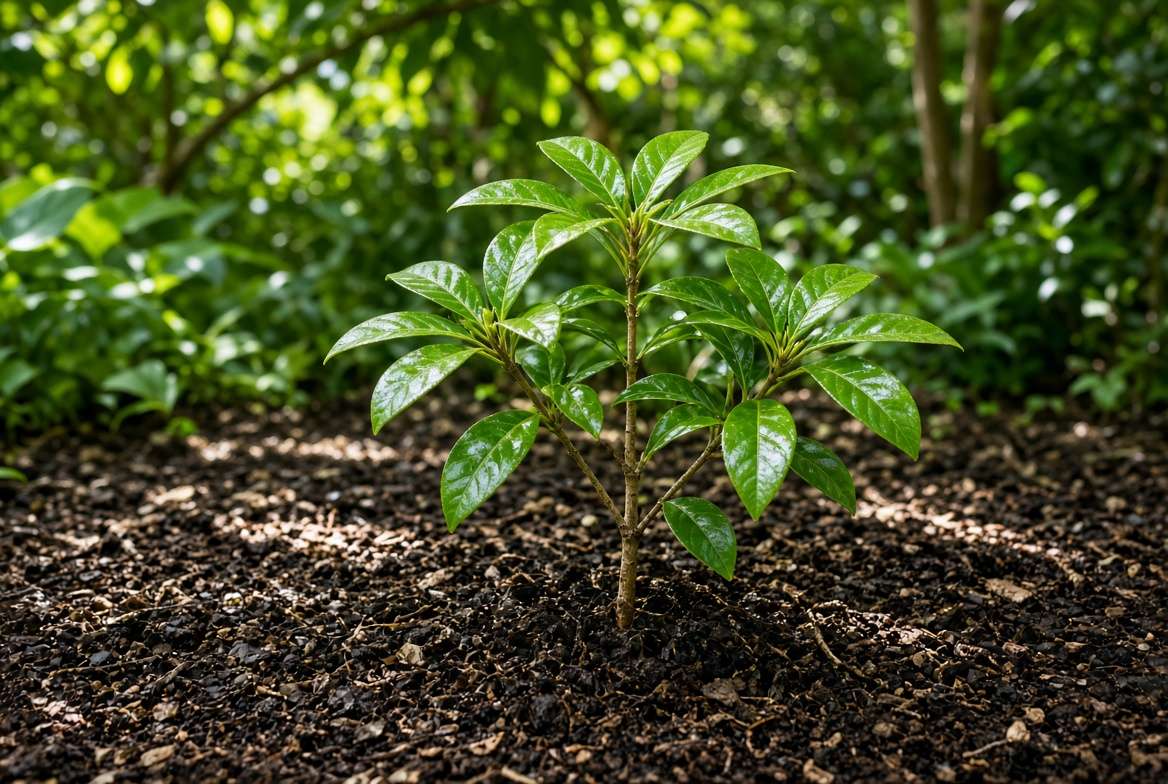
🌱 USDA Hardiness Zones
The star anise tree thrives best in USDA Hardiness Zones 8b through 11. In these warm, frost-free climates, the tree can be planted directly in the ground as a permanent landscape fixture.
-
Cold Sensitivity: This species is notoriously frost-sensitive. A mild, brief frost might only cause leaf drop, but a prolonged freeze will kill a young tree outright. If you live in Zone 7 or below, do not despair! This plant adapts beautifully to container growing, which we will cover in Section 5. ❄️
🌤️ Sunlight Requirements: Dappled is Best
A common misconception is that tropical plants always want blistering, direct sunlight. In the wild, star anise grows as an understory tree in dense forests.
-
The Sweet Spot: It prefers partial shade or dappled sunlight. Morning sun with afternoon shade is ideal.
-
Sun Protection: If you live in an excessively hot climate (like Zone 10 or 11), providing shade during the peak heat of the afternoon is strictly necessary to prevent severe leaf scorch and dehydration. 🌳
🌍 Soil Preferences: Drainage is King
Star anise requires loamy, rich, well-draining soil. It absolutely despises “wet feet,” meaning heavy, compacted clay soils that hold water will quickly lead to fatal root rot.
-
Soil pH: The tree prefers slightly acidic soil conditions, ideally with a pH hovering between 5.5 and 6.5.
-
Amendments: Before planting, work generous amounts of organic compost, aged manure, or pine bark fines into the soil. This not only gently lowers the pH but also improves aeration and drainage while providing a slow release of vital nutrients. 🍂
🪴 3. How to Plant Star Anise: Step-by-Step
When you are ready to start growing, you have two primary propagation pathways. Let’s break down the best approach for home gardeners.
🌰 Growing from Seed vs. Cuttings
-
The Seed Route: Growing from seed is possible but notoriously difficult. Star anise seeds have a very short viability window—they must be sown almost immediately after being harvested from a fresh pod. If you manage to get viable seeds, they require pre-treatment. You must soak the seeds in lukewarm water for 6 to 8 hours to soften the outer husk and stimulate germination. Plant them in a sterile seed-starting mix, keep them consistently warm (around 70°F/21°C), and maintain high humidity.
-
The Cutting Route (Expert Recommended): For 99% of home gardeners, purchasing an established nursery sapling or propagating via semi-hardwood cuttings is vastly superior. Cuttings taken in late summer root much faster and guarantee that the resulting tree is a true genetic clone of a verified culinary Illicium verum plant. ✂️
🏡 In-Ground Planting Guide
If you are blessed with a Zone 8b-11 climate, here is how to plant your tree outdoors:
-
Digging the Hole: Dig a hole that is exactly as deep as the nursery pot, but twice as wide. This allows the lateral roots to spread easily into the amended soil.
-
Positioning the Root Crown: It is critical to keep the root crown (where the stem meets the roots) exactly level with the surrounding soil surface. Planting too deep encourages stem rot.
-
Spacing: Mature trees need room to breathe. Space your saplings at least 10 to 15 feet apart from other trees or structures to accommodate their mature canopy and ensure proper airflow.
-
Mulching: Apply a generous 2-to-3-inch layer of organic mulch (like shredded bark or leaf mold) around the base of the tree. Keep the mulch a few inches away from the trunk itself. This helps regulate soil temperature, suppresses weeds, and retains vital soil moisture during hot summers. 🪵
💧 4. Essential Plant Care & Maintenance
Once your star anise is safely in the ground (or in its container), consistent care is the secret to unlocking future harvests. Because this plant is a slow-growing perennial, establishing a reliable routine early on pays massive dividends down the road.
🌧️ Watering & Humidity
Understanding the watering needs of Illicium verum requires balancing hydration with aeration.
-
Consistent Moisture: The goal is to keep the soil consistently damp, much like a wrung-out sponge. During the active growing seasons of spring and summer, check the top two inches of soil; if it feels dry to the touch, it is time to water deeply.
-
Avoid Waterlogging: Never let the plant sit in standing water. Overwatering suffocates the root system and invites fungal diseases.
-
Humidity Hacks: Hailing from subtropical forests, star anise absolutely craves high humidity. If you live in a drier climate, you must artificially boost the ambient moisture. For outdoor plants, regular morning misting or grouping plants together to create a humid microclimate works wonders. For indoor or patio plants, setting the container on a wide tray filled with pebbles and water is an excellent strategy. 🌫️
🍃 Fertilization Schedule
Star anise is not a heavy feeder, but it does benefit from supplemental nutrition to support its lush evergreen foliage and eventual fruiting.
-
Spring/Summer Feeding: Apply a balanced, slow-release organic fertilizer (such as a 10-10-10 NPK ratio) every 6 to 8 weeks during the active growing season.
-
Winter Rest: Cease all fertilization in late autumn and winter to allow the plant to naturally enter its dormant resting phase. Over-fertilizing during winter can push vulnerable new growth that will easily succumb to cold snaps. 🍂
✂️ Pruning for Health
Because it is a relatively slow grower, your star anise tree will rarely need heavy or aggressive pruning.
-
Low Maintenance Structure: Allow the tree to establish its natural, bushy shape.
-
Strategic Cuts: In late winter, just before new spring growth emerges, conduct a quick structural prune. Remove any dead, diseased, or broken branches. If the interior canopy is becoming too dense, carefully thin out crossing branches to improve sunlight penetration and crucial airflow, which naturally deters fungal infections. 🪴
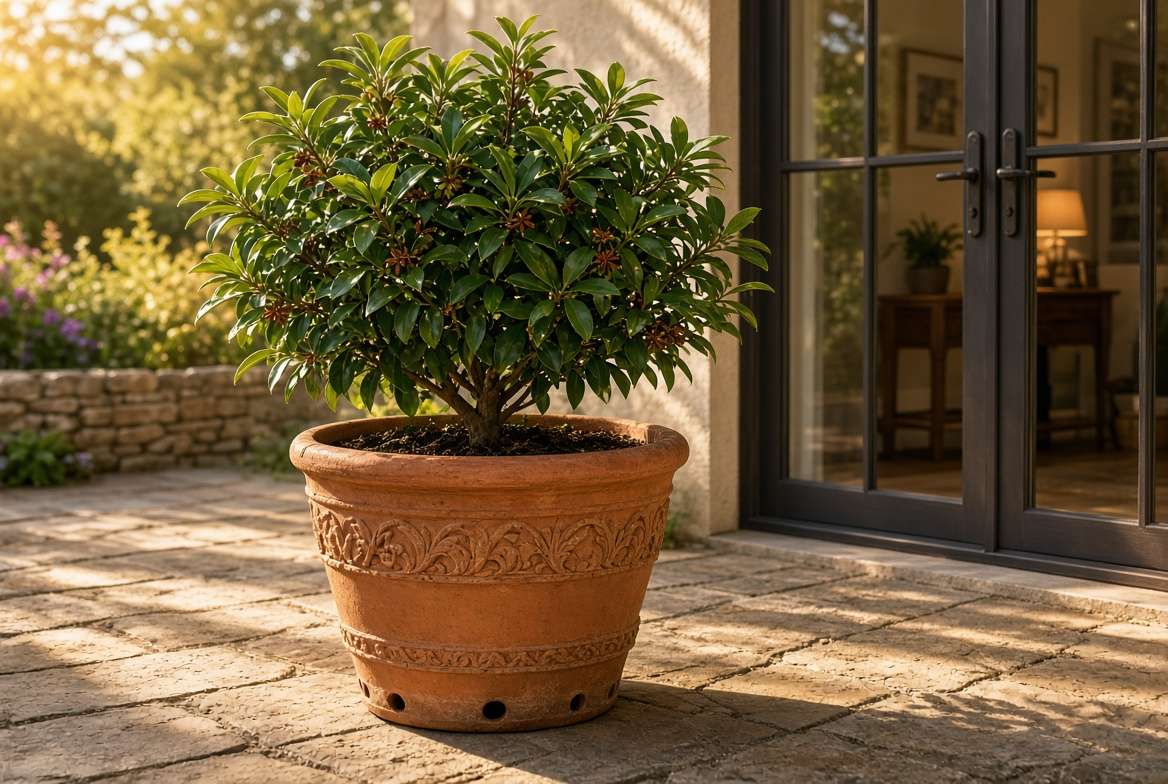
🧊 5. Container Growing (For Colder Climates)
If you live in USDA Zone 7 or below, leaving a star anise plant outdoors year-round is a guaranteed death sentence. Fortunately, this beautiful evergreen adapts exceptionally well to container gardening.
-
Pot Selection: Star anise can become quite top-heavy as it matures. Choose a large, heavy container made of thick terracotta, ceramic, or high-density resin. Ensure the pot has at least three to four large drainage holes at the bottom.
-
Custom Soil Mix: Standard potting soil is often too heavy and retains too much moisture. Create a custom, high-drainage mix: combine 50% premium organic potting soil, 30% perlite or pumice, and 20% rich compost.
-
Overwintering Indoors: Monitor your local weather closely. Before the first threat of autumn frost, transition your potted star anise indoors. Place it in a bright, south-facing window. If natural light is insufficient, supplement with a full-spectrum LED grow light for 10-12 hours a day. Keep the plant far away from drying HVAC heating vents or drafty doorways, as sudden temperature and humidity drops will cause severe leaf drop. 🏡
🐛 6. Common Pests & Troubleshooting
While Illicium verum is naturally resistant to many common garden pests thanks to its strong essential oils, it is not entirely invincible. Keeping a watchful eye will help you catch minor issues before they become fatal infestations.
-
Overwatering (Root Rot): This is the number one killer of domestically grown star anise. If you notice the glossy green leaves turning a sickly yellow and dropping rapidly, or if the base of the stem feels mushy, you are overwatering. Stop watering immediately, check the drainage, and if necessary, repot the plant in fresh, dry soil.
-
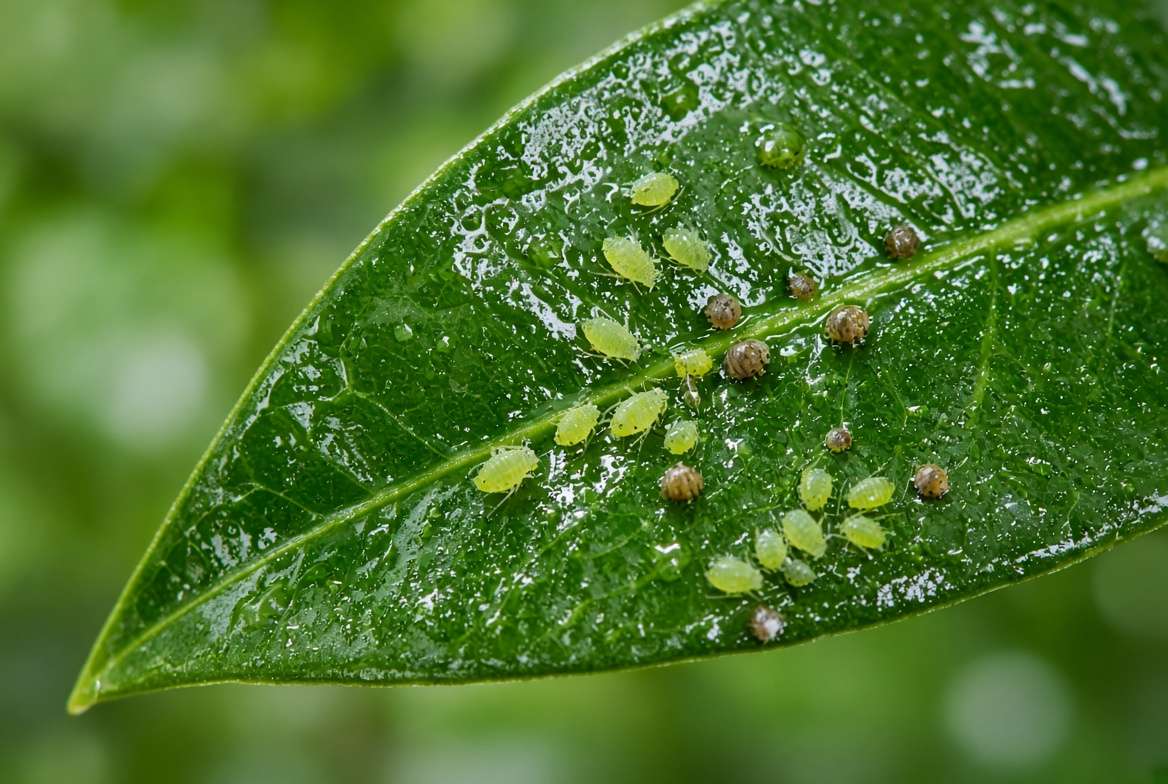
Scale Insects & Aphids: These sap-sucking insects occasionally target tender new spring growth. Look for tiny, shell-like bumps on the stems (scale) or clusters of small green/black bugs on the undersides of leaves (aphids). A telltale sign of their presence is “honeydew”—a sticky residue they leave behind that can eventually grow black sooty mold. 🐜
-
Organic Solutions: Treat pest outbreaks early with organic horticultural interventions. Gently wipe the leaves with a diluted Neem oil solution or an organic insecticidal soap. For outdoor plants, introducing beneficial predatory insects, such as ladybugs or lacewings, is a fantastic, natural way to keep aphid populations in check. 🐞
🍂 7. The Harvest: From Tree to Spice Rack
This is the moment you have been waiting for. Harvesting your own star anise is a remarkable horticultural achievement, but it requires patience and precision.
⏳ The Waiting Game
Growing star anise is not for the impatient gardener. From a young sapling, it typically takes 4 to 6 years for the tree to mature enough to bear fruit. In some less-than-ideal climates, it can take up to 10 years.
-
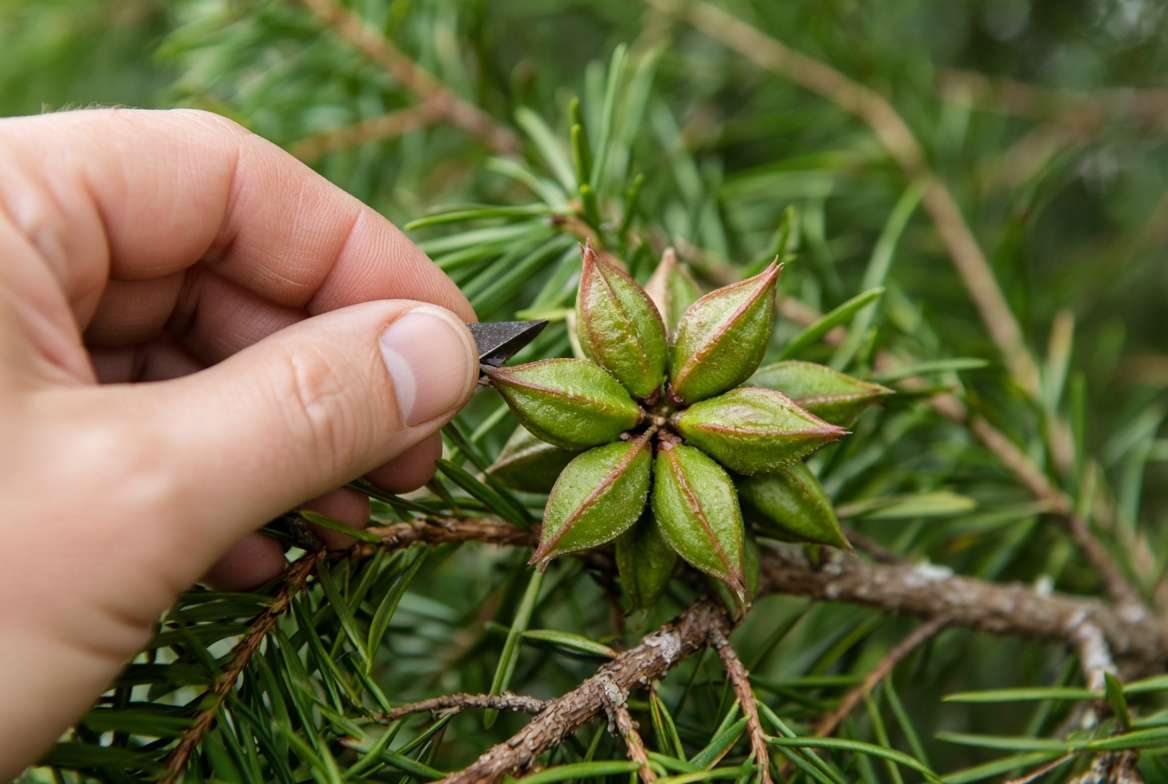
Bloom to Pod: In spring, the tree will produce delicate blossoms. If successfully pollinated, these flowers slowly swell and develop into the iconic, eight-pointed seed pods throughout the summer months. 🌸
✂️ How and When to Harvest
Timing is everything when harvesting spices to maximize their volatile essential oils.
-
The Perfect Moment: Do not wait for the pods to fully dry out and burst open on the tree! You want to harvest the pods in late summer or early autumn when they are still firm, completely formed, and just beginning to transition from a vibrant green to a reddish-brown color.
-
The Method: Carefully snip the pods from the branches using clean, sterilized pruning shears to avoid tearing the delicate bark.
🌞 Drying and Curing
Freshly harvested star anise pods cannot be used immediately; they must be properly cured.
-
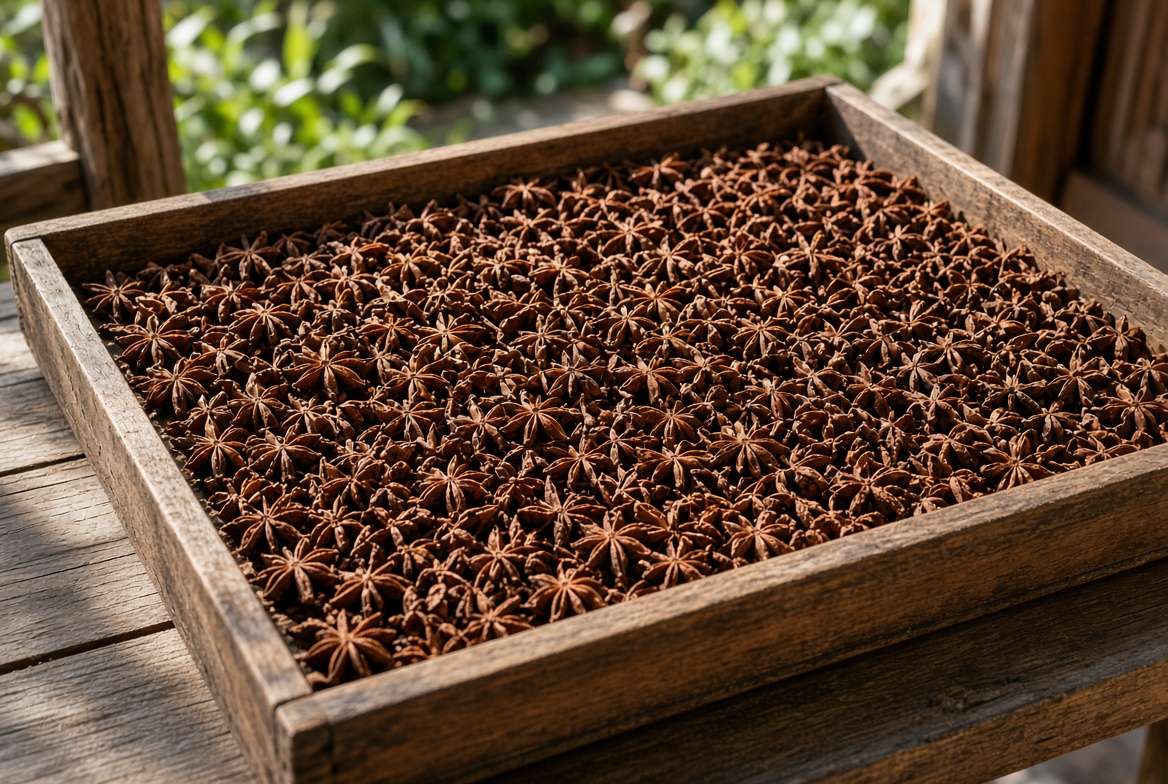
Sun Drying: The traditional and most effective method is sun-drying. Lay the harvested pods out in a single layer on a mesh screen or shallow tray. Place them in a warm, dry, well-ventilated area with plenty of sunlight. Depending on humidity levels, it will take 7 to 14 days for the pods to shrink, harden, and turn the classic deep, woody brown color you recognize from the grocery store.
-
Storage: Once completely dry and rock-hard, store your whole star anise pods in airtight glass mason jars. Keep the jars in a cool, dark place (like a pantry or spice cabinet). Properly cured and stored, homegrown star anise will retain its potent flavor and aroma for up to two full years. 🏺
🤔 8. Frequently Asked Questions (FAQs)
Does the star anise plant come back every year? Yes! Illicium verum is a long-lived evergreen perennial. In optimal climates (Zones 8b-11), it will keep its leaves year-round and continue to grow and fruit for decades.
Can I grow a star anise plant entirely indoors? Technically, yes, but it is challenging. You will need to provide it with very high humidity (via a humidifier), excellent drainage, and high-intensity full-spectrum grow lights. However, while you can maintain a beautiful indoor foliage plant, getting an entirely indoor star anise tree to produce flowers and fruit is exceedingly rare due to the lack of natural pollinators and environmental triggers. 💡
Why are my star anise leaves turning yellow? Yellowing leaves (chlorosis) in star anise usually point to one of three culprits:
-
Poor drainage/overwatering leading to suffocated roots.
-
Alkaline soil (pH above 7.0) preventing the plant from absorbing iron.
-
Sunburn from being abruptly moved into harsh, direct afternoon sunlight without acclimatization.
🎯 Conclusion
Cultivating a star anise plant is a masterclass in horticultural patience, but the rewards are truly unparalleled. By providing the right balance of dappled sunlight, high humidity, well-draining acidic soil, and winter protection for colder zones, you can successfully grow this exotic spice right in your own backyard or sunroom.
From its glossy, fragrant leaves to the immense satisfaction of plucking your very own licorice-scented pods, Illicium verum is a stunning addition to any botanical collection.
Now we want to hear from you! What USDA Hardiness Zone are you gardening in, and are you planning to grow your star anise plant directly in the ground or in a container? Let us know in the comments below! 👇











