A single snip of the scissors can double your harvest—or completely ruin it. The difference comes down to exact timing. As a grower, you are constantly balancing the desire for a lush, bushy canopy with the biological clock of your garden. If you’ve missed the ideal vegetative window, you are likely wondering: when is it too late to top your plant? The short answer is that once your plant transitions from vegetative growth to the flowering or fruiting stage, the window for topping has permanently closed.
Many gardeners discover the immense benefits of plant training but attempt it after the plant has already shifted its hormonal energy toward reproduction. This causes irreversible stress, stunted yields, and increased vulnerability to disease. In this comprehensive guide, we will explore exactly how to identify the “point of no return,” the physiological signs you must watch for, and the alternative training methods you can use if you’ve missed the golden window. 🪴✨
What Exactly is Plant Topping? (And Why Timing is Everything) 🌿
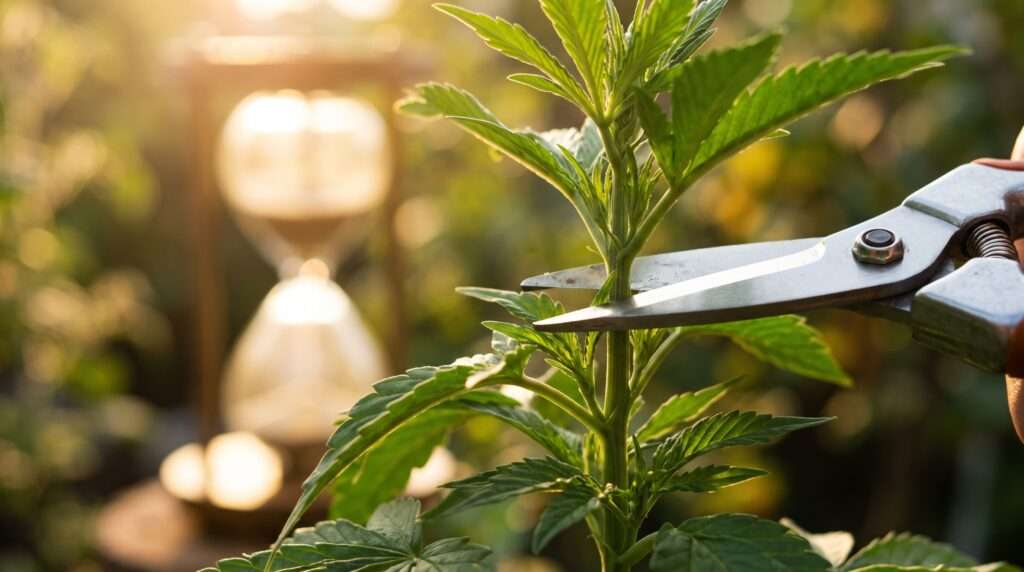
Before we can pinpoint the exact cutoff for this pruning technique, we must understand what topping actually does to the plant’s internal chemistry. Topping is a high-stress training (HST) method that involves cutting off the top of the main stem.
Plants naturally exhibit a trait called apical dominance. This means the main central stem grows upwards rapidly, hoarding the majority of the plant’s growth hormones (auxins) to reach the sunlight. While this evolutionary trait is great for surviving in the wild, it often results in a “Christmas tree” shape that yields one large main cola (flower/fruit cluster) and several smaller, underdeveloped lower branches.
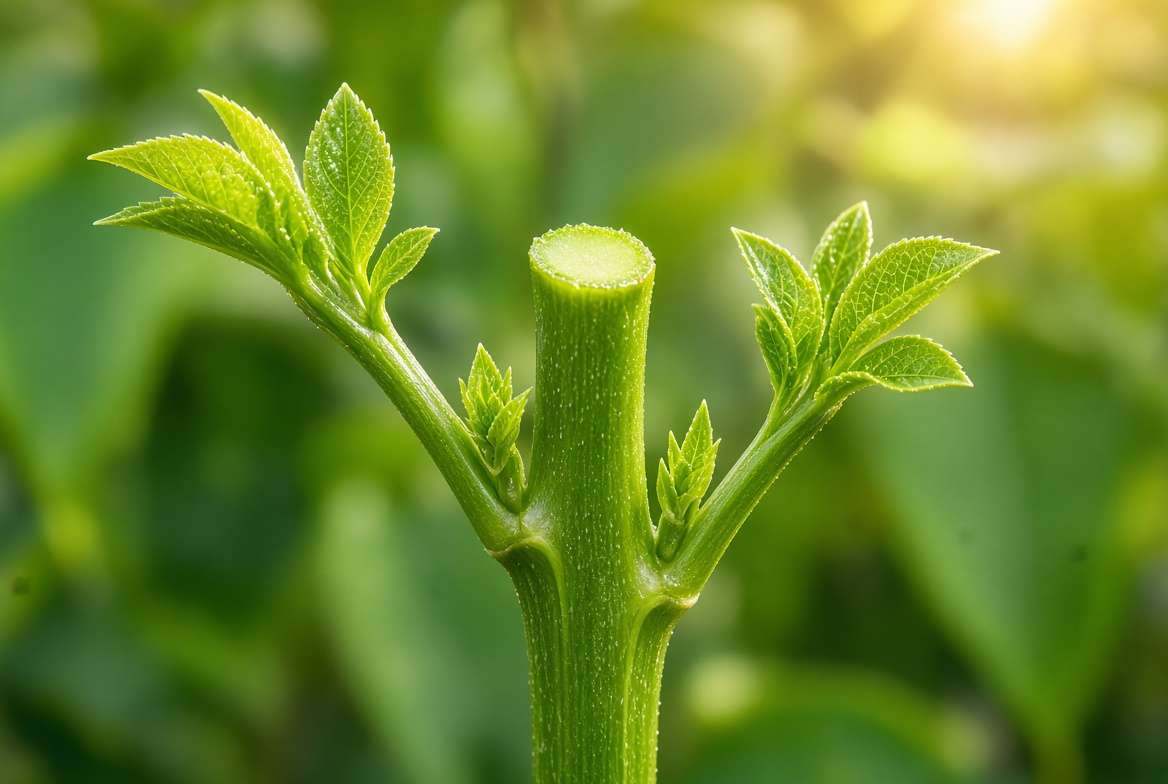
When you top a plant, you physically remove the source of apical dominance. This forces the plant to redistribute its growth hormones to the lower lateral branches.
-
The Goal: The two nodes directly below the cut will now grow outward into two main stems instead of one. This creates a flatter, bushier canopy, allowing for even light distribution and drastically increasing your overall yield.
-
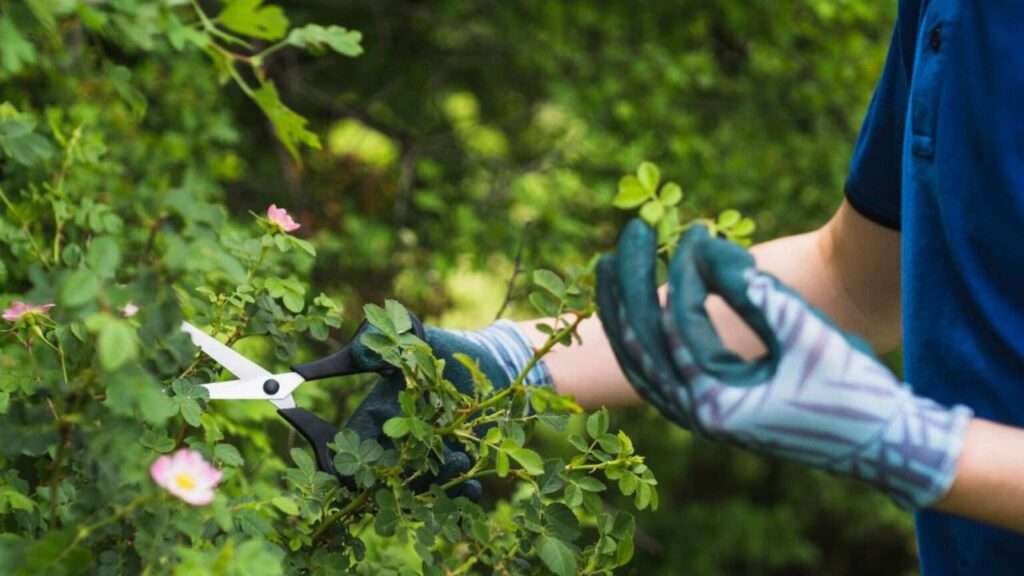
Expert Insight 💡: Treat topping as a surgical procedure rather than a casual haircut. Clean, sterilized pruning shears and precise cuts reduce the risk of infection and minimize the recovery time needed before the plant resumes vigorous growth.
The Short Answer: When Is It Too Late to Top Your Plant? ⏰
The golden rule of plant training is this: It is officially too late to top your plant once it has entered the flowering or fruiting stage.
During the vegetative stage, a plant’s sole focus is on growing stems, leaves, and roots. It can easily bounce back from the stress of a severed stem because its energy is dedicated to physical expansion. However, once the light cycle changes (for photoperiod plants) or age triggers maturity (for autoflowers and determinate varieties), the plant undergoes a massive internal hormonal shift. All energy is redirected from building structure to producing flowers, fruits, or seeds.
Ideally, all high-stress training should stop at least 1 to 2 weeks before the transition to flowering. This gives the plant adequate time to heal the wound, recover from shock, and develop the new main branches before its structural growth comes to a halt.
Signs Your Plant Has Passed the Topping Window 🛑
If you are unsure whether your plant has crossed the threshold, look closely for these physiological indicators. If you spot them, put the scissors down immediately:
-
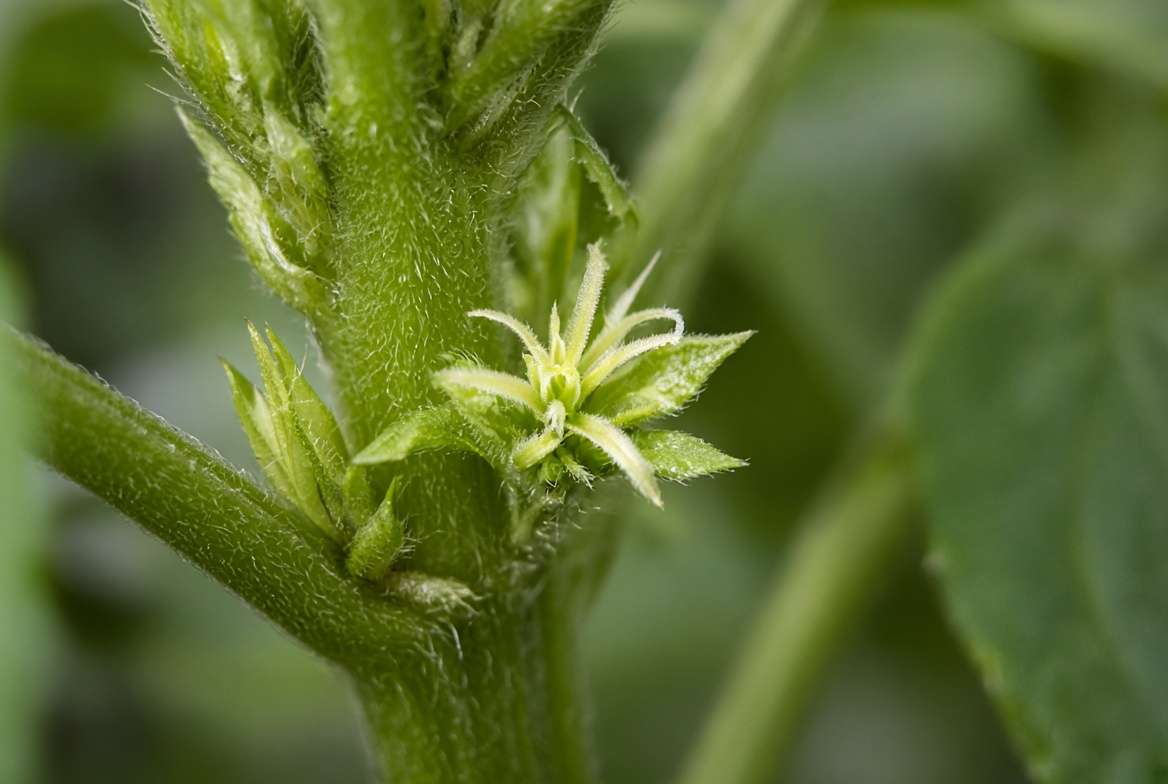
Appearance of Pre-flowers, Buds, or Pistils: The most obvious sign. If you see tiny white hairs (pistils), small pollen sacs, or miniature fruit blossoms forming at the nodes, the plant has already begun its reproductive cycle.
-
Stiff, Woody Stems: During early vegetative growth, stems are pliable, green, and fleshy. As a plant matures toward the flowering stage, the main stalk and lower branches undergo secondary growth, becoming tough and woody to support the weight of future fruits. Topping a woody plant causes severe trauma.
-
Vertical Growth Has Slowed: In the late stages of life, vigorous upward stretching stops. If your plant is no longer producing new nodes rapidly, it no longer has the vegetative momentum required to recover from a topping cut.
The Ideal Window: When Should You Top? 📅
Now that we know exactly when it is too late to top your plant, we must identify the optimal window for this high-stress training technique. Timing your pruning perfectly ensures that your plant has a robust enough root system to handle the physical trauma, while still having plenty of vegetative time left to develop a sprawling, multi-cola canopy.
Counting the Nodes 🌿
In professional horticulture and canopy management, the standard metric for topping timing is “node counting.” A node is simply the intersection on the main stalk where a leaf or a lateral branch emerges.
-
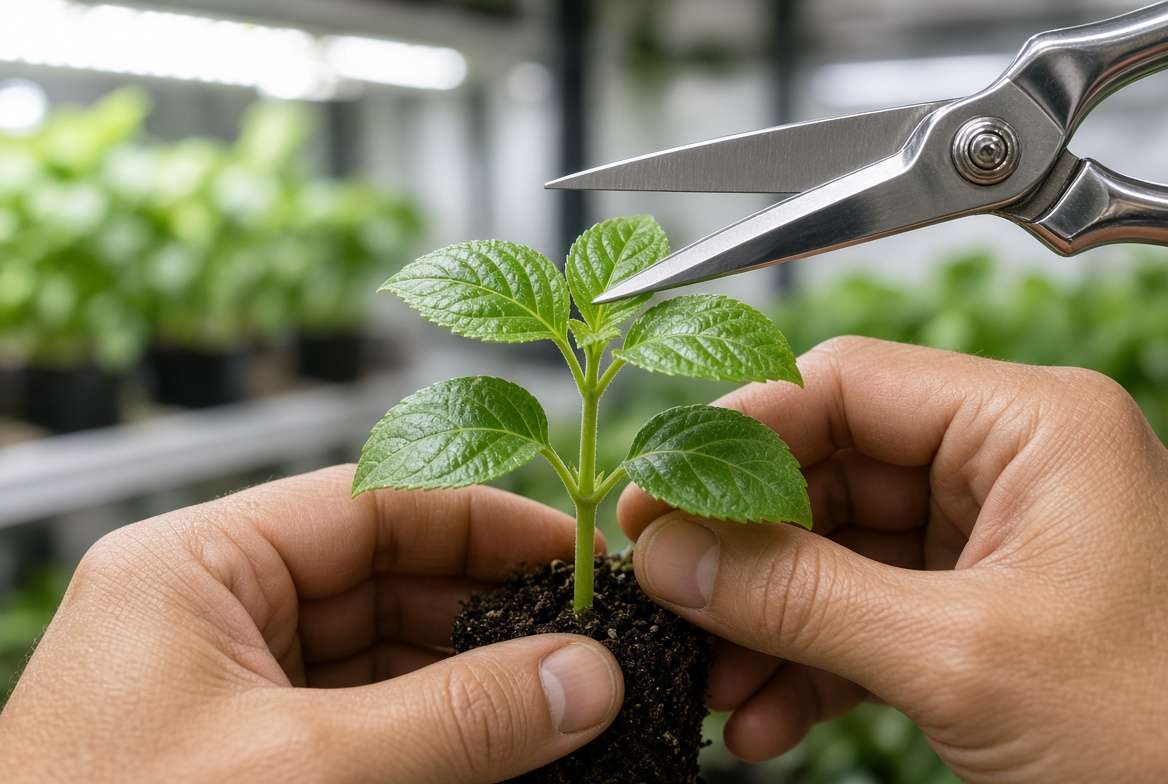
The Industry Standard: The safest and most effective time to top your plant is when it has developed between three to five healthy nodes (not counting the cotyledons, which are the initial seedling leaves).
-
Why Not Earlier? If you top a plant when it only has one or two nodes, its root system is still fragile and underdeveloped. Removing the main growth tip this early severely stunts the seedling, often stunting it permanently.
-
Why Not Later? If you wait until the plant has seven, eight, or nine nodes, you have allowed the plant to waste massive amounts of energy growing vertical stalk material that you are just going to throw away. Furthermore, the lower branches you are trying to expose to light may have already become heavily shaded and weak.
When making the cut, aim to snip the main stem just above the 3rd or 4th node. Leave a small stump (about a quarter-inch) above the node to prevent the stem from splitting as the two new main branches grow and thicken.
Plant Health Check 🏥
Node count is important, but overall plant vitality is the ultimate deciding factor.
-
Pro Tip 🧤: Never top a sick, underwatered, or pest-infested plant, regardless of its age or node count. High-stress training requires a vigorous, healthy subject. If your plant is suffering from nutrient lockout, root rot, or spider mites, topping it will only compound the stress and could lead to plant death. Always resolve health and environmental issues before you reach for the pruning shears.
What Happens If You Top Too Late? (The Risks) ⚠️
Ignoring the vegetative boundaries and topping a plant that has already transitioned into its flowering or fruiting stage is a catastrophic mistake for yield optimization. Here is the biological breakdown of exactly what happens when you top too late:
Severe Plant Shock and Stunted Growth 📉
When a plant enters its reproductive phase, it operates on a strict biological countdown. It no longer has the time or the hormonal drive to generate new structural branches. If you sever the main stem during this phase, you cause severe hormonal confusion. The auxins (growth hormones) normally responsible for lateral branching are no longer actively being produced at high vegetative levels.
Instead of aggressively growing two new colas, the plant is forced to halt all flower or fruit production to heal a massive structural wound. This shock can stall growth for weeks—time the plant desperately needs for bud and fruit swelling.
Drastically Reduced Yields 🍅
The most heartbreaking result of late topping is yield destruction. The apical bud (the very top growth tip) you cut off was destined to become the largest, most potent flower or fruit cluster on the entire plant.
In the vegetative stage, cutting this off is a strategic trade: you sacrifice one main cola to gain multiple slightly smaller ones. But in the flowering stage, the plant cannot grow those new colas. You have simply amputated your best harvest without gaining any lateral growth in return.
Increased Vulnerability to Disease 🦠
The flowering stage often requires higher humidity management, and mature flowers/fruits are dense structures that naturally restrict airflow. When you create an open, oozing wound on the main stalk late in the plant’s life, you are rolling out the red carpet for pathogens.
Fungal infections like Botrytis (bud rot) and powdery mildew thrive on open plant wounds. Furthermore, the stressed plant emits distress signals (volatile organic compounds) that can attract sap-sucking pests like aphids and thrips right as your harvest is trying to ripen.
“I Waited Too Long!” Alternative Methods for Late Stages 🛠️
If you missed the vegetative window and your plant is already stretching for the flowering phase, do not panic. While you must put the scissors away, there are still effective canopy management techniques you can use to increase light penetration and boost your yields without causing high-stress shock.
Low-Stress Training (LST) 🎀
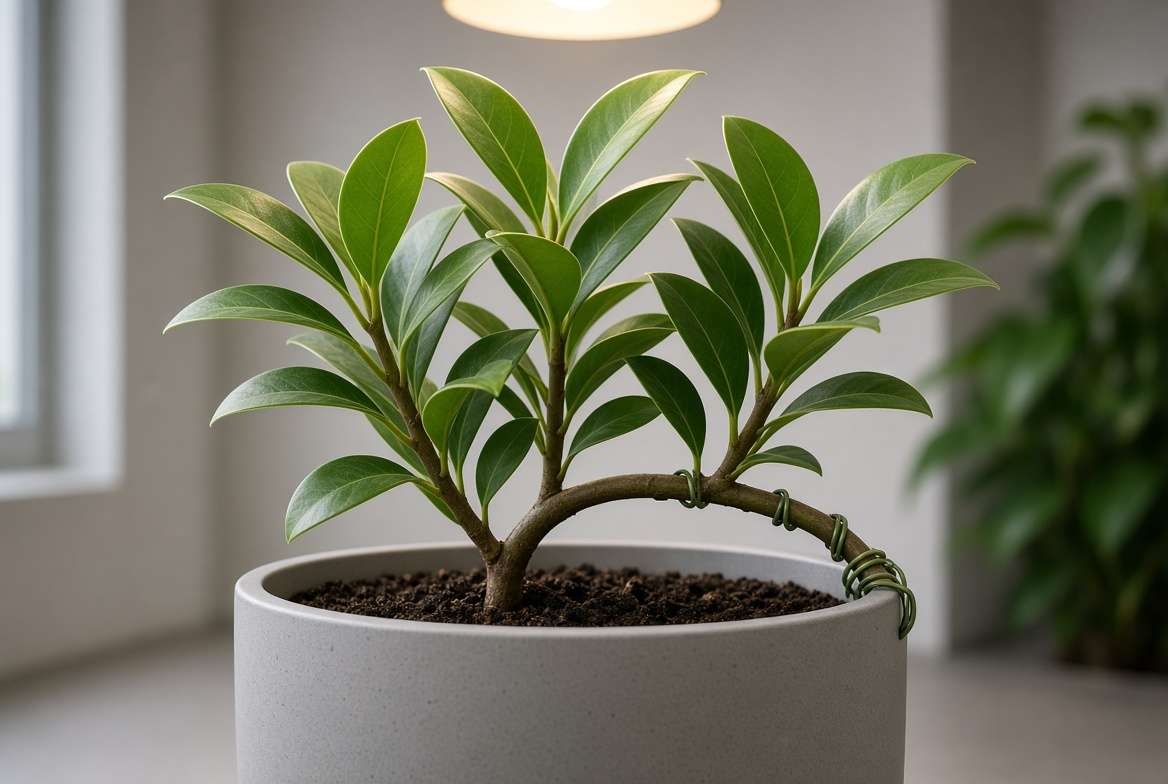
Low-Stress Training is the safest and most effective alternative to late topping. Instead of cutting the plant, you use soft plant ties, garden wire, or specialized clips to gently bend the main stem horizontally.
By pulling the tallest stem down to the same height as the lower branches, you trick the plant into thinking it has lost its apical dominance. The plant will naturally direct energy to the lower branches, evening out the canopy so that all sites receive equal light. Because there is no cutting involved, LST can be safely performed well into the early weeks of flowering without causing shock.
Strategic Defoliation ✂️
If your canopy is too dense and the lower flowering sites are severely shaded, strategic defoliation is a viable late-stage alternative. This involves carefully snipping away large, inward-facing fan leaves that are blocking light to the lower nodes.
-
The Rule of Thumb: Only remove leaves that are actively blocking bud sites or creating poor airflow in the center of the plant. Never strip a plant completely bare, as those fan leaves are the solar panels driving photosynthesis for fruit production. Defoliation is generally safe up to the middle of the flowering phase.
Super Cropping (With Caution) 💪
Super cropping is an advanced High-Stress Training (HST) technique that can sometimes be used in the very early transition phase (the “flower stretch”) if a plant is growing too close to your grow lights.
Instead of cutting the stem, you gently crush the inner herd (fibers) of the stalk between your thumb and forefinger, bending the branch at a 90-degree angle without breaking the outer skin. The plant will rebuild this knuckle, making the stem stronger and exposing the lower branches to light. Warning: This requires practice and should only be attempted by experienced growers, as accidentally snapping the outer skin late in the game can lead to branch loss.
Species-Specific Topping Timelines 🪴
The biological rules of topping are not perfectly universal; they bend depending on the specific genetics of what you are growing in your garden. Understanding the growth habits of your specific crop is a critical component of horticultural E-E-A-T (Experience, Expertise, Authoritativeness, and Trustworthiness). Here is how you should adjust your topping timeline based on plant species.
Tomatoes and Peppers 🌶️🍅
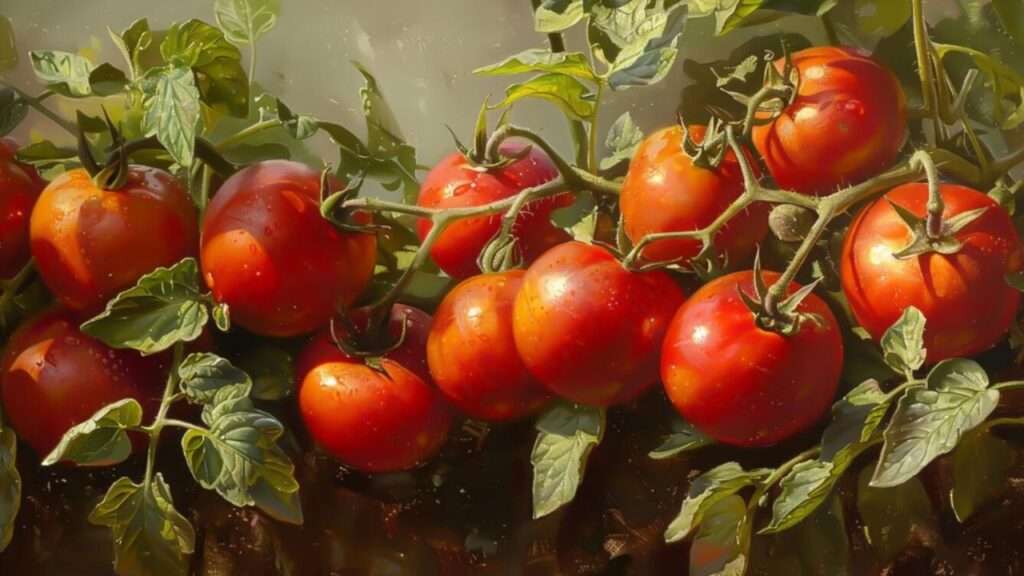
When dealing with nightshades like tomatoes and peppers, the timing and viability of topping depend entirely on whether the plant is determinate or indeterminate.
-
Determinate Varieties (Bush Types): Never top a determinate tomato or pepper plant. These genetics are biologically programmed to grow to a specific height, produce a set number of flowering branches, set their fruit all at once, and then die. If you top a determinate plant, you are literally cutting off the branches where the fruit was supposed to grow, permanently reducing your yield.
-
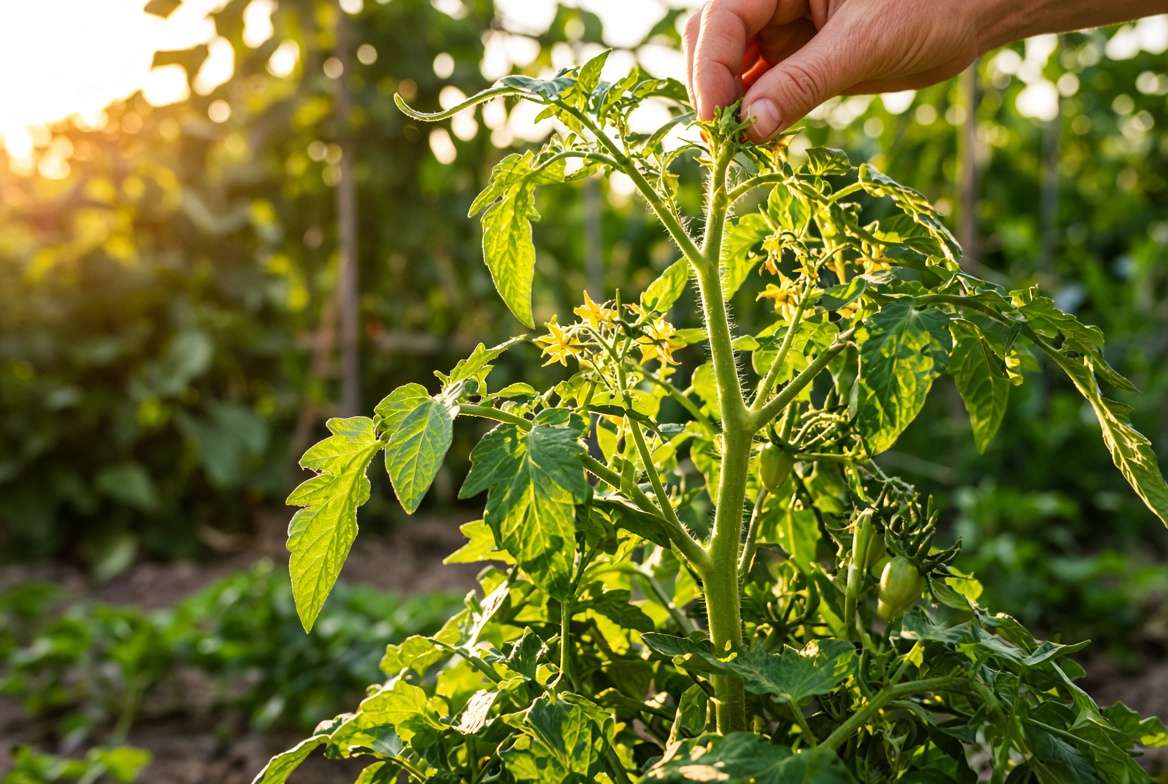
Indeterminate Varieties (Vining Types): These will grow and produce fruit continuously until frost kills them. You can top these early in the vegetative stage to create a wider bush. Interestingly, there is a second “late topping” (often called “topping off”) performed at the very end of the season. About 30 days before your first expected fall frost, you cut off the main growing tip. This stops vertical growth and forces the plant to channel all remaining energy into ripening the existing green tomatoes before the cold weather hits. ❄️
Herbs (Basil, Mint, Oregano) 🍃
Herbs are incredibly forgiving and operate on a completely different timeline than fruiting annuals. For herbs, the “leaves” are the harvest, so vegetative growth is the only goal.
-
Continuous Topping: You can (and should) top herbs almost continually throughout their life cycle. Every time you harvest a sprig of basil just above a node, you are effectively topping the plant. This prevents the herb from growing tall and woody, forcing it to remain a dense, leafy bush.
-
Preventing the Bolt: The only time it is “too late” to top an herb is when it begins to “bolt” (rapidly send up a flower stalk and go to seed). Once an herb flowers, the leaves often turn bitter. Frequent topping prevents bolting and extends the harvestable life of the plant. 🌱
Heavy-Yielding Annuals (E.g., Cannabaceae Family) 🌻
For fast-growing, heavy-yielding annuals cultivated for large floral clusters, the topping window is incredibly strict.
-
The 3-to-5 Node Rule: As discussed, topping must occur between the 3rd and 5th node.
-
Recovery Time: You must factor in a minimum of 7 to 10 days of recovery time before flipping the light cycle to 12/12 (for indoor photoperiods) or before the natural outdoor season shifts. If you top these plants and immediately force them into flowering, they will not have the structural foundation to support heavy colas, leading to snapped branches and poor bud density.
Frequently Asked Questions (FAQs) ❓
To round out your expertise as a grower, let’s address the most common troubleshooting questions regarding canopy management and pruning timing.
Can a plant recover if topped during the flowering stage? Technically, the plant will survive, but it will not “recover” in a way that benefits your harvest. Instead of growing two robust new colas, the severed stem will likely callous over, and the surrounding lateral branches will produce small, underdeveloped “popcorn” buds. The overall yield will be significantly lower than if you had simply left the main cola intact. 📉
Does topping delay the overall harvest time? Yes. Topping is a high-stress event. When you sever the main stem, the plant temporarily halts vertical growth to repair the wound and redirect hormones. This usually adds about 1 to 2 weeks to your vegetative cycle. If you are growing outdoors with a short summer season, you must factor this delay into your planting schedule to ensure your fruits have time to mature before winter. 🗓️
Should I top autoflowering plants? This is a highly debated topic among experts. Because autoflowering plants operate on a strict genetic countdown (often just 70 to 90 days from seed to harvest), they have very little time to recover from high-stress training. If you top an autoflower too late (past day 20), you will stunt it permanently. Most expert growers recommend sticking to Low-Stress Training (LST) for autoflowers. If you must top an autoflower, only do it if the plant is growing exceptionally vigorously and only at the 3rd node (usually around day 15). ⏱️
What tool is best for topping a plant cleanly? Never use dull household scissors, as they will crush the stem fibers rather than slicing them. Use a pair of razor-sharp bypass pruners or specialized bonsai snips. More importantly, always wipe the blades with 70% isopropyl alcohol before making the cut. A sterilized blade is your best defense against transmitting plant pathogens into the fresh wound. ✂️🧼
The Final Verdict: Getting your timing right is the fine line between a thriving, heavy-yielding canopy and a stressed, underperforming plant. By watching your node development, understanding your specific plant species, and respecting the transition into the reproductive cycle, you can put your pruning shears away before it’s too late. If you realize your plant has already started flowering, skip the scissors, tie down the branches with some gentle LST, and let your plant focus its energy on building a massive harvest. Happy growing! 🌻👩🌾