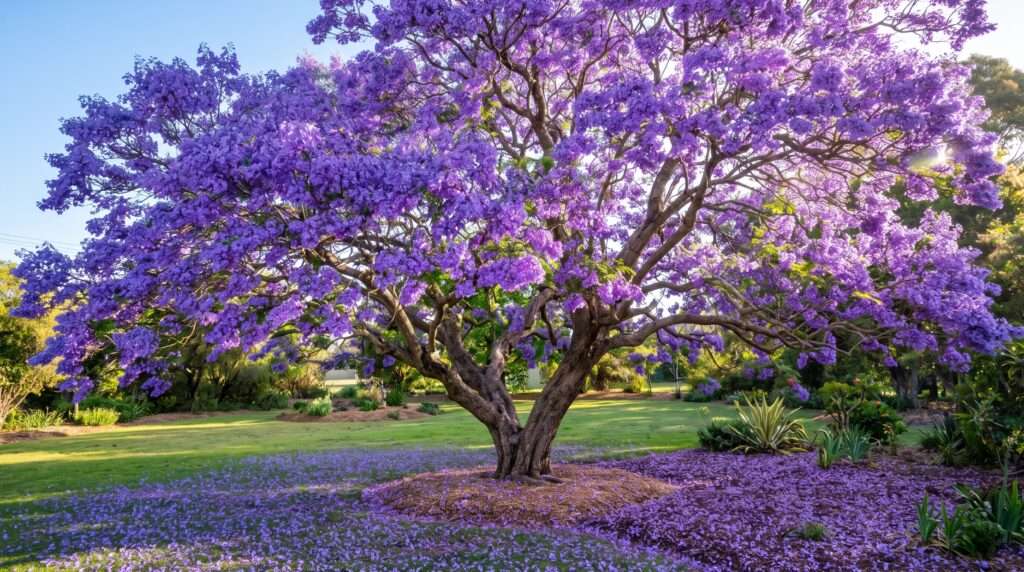
Few sights in the gardening world stop people in their tracks quite like a mature canopy of jacaranda trees erupting into a sea of electric lavender-blue. For a few magical weeks each late spring, these architectural beauties transform ordinary backyards and neighborhood streets into living postcards, blanketing the ground beneath them in a soft, violet carpet of fallen petals.
Yet for many homeowners, the reality of growing a jacaranda doesn’t always match the dream. It is surprisingly common to plant a young tree, care for it diligently, and wait year after year without seeing a single flower. Others watch helplessly as a sudden cold snap scorches the branches, or realize too late that they planted their tree right over a prized driveway or swimming pool.
As a horticulturist who has guided countless gardeners through the quirks of subtropical ornamentals, I can tell you that jacarandas aren’t difficult to grow—they are simply specific about what they need to bloom. Once you understand their natural growth rhythm, sunlight demands, and pruning window, you can coax out those breathtaking purple canopies reliably every single year.
📊 Jacaranda Tree Care Snapshot
🌿 Understanding Jacaranda Trees: What Makes Them Unique?
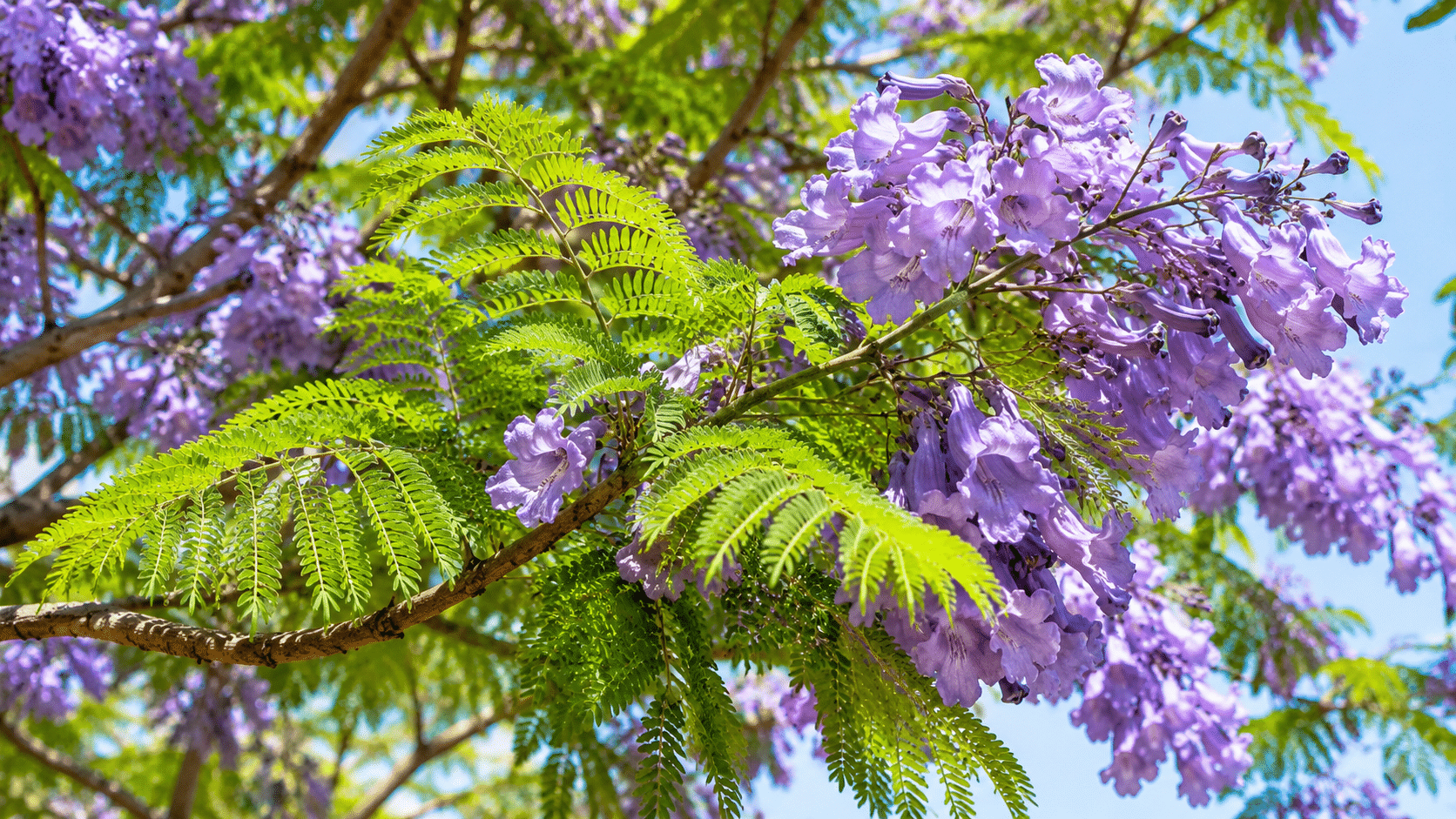
Native to the subtropical regions of south-central South America—particularly Argentina and Bolivia—Jacaranda mimosifolia has become a beloved staple in warm climates worldwide, from Southern California and Florida to South Africa and Australia. Even when not in bloom, the tree is an absolute stunner. It features delicate, feathery, fern-like bipinnate foliage that casts a light, dappled shade, making it far airier than heavy shade trees like oaks or maples.
When late spring arrives, the tree produces massive, 8-to-12-inch terminal panicles packed with tubular, trumpet-shaped violet-blue blossoms. After the flowers fade, flat, woody, disc-shaped seed pods develop and hang on the branches through winter, adding subtle architectural interest.
🍂 Don’t Panic When the Leaves Drop!
One of the most frequent questions I get from new jacaranda owners in late winter or early spring is: “Help! My jacaranda is dropping all its leaves—is it dying?”
Take a deep breath—your tree is likely doing exactly what it is supposed to do. Jacaranda trees are briefly deciduous (or semi-deciduous). Right before the flower buds swell in spring, the tree sheds its old ferny leaves so it can channel its energy into an explosive floral display. In fact, a brief leafless period in late winter is often the prelude to the heaviest blooms. Shortly after the purple flowers peak, fresh, bright green foliage emerges to fill out the canopy again.
💡 Arborist’s Insight: Seed-Grown vs. Grafted Trees
If you are shopping for a jacaranda, always ask the nursery how the tree was propagated. Seed-grown jacarandas are inexpensive and easy to find, but they have a notoriously long juvenile period—often taking 7 to 14 years to produce their first flowers. By contrast, grafted or vegetatively propagated nursery trees (grown from cuttings of mature, blooming wood) can reward you with purple blooms in just 2 to 3 years. Spending a little extra upfront saves you a decade of waiting!
📍 Choosing the Perfect Planting Site
Success with jacaranda trees starts long before your shovel hits the dirt. Because these trees grow quickly into wide, spreading umbrellas, picking the right spot on day one prevents years of headaches—and guarantees maximum flower production.
☀️ Sunlight Requirements
If you want those dense, vibrant purple blooms, full sun is non-negotiable. Your jacaranda needs a minimum of 6 to 8 hours of direct, unfiltered sunlight every single day.
While a jacaranda will technically survive in partial shade, it will stretch awkwardly toward the light, developing weak, leggy branches and sparse foliage. Worse, shaded trees almost always refuse to bloom, or produce only a handful of pale, underwhelming flowers at the very top of the canopy. Choose an open, south- or west-facing spot away from towering evergreens or two-story walls.
🌱 Soil Type and Drainage
Jacarandas are surprisingly adaptable to different soil textures, provided one golden rule is met: the soil must drain well. They thrive in sandy, loamy soils with a slightly acidic to neutral pH between 6.0 and 7.5.
Heavy, compacted clay soil that holds standing water after rain is the fastest way to kill a jacaranda, as soggy roots quickly succumb to fungal root rot. If your yard has dense clay, consider planting on a gently raised berm (12–18 inches high) to elevate the root zone and shed excess moisture away from the trunk.
🏡 Smart Placement & Mess Management
Give your tree room to stretch. Plant jacaranda trees at least 15 to 20 feet away from house foundations, underground utility lines, patios, and sidewalks. While their roots aren’t as aggressively destructive as ficus or willow roots, mature jacarandas develop wide, shallow surface roots that can slowly heave concrete walkways if crowded.
⚠️ Real-World Experience Tip: Think carefully about what sits underneath the canopy. When jacarandas finish blooming, they drop thousands of heavy, trumpet-shaped flowers all at once. If aphids are present in the canopy, their sticky honeydew mixes with the fallen petals, creating a slippery, glue-like purple mess that can stain concrete driveways, clog pool skimmers, and etch car paint if left baking in the sun.
Instead of planting over hardscapes, position your jacaranda over a wide lawn or a generous mulch bed. There, the fallen blossoms require zero cleanup and transform your yard into a dreamy, natural purple rug. 🌸
🪴 Step-by-Step Guide to Planting Jacaranda Trees
Once you’ve scouted the ideal sunny, well-drained location, proper planting technique will set your tree up for rapid root establishment and decades of vigorous growth.
🗓️ Best Time to Plant
The ideal time to plant a jacaranda tree is in spring, once all danger of frost has passed. Planting in spring gives the root system an entire warm growing season to anchor deeply into the surrounding soil before its first winter. In frost-free subtropical regions (Zones 10–11), early fall is also an excellent planting window, allowing roots to establish during mild autumn temperatures.
🕳️ Proper Planting Technique
-
Dig Wide, Not Deep: Excavate a planting hole that is 2 to 3 times wider than the nursery container or root ball, but no deeper than the root ball itself. Digging too deep causes the tree to settle over time, which can suffocate the roots.
-
Inspect the Roots: Gently slide the tree out of its pot. If you see thick roots circling tightly around the outside of the root ball (root-bound), use a clean, sharp knife or pruners to make 3–4 vertical slices about an inch deep along the sides, and gently tease the outer roots loose.
-
Expose the Root Flare: Locate the root flare—the subtle widening at the base of the trunk where the topmost roots emerge. Set the tree in the hole so this flare sits 1 inch above the surrounding soil grade. Never bury the trunk flare.
-
Backfill with Native Soil: Fill the hole back in using the original native soil you dug out, breaking up any large clods. Avoid stuffing the planting hole with rich bagged compost or potting mix; doing so creates a “bathtub effect” where roots circle inside the soft amended soil instead of venturing out into your yard.
-
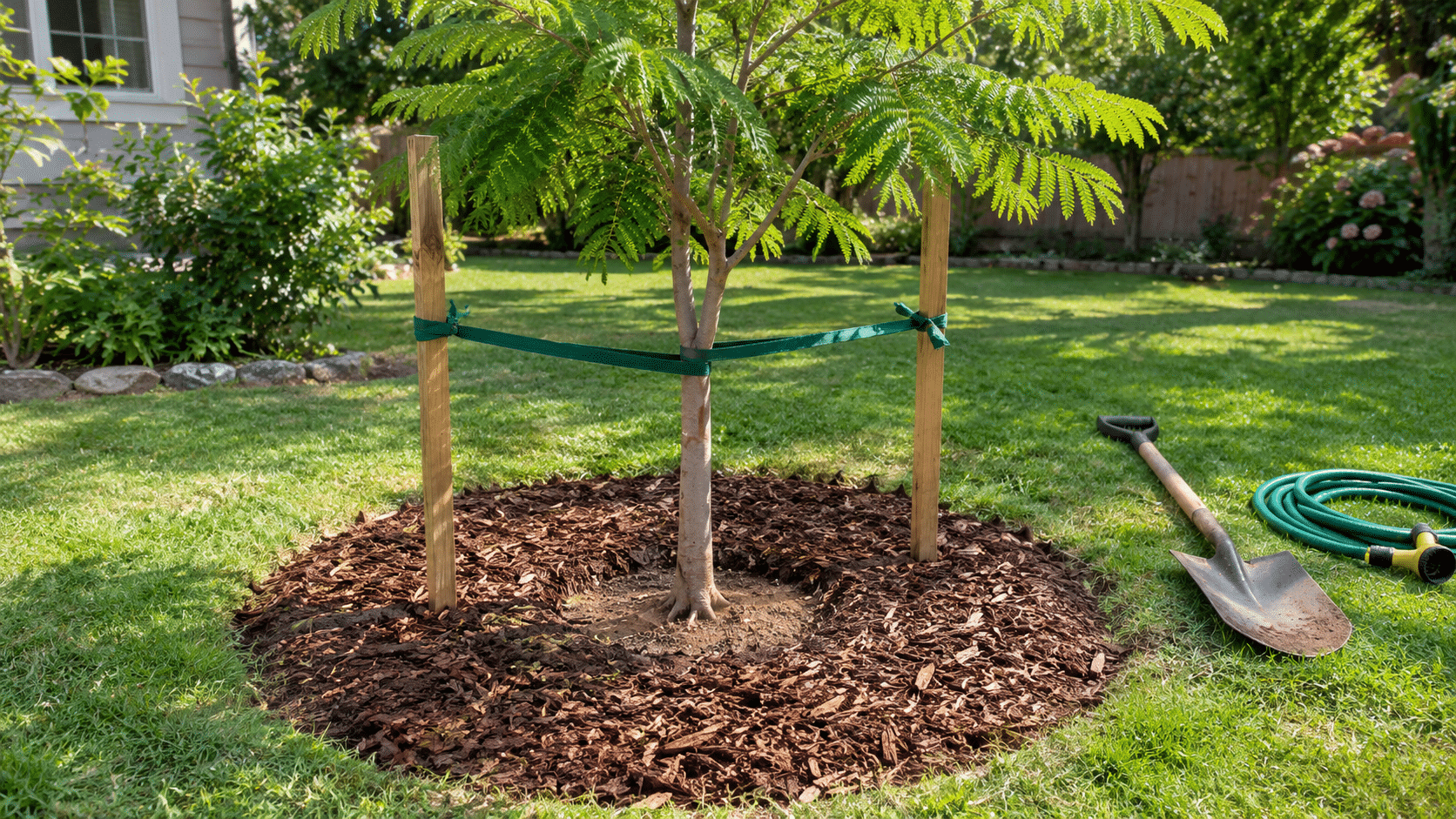
Stake Only If Necessary: Young jacarandas can be a bit top-heavy. If your site is windy and the trunk cannot stand upright on its own, drive two stakes into the solid ground outside the root ball and secure the trunk loosely with wide, flexible tree ties. Always remove stakes after 1 year so the trunk can sway in the wind and build natural strength.
💧 Initial Watering & Mulching
Immediately after backfilling, build a temporary 3-inch-tall soil berm around the outer edge of the planting hole to form a watering basin. Fill this basin slowly with water and let it soak deeply into the root zone to settle the soil and eliminate air pockets.
Finish by spreading a 2-to-3-inch layer of organic mulch (such as shredded bark or wood chips) in a wide ring extending 3 feet out from the trunk. Mulch keeps the roots cool, locks in moisture, and suppresses competing weeds. Just be sure to pull the mulch 3 to 4 inches away from the trunk itself—never pile mulch against the bark (a harmful practice known as a “mulch volcano”), as trapped moisture invites trunk rot and pests. 🌿
💜 Essential Care for Lush, Vibrant Purple Blooms
Once your jacaranda is in the ground, the secret to triggering jaw-dropping spring displays lies in mimicking its native subtropical rhythm—balancing moisture, nutrients, and smart structural pruning.
🚿 Watering Schedule: Young vs. Mature Trees
Jacaranda trees have very different hydration needs depending on their age:
-
Years 1–2 (Establishment Phase): Young trees need consistent, deep watering to encourage a strong, downward-growing root system. Water deeply 1 to 2 times per week during hot summer months, allowing the top 2–3 inches of soil to dry slightly between soakings. Avoid shallow daily sprinkling, which keeps roots trapped near the surface.
-
Mature Trees (3+ Years): Once established, jacarandas are remarkably drought-tolerant. During prolonged summer dry spells, a single deep soaking every 2 to 3 weeks is plenty to keep the foliage lush and stress-free.
💡 The Bloom Secret: In their native South American habitat, jacarandas experience a distinct dry winter followed by spring rains. Slightly tapering off supplemental watering in late winter (unless you are in an extreme drought) mimics this natural dry season and signals the tree to set heavier flower buds for spring.
🧪 Fertilizing Without Killing Your Blooms
Jacarandas are not heavy feeders, and over-fertilizing is one of the fastest ways to sabotage your flower show. Apply a balanced, slow-release granular fertilizer (such as a 10-10-10) or a low-nitrogen, bloom-boosting formula (higher in phosphorus, like 5-10-10) once in early spring just as new growth begins.
⚠️ Common Mistake: Watch out for high-nitrogen lawn fertilizers! If your jacaranda is planted in the middle of a heavily fertilized grass lawn, its wide surface roots will greedily soak up that excess nitrogen. High nitrogen pushes explosive, lush green ferny foliage—at the direct expense of purple flowers. Keep turf fertilizers at least a few feet outside the tree’s drip line.
✂️ How and When to Prune Jacaranda Trees
Pruning is where most gardeners accidentally ruin their blooms. Follow these three golden rules:
-
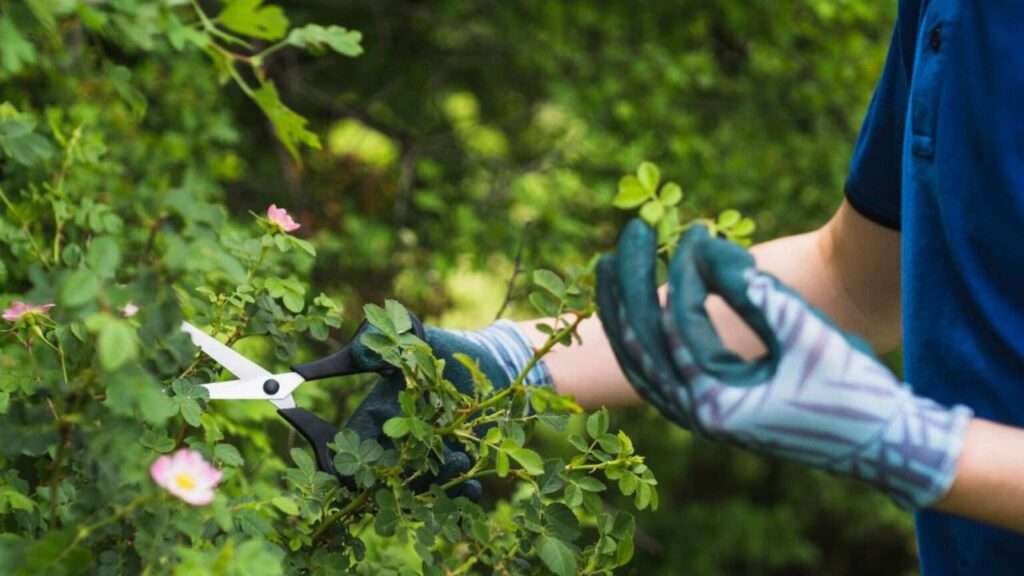
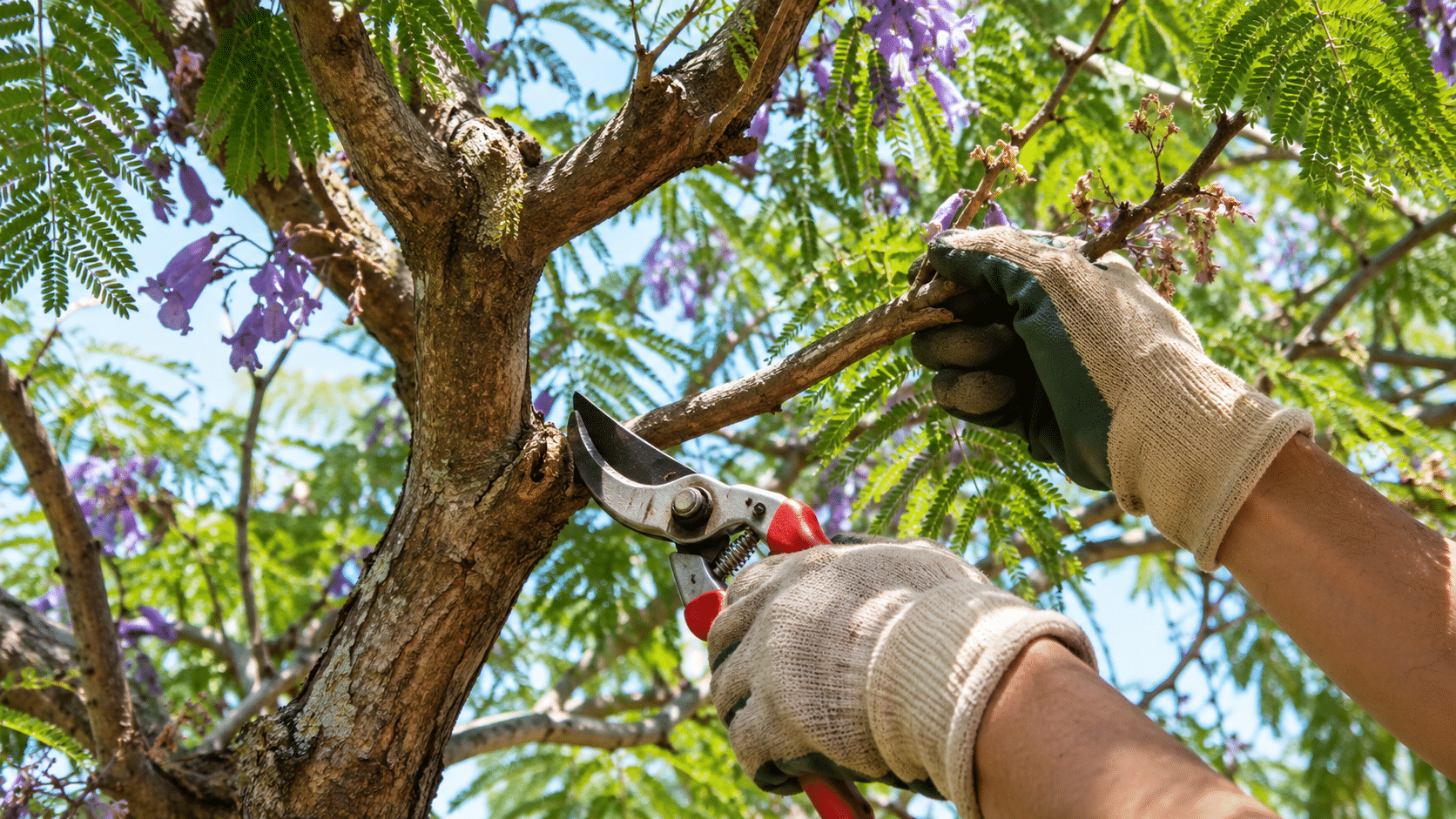
Timing Is Everything: Always prune immediately after flowering finishes in late spring or early summer. Jacarandas form their flower buds on mature wood well ahead of the next season. If you prune in fall, winter, or early spring, you are literally cutting off next year’s purple canopy.
-
Focus on Early Structure: During the first 3 to 5 years, perform light structural pruning to establish a single, strong central trunk (leader) and well-spaced main scaffold branches. Remove any dead, damaged, or crossing branches that rub against each other.
-
🚫 Never Top a Jacaranda: Never shear or “top” the main branches of a jacaranda tree to control its height. Topping shocks the tree into shooting out dozens of weak, ugly vertical branches called water sprouts. These sprouts ruin the tree’s graceful umbrella silhouette, break easily in windstorms, and rarely produce flowers.
❄️ Frost Protection & Cold Hardiness
Jacarandas thrive outdoors year-round in USDA Hardiness Zones 9b through 11. Mature, well-established trees can usually survive brief overnight dips down to 25°F (-4°C) with only minor twig dieback. However, young trees under 4 years old are far more tender and will suffer severe bark and branch damage below 30°F (-1°C).
If an unexpected freeze is in the forecast for a young tree:
-
Water the soil deeply the afternoon before the freeze (moist soil holds and radiates heat better than dry soil).
-
Drape breathable frost cloth or burlap over the canopy down to the ground to trap radiant soil heat. Never use plastic sheeting directly against the leaves, as it conducts cold and burns foliage.
-
Add gentle warmth by wrapping non-LED incandescent holiday string lights around the trunk and inner branches overnight.
🪴 Can You Grow Jacaranda Trees in Containers?
Live in USDA Zone 8 or cooler? You don’t have to miss out on the jacaranda magic! While a standard Jacaranda mimosifolia will quickly outgrow a pot, you can successfully grow dwarf cultivars in containers and overwinter them indoors.
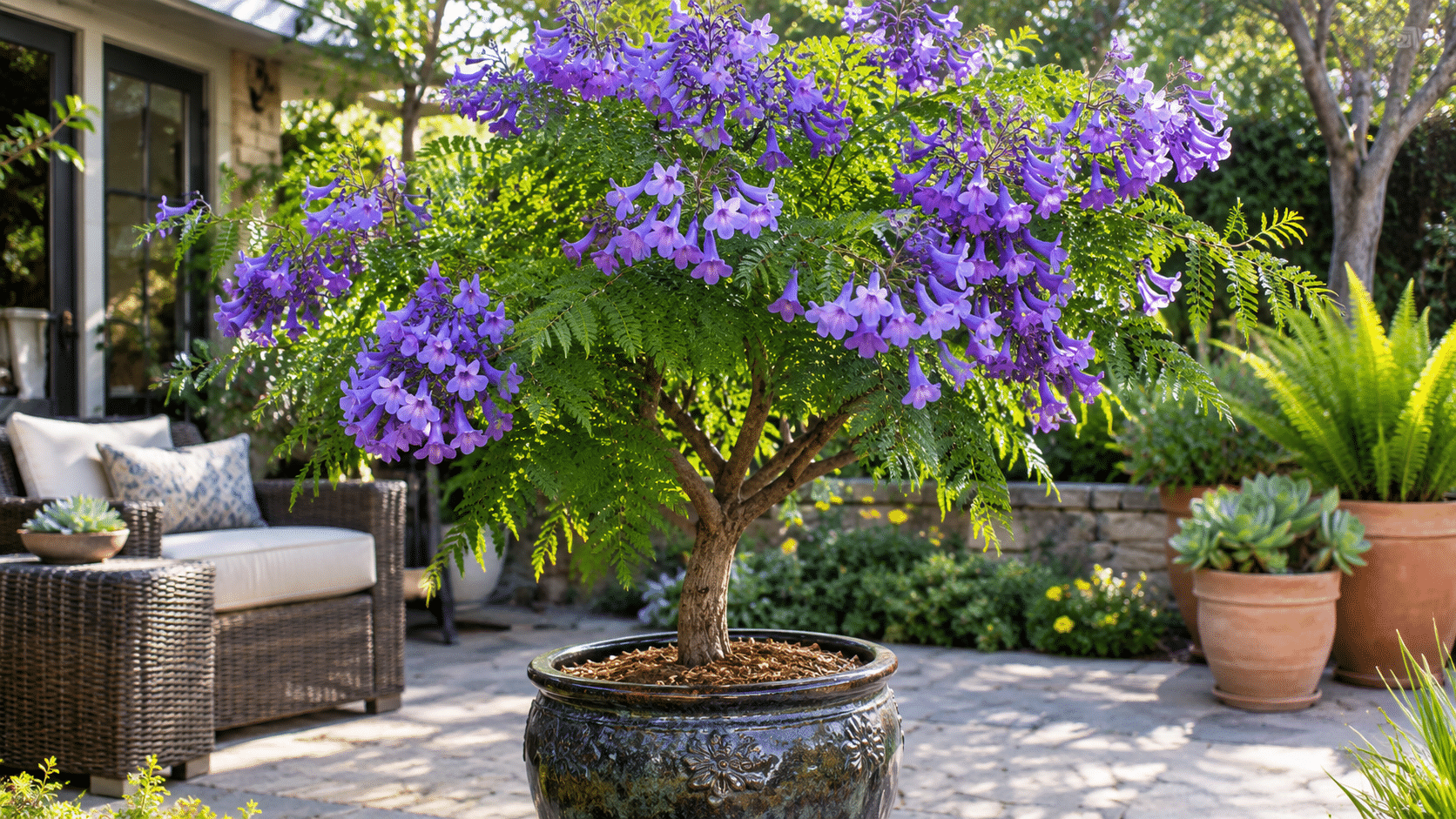
The undisputed champion for patio growing is Jacaranda mimosifolia ‘Bonsai Blue’. This compact dwarf variety stays around 6 to 10 feet tall in a container, features deeply saturated purple flowers, and—best of all—begins blooming at a much younger age than standard trees.
Container Care Basics:
-
Pot & Soil: Choose a heavy, 18-to-24-inch container with ample drainage holes. Fill it with a fast-draining potting mix amended with extra perlite or pumice.
-
Summer Placement: Keep the pot on your sunniest, warmest patio or deck during spring and summer. Container trees dry out faster than in-ground trees, so check the soil moisture every 2–3 days.
-
Overwintering: Before nighttime temperatures drop below 40°F (4°C), move your potted jacaranda into a bright, cool sunroom, greenhouse, or near a sunny south-facing window. Cut back on watering during winter—just enough to keep the root ball from going bone-dry—and move it back outside once spring frosts have passed. 🏡
🔍 Troubleshooting: Why Isn’t My Jacaranda Tree Blooming?
If spring rolls around and your jacaranda is nothing but green leaves, run through this quick diagnostic checklist to pinpoint the culprit:
-
⏳ Immaturity: If your tree was grown from seed, it may simply not be old enough yet (remember, seed-grown trees can take 7–14 years to mature). Patience is the only cure here.
-
🌿 Excess Nitrogen: Lush, dark-green, rapidly growing leaves with zero flower buds almost always point to too much nitrogen from nearby lawn fertilizers. Switch to a phosphorus-rich fertilizer and hold off on feeding the grass underneath.
-
🌑 Insufficient Sunlight: Has a neighboring tree grown taller and cast afternoon shade over your jacaranda? Less than 6 hours of direct sun will dramatically reduce or halt flowering.
-
✂️ Bad Pruning Timing: If you or a landscaper trimmed the tree in late autumn or winter, the developing flower buds were likely removed before they had a chance to open.
-
🌡️ Late Spring Frosts: A sudden cold snap in late winter or early spring can silently kill tender flower buds before they swell, even if the tree’s branches look completely unharmed.
🐛 Common Pests and Diseases to Watch For
Healthy, sun-drenched jacaranda trees are tough and relatively pest-resistant, but a few common sap-sucking insects and soil fungi can occasionally cause trouble.
🐞 Pests
-
Aphids, Whiteflies, and Scale Insects: These tiny pests cluster on tender new shoots and feed on plant sap. As they feed, they excrete a clear, sticky substance called honeydew, which coats the leaves and eventually attracts black sooty mold (a harmless but unsightly surface fungus).
-
Treatment: For mild outbreaks on young trees, blast the foliage with a strong stream of water from your garden hose in the morning. For heavier infestations, spray thoroughly with insecticidal soap or cold-pressed neem oil, making sure to coat the undersides of the leaves.
🍄 Diseases
-
Root Rot (Armillaria and Phytophthora): By far the biggest threat to jacaranda trees is fungal root rot, which causes yellowing leaves, branch dieback, and mushy, blackened roots. It is almost always triggered by overwatering or planting in heavy, poorly drained clay soil.
-
🛡️ Prevention-First Approach: Once advanced root rot sets in, it is very difficult to cure. Your best defense is prevention: plant in well-draining soil, never bury the root flare, and let the soil breathe between deep waterings.
❓ Frequently Asked Questions About Jacaranda Trees
1. How fast do jacaranda trees grow?
Jacaranda trees are fast growers. In warm climates with full sun and proper watering, a young jacaranda can easily add 2 to 3 feet of height per year, quickly developing into a substantial shade tree within 5 to 7 years.
2. Do jacaranda trees have invasive roots?
They do not have aggressively invasive, pipe-crushing roots like willows or ficus trees, but mature jacarandas do develop wide, shallow surface roots. To prevent cracked sidewalks or lifted pavers, always plant them at least 15 to 20 feet away from concrete hardscapes and foundations.
3. When do jacaranda trees bloom?
In the Northern Hemisphere, jacaranda trees put on their main show in late spring to early summer (typically May through June), lasting for 4 to 8 weeks. In mild, frost-free climates, they often reward gardeners with a lighter secondary flush of purple blooms in early autumn.
4. Are jacaranda trees toxic to dogs, cats, or humans?
No! Jacaranda mimosifolia is non-toxic to dogs, cats, and humans. While eating large amounts of any fallen plant matter could cause mild tummy upset in curious pets, the tree poses no poisoning risk. The only real hazard is slipping on wet, fallen blossoms on smooth concrete.
5. Can you grow a jacaranda tree from a cutting or seed?
Yes, you can propagate them both ways. Seeds germinate readily in warm soil, making them a fun project, though you will wait many years for blooms. Taking semi-hardwood cuttings in summer from a mature, blooming tree—or purchasing a grafted nursery tree—is the fastest route to flowers.
🌸 Bringing Your Purple Canopy to Life
Growing a breathtaking jacaranda tree doesn’t require a degree in botany—just a little respect for what these subtropical showstoppers love. Give your tree full, unfiltered sunlight, plant it in well-draining soil away from driveways and pools, go easy on the nitrogen, and only prune right after the purple flowers fade.
With a bit of patience and the right care routine, you’ll be rewarded every late spring with one of nature’s most unforgettable floral displays right in your own backyard.
What USDA growing zone are you in, and are you planting your first jacaranda or trying to coax blooms out of an older tree? Share your experience or questions in the comments below—I’d love to help you get those purple blooms bursting! 💜🌿