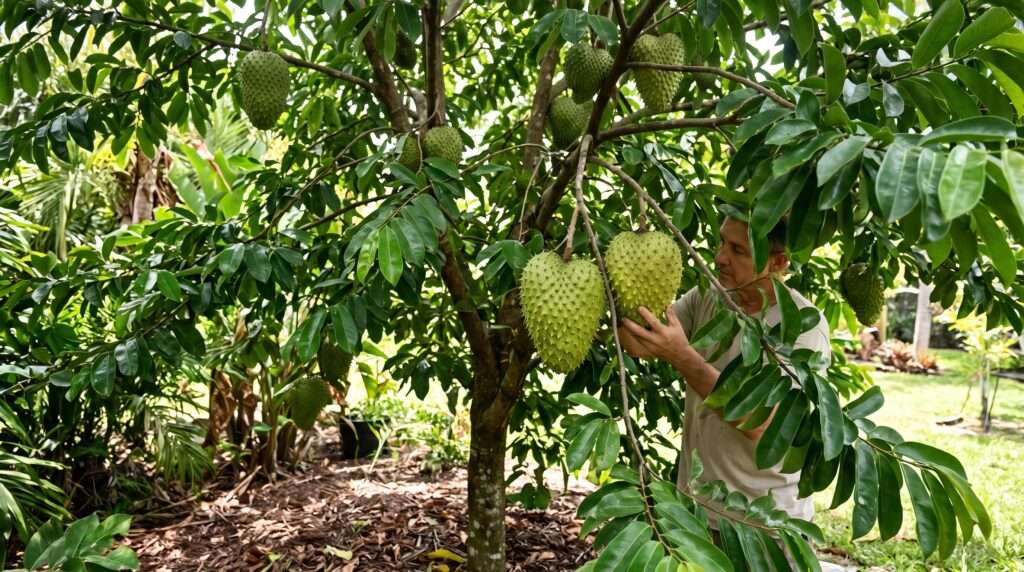
If you have ever grown a guanabana tree, you probably know the heartbreak of watching it burst into dozens of thick, creamy-yellow blooms—only to watch every single flower turn brown and drop to the ground without leaving a single fruit behind. It is easily the #1 frustration among tropical fruit growers. You water it, feed it, protect it from the wind, and give it prime real estate in your yard, yet it refuses to reward you with that sweet, tangy, custard-like soursop harvest.
Here is the good news: getting a guanabana tree (Annona muricata) to fruit isn’t a matter of luck, magic, or waiting a decade. In almost every case, a healthy tree that refuses to set fruit is missing just two things—a consistent tropical microclimate and one simple, 60-second morning habit called hand pollination.
In this complete guide, we will walk through everything you need to know about soursop tree care, from choosing between seeds and grafted trees to mastering soil drainage, preventing cold shock, and hand-pollinating your blooms for heavy, symmetrical fruit.
⚡ Guanabana Tree Quick Care Snapshot
| Care Factor | Ideal Requirement |
| Botanical Name | Annona muricata (Soursop, Graviola, Guyabano) |
| USDA Hardiness Zones | 10b–11 (grown in containers in cooler zones) |
| Sunlight | 6–8 hours of direct, unfiltered sunlight daily |
| Soil Type & pH | Well-draining sandy or loamy soil; pH 5.5–6.5 |
| Watering | Deeply 2–3 times per week while establishing; never soggy |
| Time to Fruit | 2–3 years (grafted) | 3–5 years (from seed) |
| Mature Height | 15–30 feet in-ground (easily pruned to 8–12 feet) |
What Is a Guanabana Tree? (Quick Botanical Breakdown) 🌿
Before diving into planting and care, it helps to clear up one of the biggest points of confusion at local plant nurseries: guanabana, soursop, graviola, and guyabano are all the exact same tree. Scientifically classified as Annona muricata, this broadleaf evergreen belongs to the Annonaceae (custard apple) family, making it a close botanical cousin to the cherimoya, sugar apple, and pawpaw.
-
💡 Nursery Pro Tip: Because different regions use different common names, some specialty nurseries actually price the exact same Annona muricata sapling differently depending on whether the tag says “Graviola,” “Soursop,” or “Guanabana.” Always check the botanical name on the label so you don’t overpay.
Native to the tropical Americas and the Caribbean, the guanabana tree is prized for its glossy, dark-green, aromatic leaves and its massive, heart-shaped green fruits covered in soft, pliable spines. Left unpruned in ideal tropical soil, a mature tree can reach 25 to 30 feet tall. However, home growers can easily maintain it at a manageable 8 to 12 feet. Underneath the soil, it develops a relatively shallow, fibrous root system, which means it responds quickly to surface mulching and feeding—but also dries out or suffocates fast if soil conditions are wrong.
Seed vs. Grafted: Choosing the Right Guanabana Tree 🌱
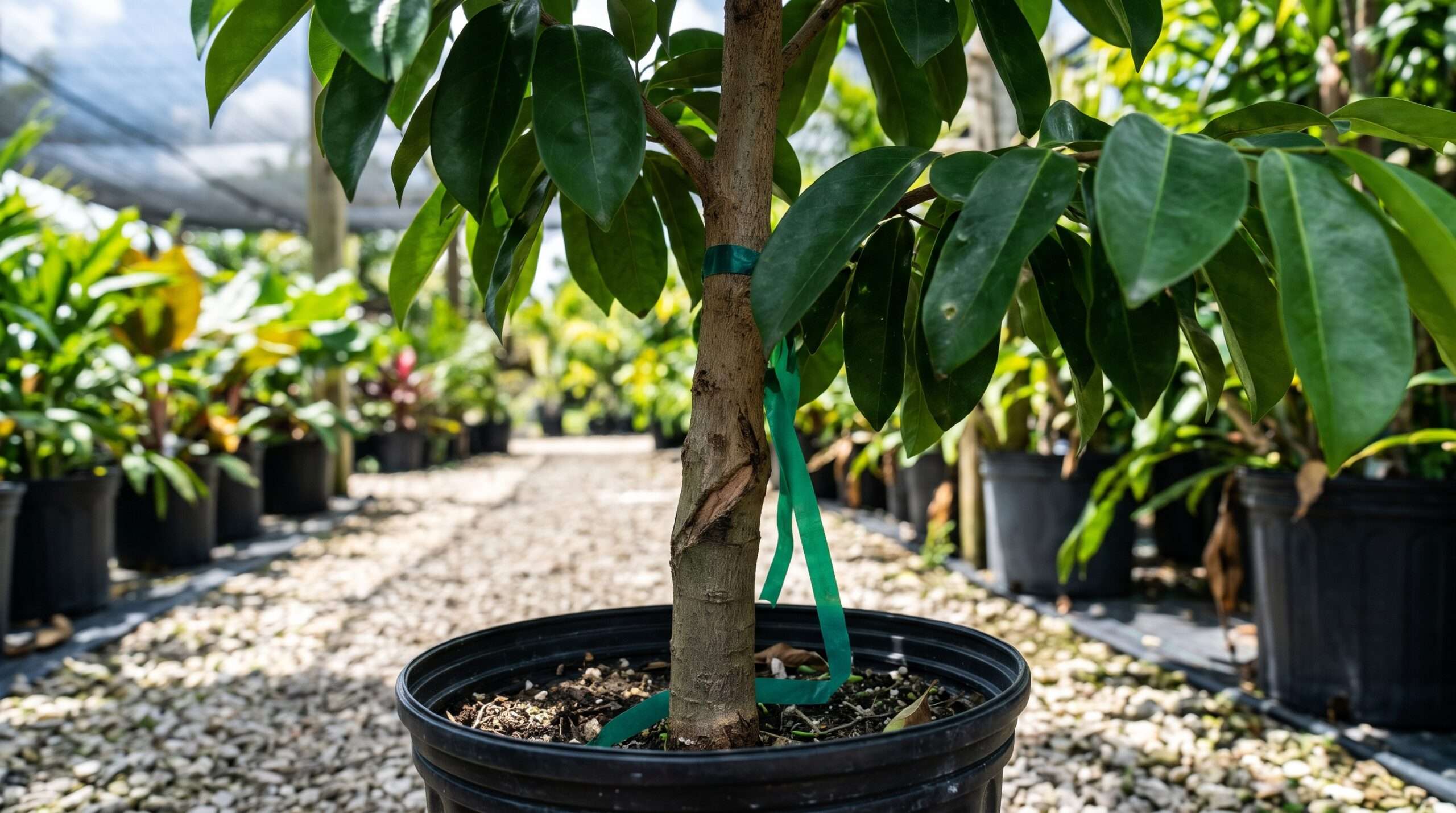
Your journey starts with a major decision: should you sprout a fresh seed from a store-bought fruit, or invest in a grafted nursery tree? Both work, but they offer very different timelines.
Growing from Seed (Patience Required)
Guanabana seeds are surprisingly easy to germinate. Fresh seeds rinsed clean and planted half an inch deep in warm, moist seed-starting mix typically sprout within 15 to 30 days, provided soil temperatures stay between 75°F and 85°F (24°C–29°C).
The trade-off is time and genetics. A seedling guanabana tree takes 3 to 5 years to reach flowering maturity, and because it isn’t a clone of the parent tree, the fruit quality, sweetness, and yield can vary. Some seedlings produce incredible, sweet-tart fruit; others produce smaller, more fibrous fruit.
⚠️ Crucial Safety Warning: Guanabana seeds contain a toxic, non-drying irritant oil (along with annonacin compounds) that can cause severe eye inflammation and stomach upset if ingested. Always wash your hands thoroughly with soap and water after handling fresh seeds, never rub your eyes while cleaning them, and keep seeds out of reach of children and pets.
Buying a Grafted Tree (The Fast Track)
If you want guaranteed flavor and a faster harvest, buy a grafted tree from a reputable tropical fruit nursery. Grafted trees are cloned from proven, heavy-bearing mother trees—such as the popular ‘Cuban Fiberless’ or ‘Whitman Fiberless’ varieties—and often begin flowering and fruiting in just 2 to 3 years.
-
💡 Rootstock Insight: When buying a grafted guanabana tree, ask the nursery what rootstock was used. According to university agricultural extension trials (including UF/IFAS), guanabana grafts best onto its own seedling rootstock, pond apple (Annona glabra), or custard apple (Annona reticulata). Avoid trees grafted onto sugar apple (Annona squamosa) or cherimoya, as these combinations often suffer from delayed graft incompatibility and tend to be short-lived.
Essential Guanabana Tree Care Requirements ☀️💧
Once your tree is in the ground or a pot, success comes down to mimicking the warm, humid, well-drained conditions of the lowland tropics.
Sunlight & Wind Protection
Your guanabana tree needs 6 to 8 hours of direct sunlight every day to build the energy required for heavy flowering. While young saplings appreciate a bit of dappled afternoon shade during scorching heatwaves, mature trees placed in partial shade will grow leggy, produce sparse blooms, and rarely set fruit.
Equally important is wind protection. Guanabana wood is relatively brittle, and the large, heavy fruits can easily snap branches during gusty storms. Even more frustrating, dry, steady winds dehydrate the delicate flowers and knock them off the tree before pollination can happen. Plant your tree on the sheltered south or southeast side of a house, fence, or dense hedge.
Temperature & Cold Hardiness
Among the Annona family, the guanabana is by far the most cold-sensitive. It thrives in temperatures between 70°F and 90°F (21°C–32°C) with moderate-to-high humidity.
-
Below 45°F (7°C): Growth stalls and the tree may shed leaves.
-
Below 41°F (5°C): Visible leaf burn and twig dieback begin.
-
32°F (0°C) and below: Even a brief frost can kill young trees outright and severely damage mature wood.
If you live outside USDA Zones 10b–11, plan to grow your tree in a movable container or inside a heated greenhouse.
Soil & Mulching
If there is one rule you cannot break in soursop tree care, it is this: never let the roots sit in standing water. Guanabana trees thrive in loose, well-draining sandy or loamy soil with a slightly acidic to neutral soil pH of 5.5 to 6.5. If your yard has heavy clay, plant the tree on a raised mound (12 to 18 inches high) amended with coarse sand, pine bark fines, and aged compost.
Because the root system is shallow, apply a 3-to-4-inch layer of organic mulch (such as wood chips, shredded leaves, or pine straw) around the drip line. Keep the mulch pulled back 4 to 6 inches from the main trunk to prevent collar rot. Mulch keeps the roots cool, locks in even moisture, and feeds beneficial soil microbes as it breaks down.
Watering Schedule
During the first year, water deeply 2 to 3 times per week, allowing the top 1 to 2 inches of soil to dry out slightly between waterings. Once established, mature in-ground trees are moderately drought-tolerant, though consistent moisture during flowering and fruit swelling is essential—drought stress during fruit set will cause your tree to abort its crop.
-
🔍 How to Read Your Tree: Your guanabana leaves will tell you exactly what is wrong with your watering routine. Yellowing, limp leaves that drop easily almost always point to overwatering or poor drainage. Crispy, brown, upward-curling leaf edges signal underwatering or extreme heat stress.
Fertilizing for Flowers, Not Just Leaves
Guanabana trees are moderate-to-heavy feeders during the warm growing season (spring through early autumn). Use a balanced granular fertilizer—such as an 8-3-9 or 10-10-10 tropical fruit blend—applied quarterly. Start with about 1/4 pound per application for a first-year tree, gradually scaling up to 2 to 3 pounds per application for mature, fruiting trees.
-
⚠️ Common Mistake: Avoid high-nitrogen lawn fertilizers. Excess nitrogen forces a flush of lush, dark-green foliage at the direct expense of flower buds and fruit set.
-
Micronutrient Boost: If you grow in alkaline, sandy, or limestone-rich soils (common in South Florida and coastal areas), your tree may struggle to absorb iron and magnesium, resulting in yellow leaves with green veins (interveinal chlorosis). Apply a chelated iron soil drench and a foliar kelp or micronutrient spray twice a year to keep foliage vibrant.
The Secret to Fruiting: How to Hand Pollinate Your Guanabana Tree 🖌️🌸
If your guanabana tree is healthy, receives plenty of sun, and produces dozens of flowers that simply dry up and fall off, pollination is almost certainly your bottleneck.
Why Your Guanabana Tree Blooms But Never Fruits
Guanabana flowers exhibit a fascinating botanical trait called protogynous dichogamy. In plain English, each flower has both female and male reproductive parts, but they are not active at the same time.
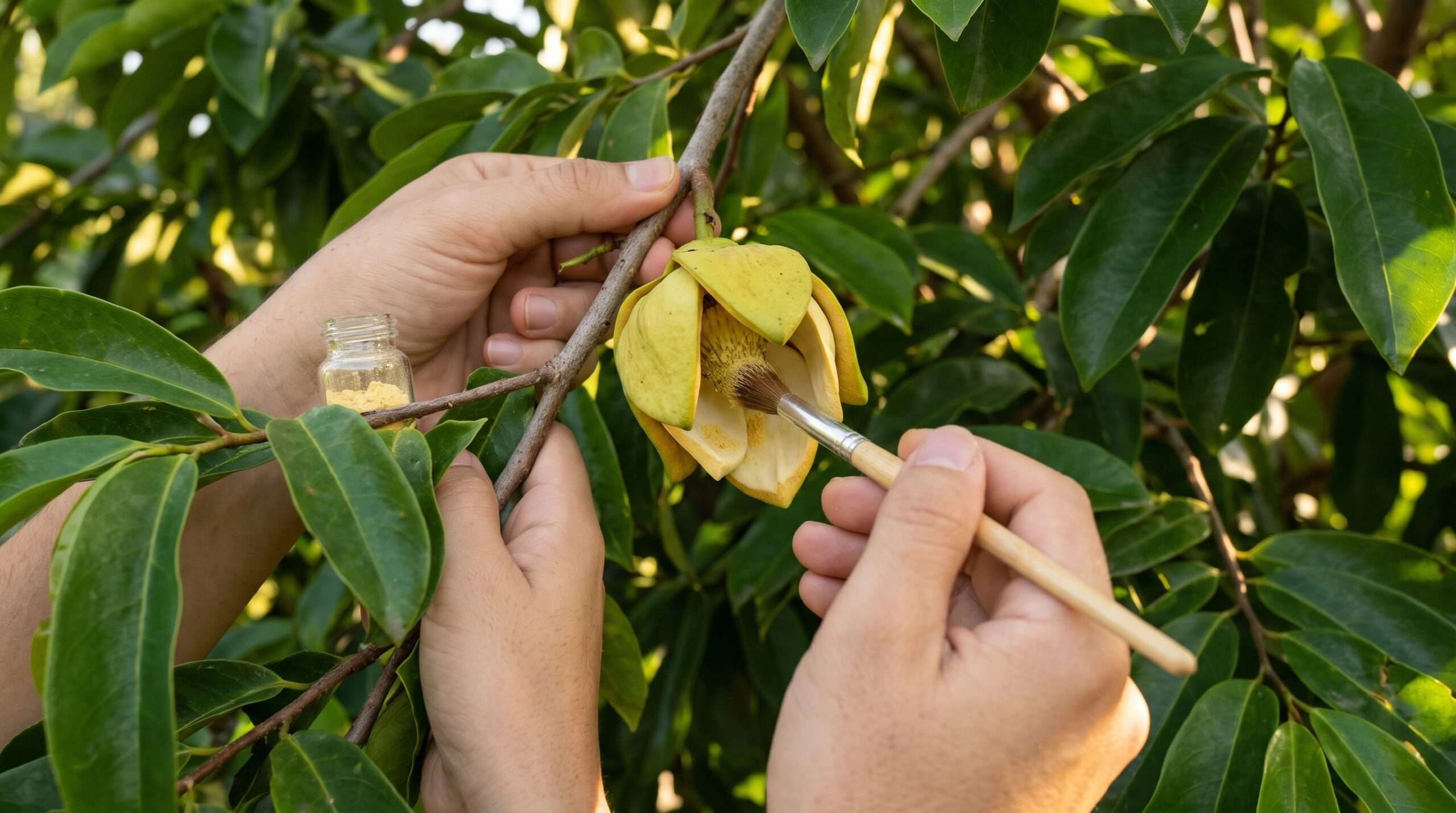
When a flower first opens, it is in its female stage—the sticky central stigma is receptive to pollen, but its own anthers haven’t released any pollen yet. Later, as the flower opens wider, the female stage ends and the male stage begins, shedding abundant yellow pollen. Because the two stages rarely overlap on the same flower, self-pollination is difficult.
In its native tropical rainforests, tiny nitidulid beetles (Carpophilus species) crawl inside the fragrant flowers to feed, inadvertently carrying pollen from older male-stage flowers to fresh female-stage flowers. In most suburban yards, patios, and greenhouses, those specific beetles simply aren’t there. That is where you step in.
Step-by-Step Hand Pollination Guide
Hand-pollinating a guanabana tree takes less than two minutes once you learn to spot the two flower stages.
Tools Needed:
-
A small, soft-bristled artist’s paintbrush (size 2 to 4 works best)
-
A small, clean glass jar, pill bottle, or film canister
-
Optional: A piece of colored yarn or garden twine to mark pollinated blooms
Step 1: Collect Pollen in the Late Afternoon (4:00 PM – 6:00 PM) Look for older flowers whose thick, outer petals have opened wide and started to loosen. Gently tap the flower over your small container, or use your paintbrush to sweep the powdery yellow pollen from the base of the petals into the jar. Seal the container and store it in a cool, dry place (or the vegetable crisper drawer of your refrigerator) overnight.
Step 2: Locate Female-Stage Flowers the Next Morning (7:00 AM – 10:00 AM) Head back to your tree early the next morning. Look for fresh flowers where the outer petals have just barely parted, forming a small triangular opening. If you gently peek inside, the central cone (the stigma) will look slightly glossy and sticky.
Step 3: Brush Evenly Around the Entire Cone Dip your paintbrush into the collected pollen. Gently insert the brush into the partially open female flower and dab pollen evenly across every side of the central cone. Take an extra five seconds to coat it thoroughly.
Step 4: Track Your Success Tie a loose piece of colored string around the stem of each flower you pollinate. Within 7 to 10 days, successfully pollinated flowers will drop their outer petals while the central cone stays firmly attached, turns bright green, and begins to swell into a baby soursop.
-
💡 Expert Insight: Ever seen a lumpy, crooked, or lopsided guanabana fruit? That happens because of incomplete pollination. A guanabana is an aggregate fruit made of dozens of fused carpels. Every single carpel must receive a grain of pollen to swell properly. Even brush coverage equals heavy, symmetrical, picture-perfect fruit!
Growing a Guanabana Tree in a Container (For Cooler Climates) 🪴❄️
You don’t need to live in Miami, Hawaii, or the Caribbean to harvest fresh soursop. Guanabana trees adapt surprisingly well to container culture, provided you manage pot size and winter warmth.
-
Pot Size & Soil Mix: Start young trees in a 5-gallon pot and step up gradually to a 20-to-25-gallon container (fabric grow bags or heavy nursery pots with ample drainage holes work great). Use a chunky, fast-draining potting mix—combine high-quality potting soil with 25% perlite and 25% fine pine bark.
-
Overwintering Indoors: Move your tree indoors before nighttime temperatures dip below 45°F (7°C). Place it next to your brightest south-facing window, or supplement with a full-spectrum LED grow light for 10 to 12 hours a day. Always set the pot on a wheeled plant caddy or wooden blocks to keep the roots off freezing concrete floors.
-
Managing Indoor Humidity: Winter indoor air is notoriously dry. Run a small room humidifier nearby or set the pot on a wide pebble tray filled with water. Don’t panic if your tree drops 20% to 30% of its leaves indoors—this is a normal stress response to lower light and humidity, and it will flush back out vigorously in spring.
-
Container Feeding: Frequent watering flushes nutrients out of potting mix faster than garden soil. Feed container trees at half-strength twice as often during spring and summer, and pause fertilizing completely during the winter months.
Pruning & Training for Easier Harvesting ✂️🌳
A single ripe guanabana fruit can easily weigh 5 to 10 pounds. If your tree grows 25 feet tall, harvesting becomes a dangerous ladder-balancing act—and a 10-pound fruit dropping from the top of the canopy will burst open on impact.
-
When to Prune: Prune once a year, either immediately after your main harvest or in early spring just as new growth begins to push.
-
How to Prune: Start by removing any dead, diseased, or crossing interior branches to open up the center of the canopy for airflow and sunlight. Trim off any vigorous vertical shoots (suckers) sprouting from the base of the trunk, especially below the graft union.
-
Height Control: Once the tree reaches 6 to 8 feet, head back the tallest upright branches to encourage a wide, spreading, vase-shaped canopy. Keeping your tree capped at 8 to 12 feet makes hand-pollinating, bagging fruit, and harvesting effortless.
Common Pests, Diseases & Troubleshooting 🐛🩺
Even well-cared-for tropical trees run into occasional pests and fungal issues, especially in humid weather. Use this quick diagnostic table to catch problems early:
| Problem | Symptoms to Watch For | Proven Organic Fix |
| Annona Seed Borer | Tiny black entry holes on developing fruit; internal tunneling and premature rotting. | Slip breathable organza or biodegradable fruit bags over baby fruits as soon as they reach golf-ball size. |
| Anthracnose (Fungus) | Black, sunken spots on leaves, flowers, and fruit; sudden flower drop during rainy weeks. | Prune for better airflow, rake up fallen leaves/fruit, and apply a preventative copper fungicide before heavy rains. |
| Mealybugs & Scale | White cottony clusters or brown bumps on stems; sticky honeydew and black sooty mold. | Spray thoroughly with neem oil or insecticidal soap. (Warning: Never spray open flowers, as it harms pollinating beetles.) |
| Root Rot (Phytophthora) | Wilting despite wet soil, yellowing leaves, dark mushy roots, and sudden canopy decline. | Stop watering immediately, improve drainage, and consider repotting into fresh, airy mix if container-grown. |
When and How to Harvest Guanabana Fruit 🧺🍈
Knowing the exact moment to pick a guanabana is crucial. Pick it too early, and it will turn rubbery and tasteless; wait too long, and it will fall off the tree and split open.
-
Watch the Color Shift: An immature guanabana is a glossy, dark forest green. As it reaches physiological maturity, the skin loses its shine and fades to a duller, lighter yellowish-green.
-
Check the Spines: Look closely at the soft, fleshy spines covering the fruit. As the fruit swells to full size, the spines spread further apart and feel slightly softer at the tips.
-
The Gentle Touch Test: Cup the fruit in your palm and apply gentle thumb pressure. It should still feel mostly firm, with just the slightest hint of give.
-
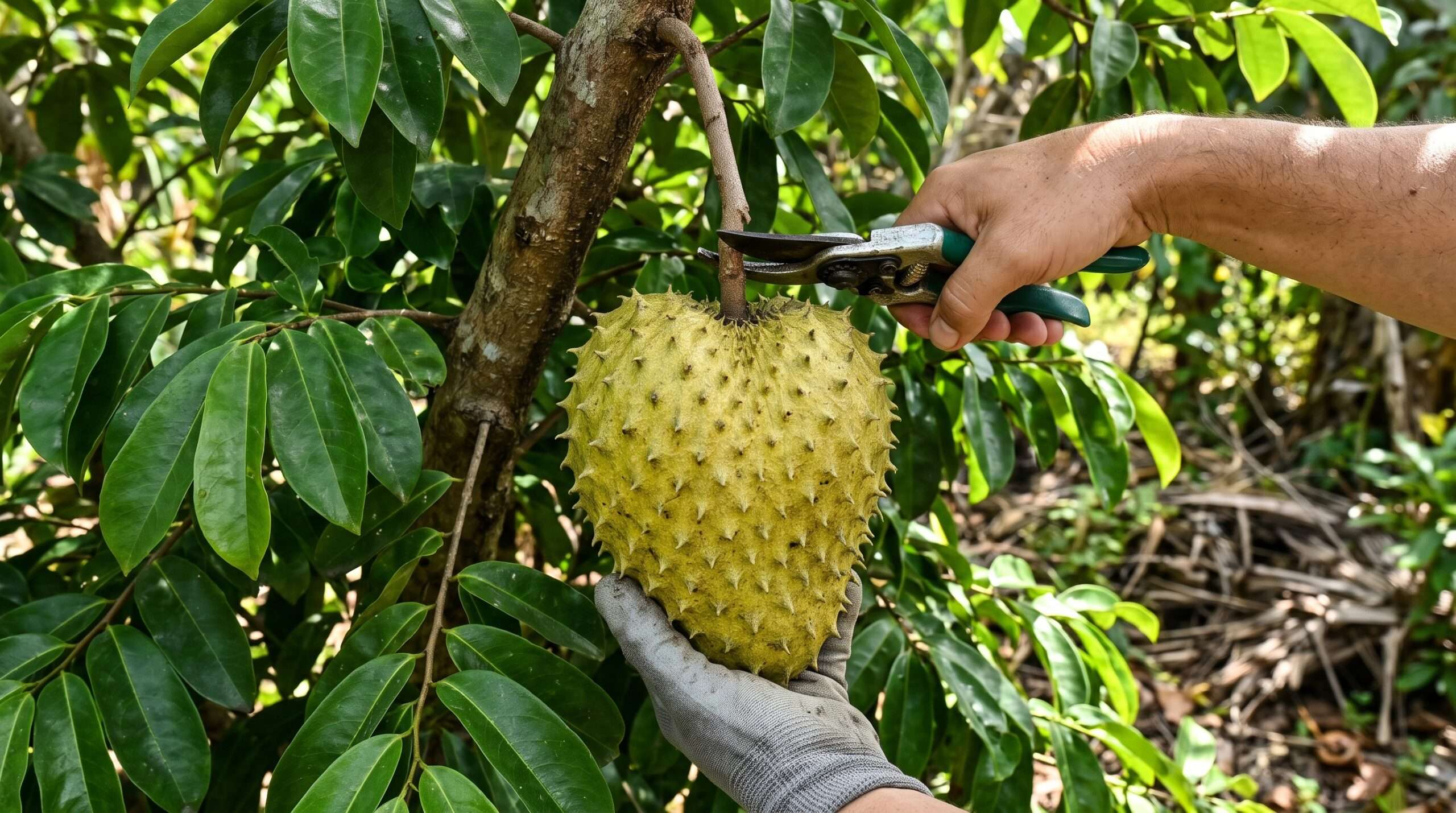
Cut—Don’t Pull: Always harvest using clean, sharp pruning shears, leaving about an inch of stem attached to the fruit. Yanking the fruit off the branch tears the skin and causes rapid rotting.
Bring your harvested fruit inside and set it on your kitchen counter at room temperature. Within 2 to 4 days, it will soften to the texture of a ripe avocado, filling your kitchen with an unmistakable sweet, pineapple-strawberry aroma. Slice it open, remove the dark seeds, and enjoy!
Frequently Asked Questions (FAQs) ❓💬
How fast does a guanabana tree grow?
Under warm, sunny tropical conditions with regular watering and feeding, a guanabana tree is a fast grower, easily putting on 2 to 3 feet of new height per year during its first three years before slowing down to focus its energy on flowering and fruiting.
Is a guanabana tree self-fertile?
Technically, yes—you only need one guanabana tree to get fruit because each flower contains both male and female parts. However, because those parts mature at different times, natural pollination rates are often low in home gardens. Hand pollination dramatically increases your fruit set.
Why are my guanabana tree leaves turning yellow and falling off?
Yellowing leaves are usually caused by one of three culprits: overwatering (the most common cause), a cold snap below 45°F (7°C), or an iron/magnesium deficiency if your soil pH is too high. Check soil moisture first before adding fertilizer.
Can you grow a guanabana tree indoors year-round?
Yes, you can grow a dwarf or heavily pruned guanabana tree indoors year-round next to a bright south-facing window supplemented with strong full-spectrum grow lights. However, moving the container outdoors during warm summer months will significantly boost flowering and fruit production.
✨ Final Takeaway
Growing a guanabana tree is one of the most rewarding projects any tropical fruit lover can take on. Once you dial in fast-draining soil, protect your tree from chilly nights, and spend a couple of peaceful mornings hand-pollinating its blooms, a single healthy tree can reward you with dozens of creamy, 5-to-10-pound soursops every single year.
What USDA growing zone are you in, and have you tried hand-pollinating your guanabana tree yet? Drop a comment below with your questions or progress—I’d love to help you get your first harvest! 🌱🍈