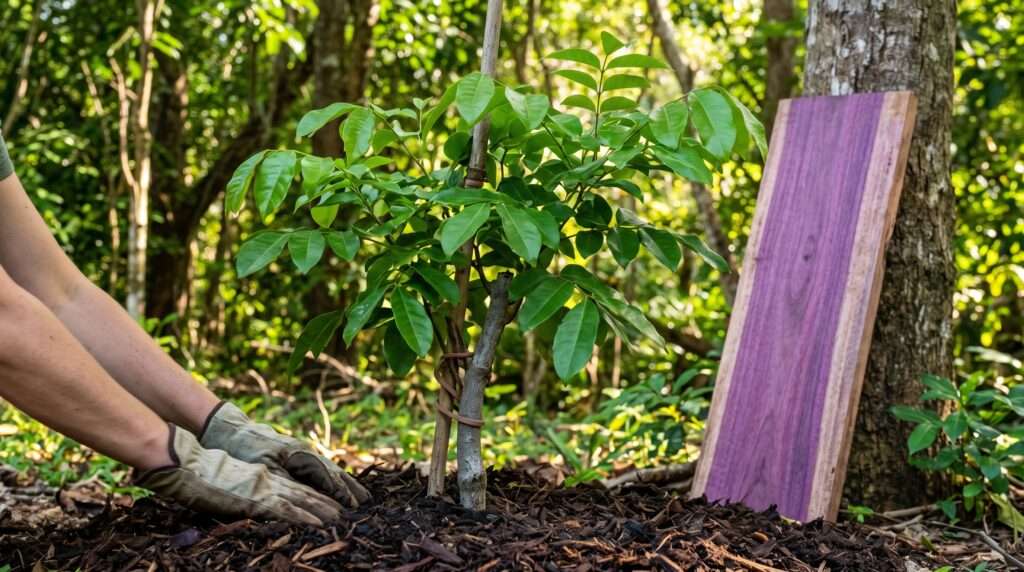
Imagine slicing into the trunk of a towering rainforest giant, expecting ordinary tan timber, only to watch the wood magically shift from dull grayish-brown to a deep, royal violet right before your eyes. That is the signature wonder of the tree purple heart (Peltogyne spp.)—one of the most extraordinary tropical hardwoods on the planet.
While woodworkers and luthiers have prized its ultra-dense, naturally purple timber for centuries, gardeners and tropical plant enthusiasts often hit a frustrating wall when trying to grow it. Most online guides either confuse this majestic canopy tree with a common purple-leaved houseplant or focus exclusively on lumber milling, leaving growers completely in the dark about how to keep a living sapling alive.
If you are ready to cultivate this rare botanical treasure, you are in the right place. This comprehensive, field-tested guide breaks down everything you need to know about climate, soil chemistry, watering, propagation, and long-term maintenance so your tree purple heart doesn’t just survive—it thrives. ✨
Tree Purple Heart Care at a Glance 📋
Before diving into the nuances of tropical arboriculture, here is a quick-reference snapshot of what Peltogyne needs to flourish.
What Is the Tree Purple Heart? (Botany & Identity) 🌿
Meet the Peltogyne Genus
Native to the lush tropical rainforests of Central and South America—stretching from southern Mexico down through the Amazon Basin and into Brazil—the tree purple heart belongs to the genus Peltogyne, which includes roughly 23 distinct species. Known regionally as amaranth, nazareno, or pau roxo, these trees are ecological powerhouses.
Because Peltogyne is a member of the legume family (Fabaceae), its roots form symbiotic relationships with soil bacteria (Rhizobium) that convert atmospheric nitrogen into a usable form. In simple terms, this tree naturally enriches the soil around it. Visually, it features compound leaves made up of paired, glossy green leaflets, clusters of small, fragrant white flowers that attract tropical pollinators, and flat, winged seed pods that disperse on the breeze.
As for that famous purple color? It comes from a natural chemical compound called peltogynol. When the tree is alive, its exterior bark is grayish-brown and its leaves are vibrant green. The vivid violet hue only appears in the inner heartwood when exposed to oxygen and ultraviolet light.
Tree vs. Houseplant: Clearing Up the Confusion 🔍
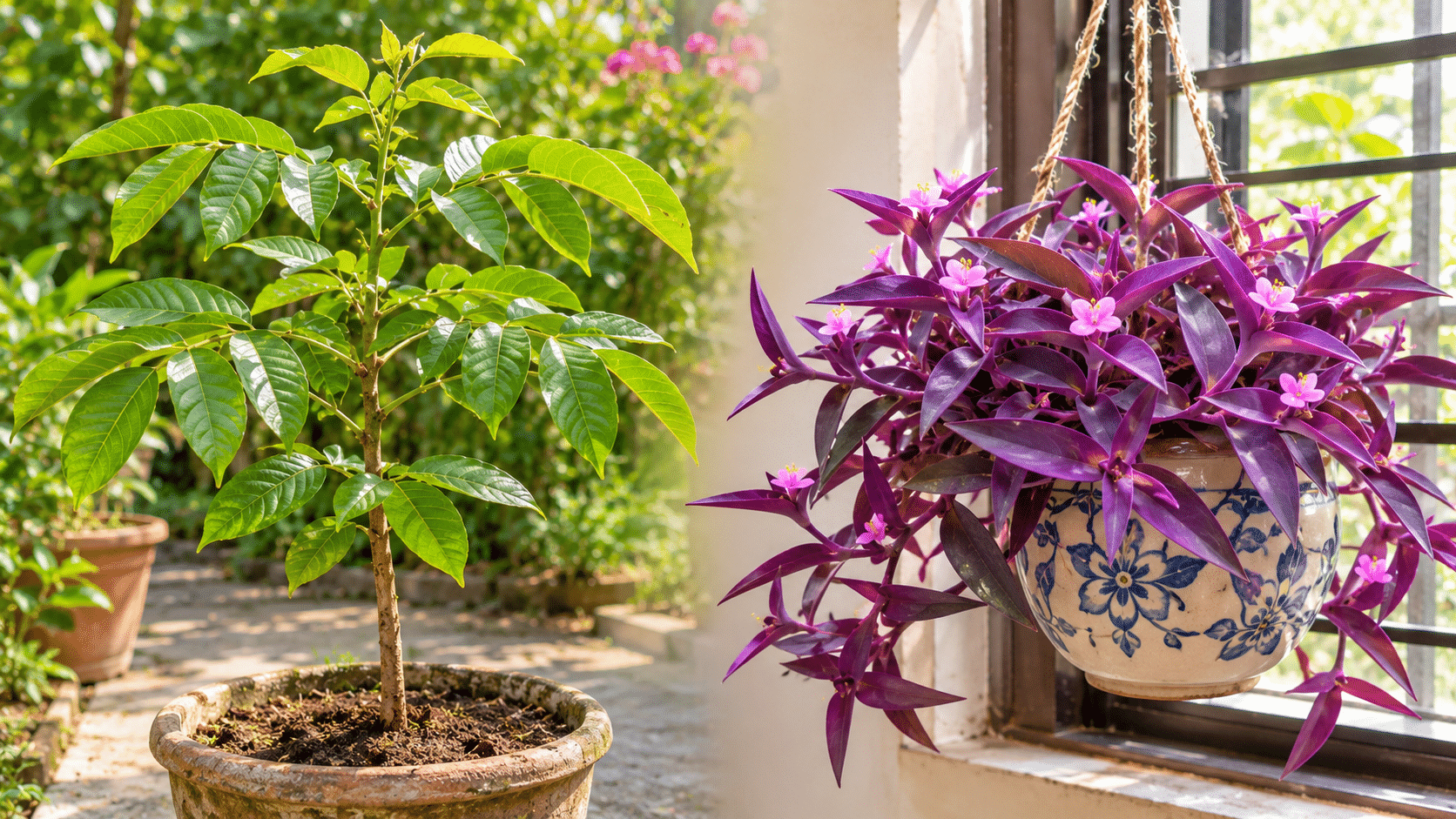
One of the biggest stumbling blocks for gardeners searching for tree purple heart care is a widespread naming mix-up. If you type “purple heart plant” into a search engine, you will mostly see photos of Tradescantia pallida—a trailing, fast-growing perennial groundcover with fuzzy, neon-purple leaves that thrives on sunny windowsills.
While both are gorgeous in their own right, their care requirements are worlds apart:
-
Tradescantia pallida (Purple Heart Plant): A small, succulent-like herb that grows 12–18 inches tall and can be propagated from a stem cutting in a glass of water.
-
Peltogyne spp. (Tree Purple Heart): A massive, slow-growing tropical hardwood tree that develops a deep taproot, requires decades to reach full stature, and needs a frost-free climate to live outdoors.
Knowing which plant you have is the first step to keeping it healthy. If you have a woody sapling with paired green leaves, keep reading—this guide is built specifically for you.
Sunlight, Temperature & Climate Requirements ☀️
Replicating the tropical rainforest canopy is the secret to raising a resilient Peltogyne. Because these trees evolved near the equator, temperature stability and light progression matter far more than they do for temperate shade trees.
Ideal Hardiness Zones & Frost Sensitivity
The tree purple heart thrives in USDA Hardiness Zones 10b through 12, where year-round temperatures hover between 70°F and 95°F (21°C–35°C).
It has virtually zero tolerance for freezing weather. Even a brief dip below 45°F (7°C) can trigger severe cold stress, causing leaf drop and dieback in young saplings. If you live in Zone 9b or 10a, where occasional winter frosts occur, you will need frost cloth, overhead watering systems, or a heated greenhouse to protect young trees until they develop thicker, insulated bark.
Sun Exposure: Saplings vs. Mature Trees
In the wild, a Peltogyne seed germinates on the dim rainforest floor and slowly fights its way up toward the sunlight. Mimicking this transition prevents sunburn and stunted growth:
-
Seedlings & Young Saplings (Years 1–3): Provide bright, dappled shade or morning sun with afternoon shade. Harsh, direct midday sun can scorch tender young foliage and dry out shallow root systems before they establish.
-
Mature Trees (Year 4+): Once the trunk thickens and the root system anchors deeply, transition the tree to full, direct sunlight (6 to 8+ hours daily). Full sun fuels the dense canopy growth and sturdy limb structure needed to weather tropical storms.
Humidity & Wind Protection 💨
Aim for ambient humidity levels between 60% and 80%. In drier subtropical climates, regular deep watering and a thick layer of organic mulch help create a humid microclimate around the root zone.
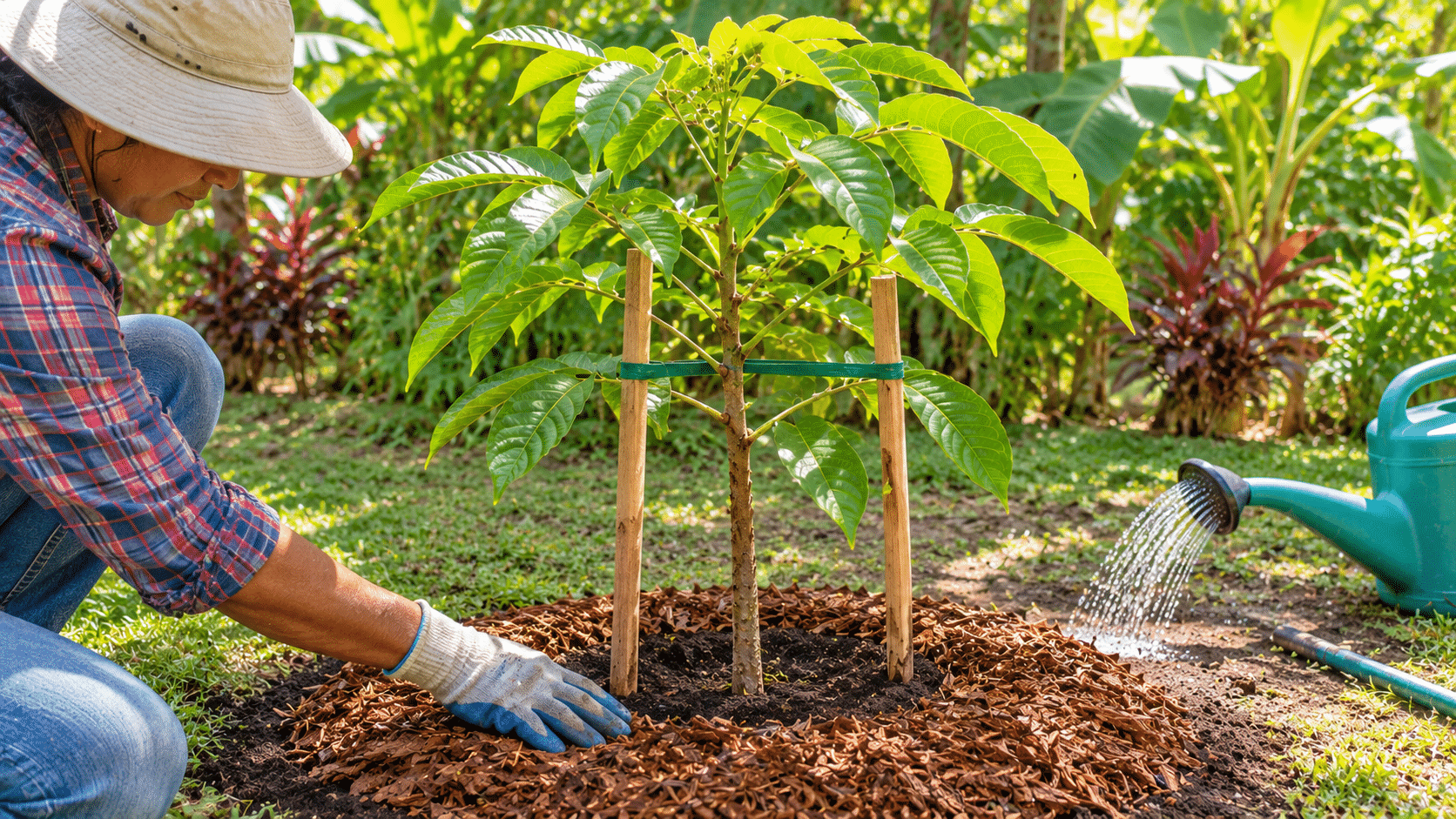
Young saplings also need protection from sustained high winds, which strip moisture from the leaves faster than the roots can replace it. If you are planting in a breezy coastal area, install two flexible tree stakes placed opposite each other using soft rubber ties, allowing the trunk slight movement so it builds natural taper and strength. Remove the stakes after 12 to 18 months.
💡 Arborist’s Tip: Growing at the chilly edge of Zone 10? Plant your sapling near a south-facing masonry wall or within a sheltered courtyard. The wall absorbs solar heat during the day and radiates it back at night, creating a microclimate that can stay 3°F to 5°F warmer than open yards.
Soil & Planting Guide for Strong Roots 🌱
A tree is only as healthy as the soil beneath it. While Peltogyne trees are tough once established, poor drainage during their early years is the fastest way to lose a specimen.
The Best Soil Mix & pH Levels
In their native habitats, purpleheart trees grow on well-drained upland slopes and riverbanks—rarely in stagnant swamps. They prefer deep, fertile sandy loam or clay-loam rich in decomposed organic matter.
-
Target pH: Slightly acidic to neutral (5.5 to 7.0). If your native soil is heavily alkaline (above 7.5), the tree will struggle to absorb iron and manganese, leading to yellowing leaves.
-
Drainage Check: Before planting, dig a 12-inch-deep test hole and fill it with water. If the water hasn’t drained completely within 4 hours, you will need to plant on a raised mound (berm) 12 to 18 inches high to keep the roots out of standing water.
Step-by-Step Planting Instructions
Follow this exact sequence to minimize transplant shock and encourage a deep, wind-firm taproot:
-
Choose the Right Spot: Think 30 years ahead. Because a tree purple heart develops a wide canopy and an extensive root system, plant it at least 30 to 40 feet away from house foundations, swimming pools, septic lines, and overhead utility wires.
-
Dig a Wide, Shallow Hole: Dig the planting hole twice as wide as the root ball, but no deeper than the height of the root ball. Planting too deep buries the root flare (where the trunk widens at the base), which traps moisture against the bark and invites fatal trunk rot.
-
Inspect and Loosen the Roots: Gently slide the sapling out of its nursery pot. If you see roots circling tightly around the outside, score them lightly with a clean knife or tease them outward with your fingers so they grow into the surrounding soil rather than girdling the trunk.
-
Backfill with Native Soil: Place the tree in the hole, ensuring the root flare sits 1 inch above the surrounding soil line. Backfill using your native soil blended with no more than 20% aged compost. (Avoid filling the hole with pure potting mix, which creates a “bathtub effect” where water pools inside the hole instead of draining outward.)
-
Water Deeply & Mulch: Soak the root zone thoroughly to eliminate air pockets. Finish by spreading a 3-inch layer of organic hardwood mulch in a 4-foot-wide ring around the tree—keeping the mulch pulled back 3 to 4 inches away from the trunk like a donut, never piled against the bark like a volcano.
Watering & Fertilizing Schedule 💧
Balancing moisture and nutrients is all about respecting the tree’s natural rhythm as a tropical legume.
Watering by Growth Stage
-
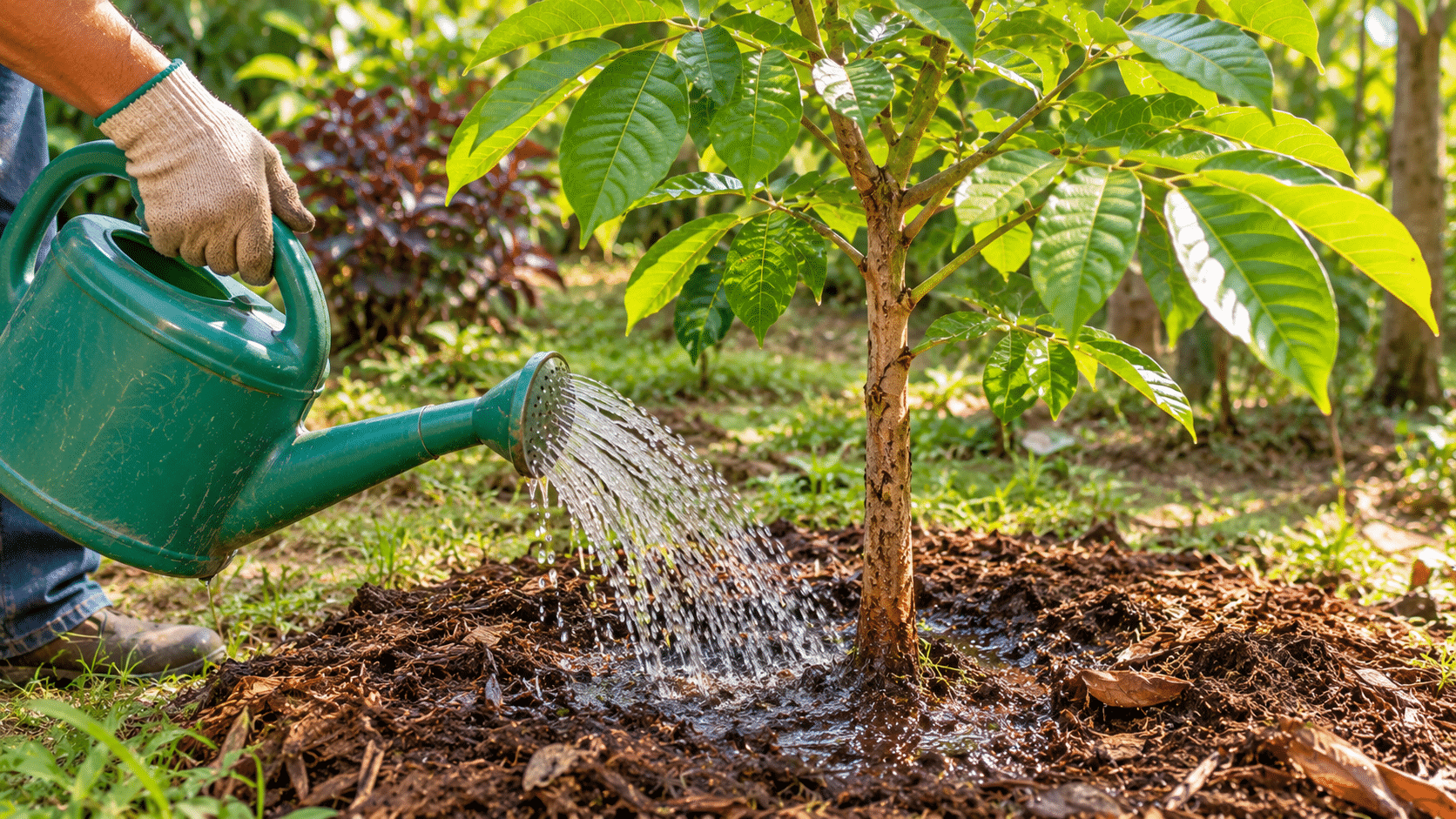
First 1–2 Years (Establishment Phase): Consistent moisture is critical while the taproot anchors itself. Water deeply 2 to 3 times per week during dry spells, allowing the top 2 inches of soil to dry slightly between waterings. Deep, slow watering at the drip line encourages roots to grow downward rather than staying near the surface.
-
Established Trees (3+ Years): Once mature, Peltogyne becomes surprisingly resilient and moderately drought-tolerant. During the rainy season, supplemental watering is rarely needed. During extended dry seasons, give the tree a deep soaking once every 10 to 14 days.
Feeding Your Tree Purple Heart
Because it fixes its own nitrogen, a tree purple heart does not require heavy chemical feeding. In fact, less is often more.
-
Best Fertilizer: Apply a balanced, slow-release organic granular fertilizer (such as 5-5-5 or 6-6-6) enriched with trace micronutrients (iron, magnesium, zinc).
-
Timing: Feed twice a year—once in early spring as new growth flushes out, and once in mid-summer. Stop fertilizing by late summer so the tree doesn’t push tender new shoots right before cooler autumn temperatures arrive.
-
Organic Boost: Top-dressing the root zone annually with 1 to 2 inches of rich worm castings or aged compost mimics the natural leaf litter of the rainforest floor.
⚠️ Common Mistake Callout: Never apply high-nitrogen lawn fertilizers (like 20-5-5) near your purple heart tree. Excess nitrogen forces rapid, weak, leggy shoot growth that snaps easily in high winds and attracts sap-sucking pests like scale and aphids.
Pruning, Training & Long-Term Maintenance ✂️
Because Peltogyne wood is famously dense and heavy, building a strong branch structure early on saves you from expensive tree work decades down the road.
Structural Pruning for a Healthy Canopy
-
When to Prune: The best window is the late dry season or early spring, just before the tree enters its active growth flush. Avoid heavy pruning during peak rainy seasons when fungal spores are most active.
-
Establish a Central Leader: During the first 5 years, focus on maintaining a single, dominant vertical trunk (the central leader). If two competing main stems form a tight V-shaped crotch, prune back the weaker one to prevent splitting later.
-
The 3 Ds Rule: Always remove Dead, Damaged, or Diseased branches first, along with any limbs rubbing or crossing against each other.
-
The 25% Rule: Never remove more than 25% of the living canopy in a single year. Over-pruning stresses the tree and exposes the interior bark to sunscald.
Seasonal Maintenance Checklist
-
Spring: Refresh the 3-inch mulch ring, apply spring organic fertilizer, and inspect new shoots for scale insects.
-
Summer: Monitor soil moisture during heatwaves and check tree stakes to ensure ties aren’t cutting into the expanding bark.
-
Autumn: Inspect the base of the trunk for girdling roots and clear away fallen debris after tropical storms.
-
Winter: In marginal zones (Zone 10a), keep frost blankets on standby for cold snaps.
How to Propagate a Tree Purple Heart 🌰
Finding a mature Peltogyne sapling at a local nursery can be tricky, which is why many dedicated growers start their own from seed.
Growing from Seed (Scarification & Germination)
Purpleheart seeds come wrapped in a tough, water-resistant coat designed to survive the rainforest floor until conditions are perfect. To speed up germination, you need to help moisture get inside:
-
Mechanical Scarification: Use a small nail file or fine-grit sandpaper to gently nick the outer seed coat on the side opposite the hilum (the small scar where the seed attached to the pod). Stop as soon as you see the lighter inner layer—do not damage the embryo.
-
Warm Water Soak: Submerge the scarified seeds in warm water (80°F–85°F) for 12 to 24 hours. Seeds that swell slightly are ready to plant.
-
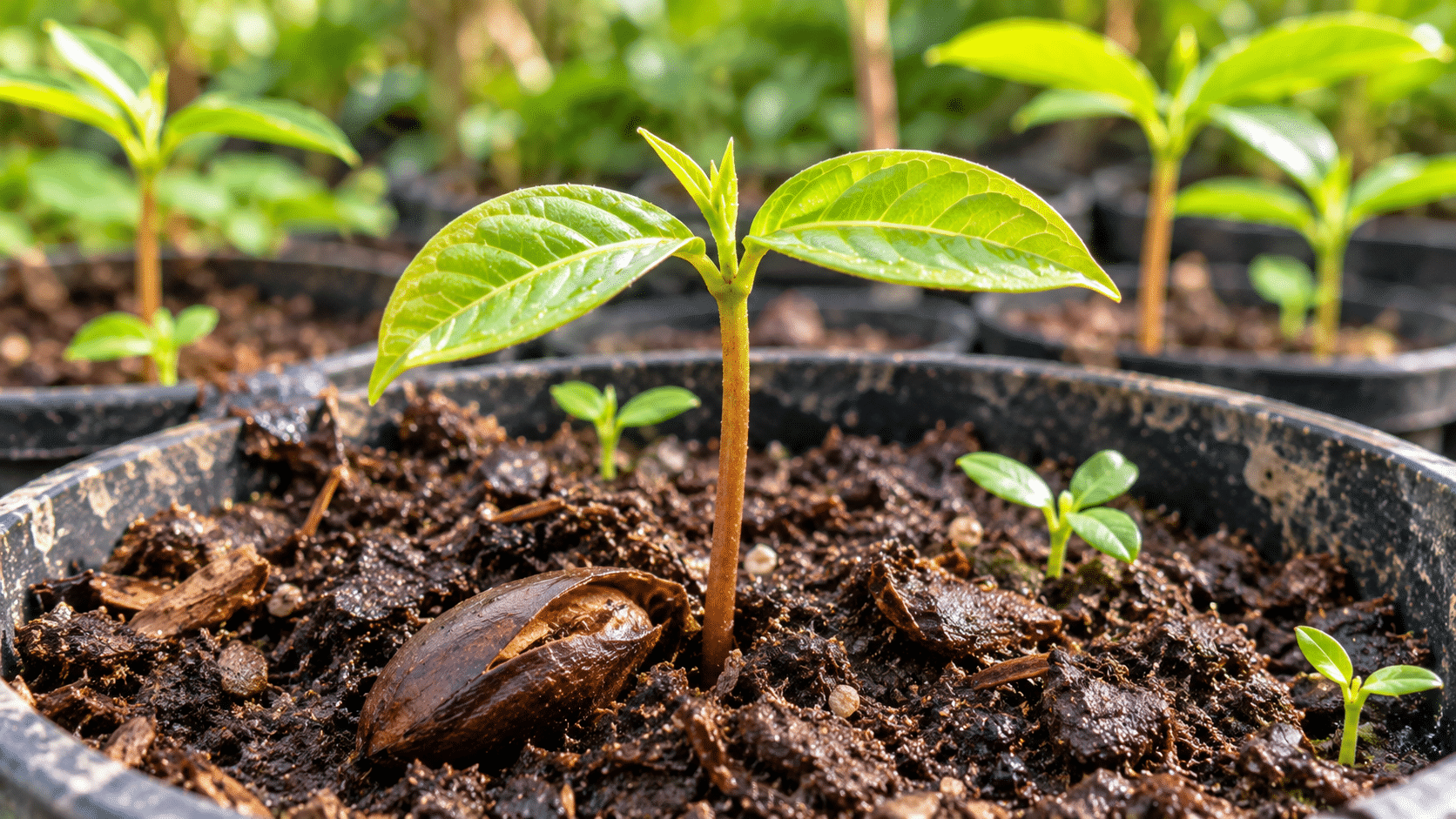
Sowing: Plant seeds 1 inch deep in a sterile, well-draining seed-starting mix (50% coco coir or peat moss, 50% perlite). Use deep forestry pots (at least 6–8 inches tall) to accommodate the fast-growing taproot.
-
Warmth & Humidity: Keep the soil consistently moist—not soggy—at 75°F to 85°F (24°C–29°C). A seedling heat mat and humidity dome work wonders. Germination typically takes 2 to 4 weeks.
Can You Grow It in a Container or Greenhouse? 🪴
Yes—with realistic expectations! You can successfully grow a tree purple heart in a large container on a sunny patio or inside a bright, heated greenhouse for its first 3 to 5 years. Some adventurous horticulturists even train young Peltogyne saplings as tropical bonsai.
To succeed in a pot:
-
Choose a deep container with ample drainage holes to give the taproot vertical room.
-
Use a chunky, fast-draining aroid or citrus soil mix.
-
Repot every 1 to 2 years, gently root-pruning only when necessary, and always bring the pot indoors before nighttime temperatures drop below 50°F (10°C).
Common Pests, Diseases & Troubleshooting 🩺
Even a tough tropical hardwood can run into trouble if its environment slips out of balance. Use this quick diagnostic guide to spot and fix issues early.
Root Rot & Overwatering
-
Symptoms: Drooping or wilting leaves even when the soil feels wet; yellowing lower foliage; a foul, swampy odor near the roots; soft, dark, mushy roots.
-
Cause: Poorly draining clay soil, overwatering, or planting too deep.
-
Fix: Immediately cut back on watering. If the tree is in a container, repot it into fresh, dry, chunky soil after trimming away blackened roots with sterilized shears. For in-ground trees, aerate the surrounding soil, improve surface drainage, and drench the root zone with beneficial mycorrhizal fungi to help rebuild healthy root mass.
Common Tropical Pests
-
Scale Insects & Mealybugs:
-
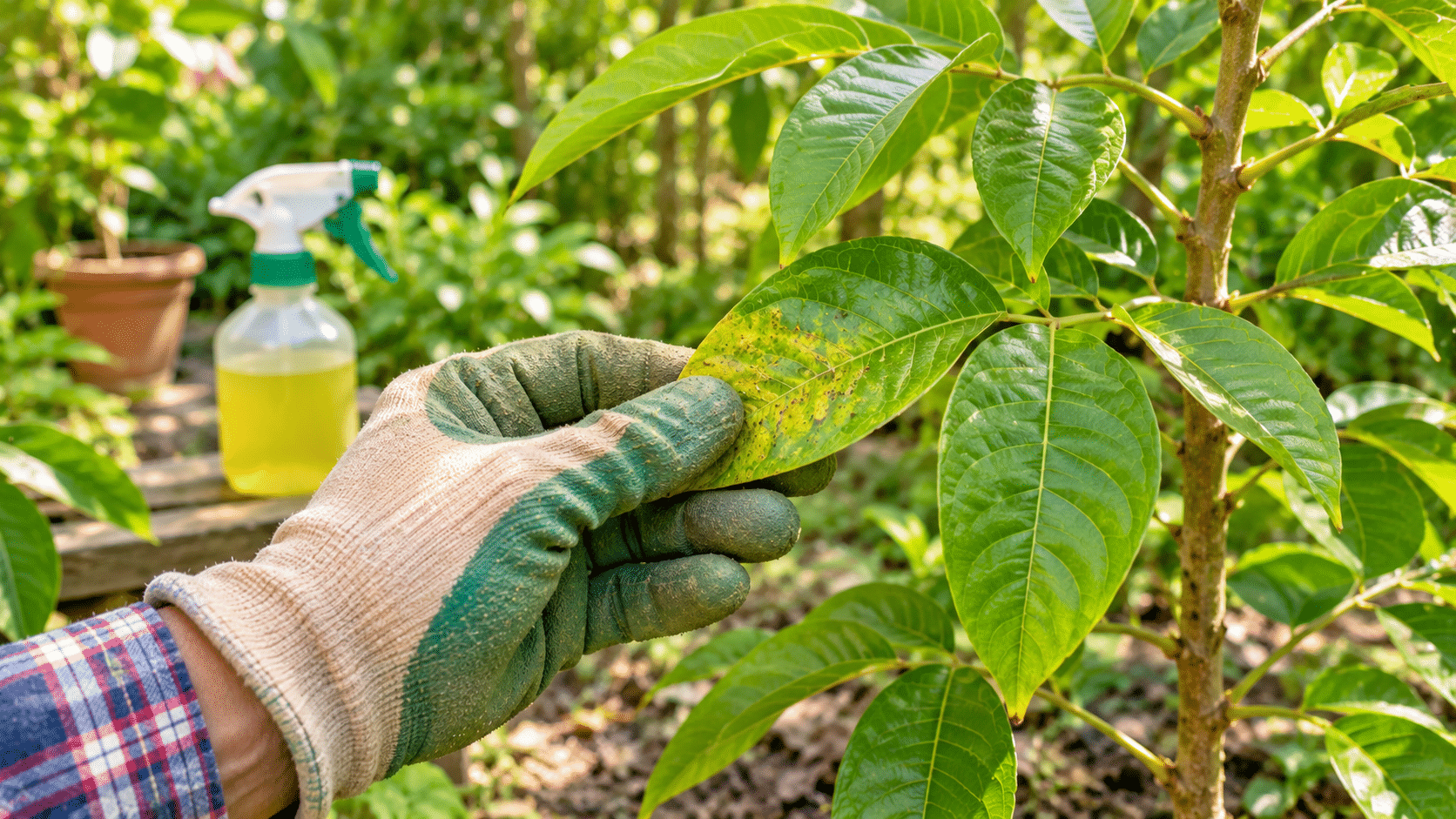
Symptoms: Small brown bumps on stems (scale) or white cottony clusters in leaf axils (mealybugs), often accompanied by sticky “honeydew” and black sooty mold.
-
Fix: Wipe off visible pests with a cotton swab dipped in 70% rubbing alcohol, then spray the foliage thoroughly with cold-pressed neem oil or insecticidal soap every 7 days until clear.
-
-
Wood Borers:
-
Symptoms: Small, round exit holes in the bark with fine sawdust (frass) piling up at the base.
-
Fix: Wood borers almost exclusively attack stressed, drought-weakened, or physically damaged trees. The best defense is preventative: keep your tree well-watered, mulched, and free from lawnmower/string-trimmer injuries.
-
Nutrient Deficiencies & Leaf Drop
-
Symptoms: Bright yellow leaves with dark green veins (interveinal chlorosis) indicate an iron deficiency, usually caused by soil pH creeping above 7.2.
-
Fix: Apply a chelated iron soil drench and gradually acidify the soil using elemental sulfur or acidic organic mulch (like pine bark).
-
Normal Seasonal Drop: Don’t panic if your mature tree sheds a portion of its leaves during a severe dry season! Several Peltogyne species are naturally semi-deciduous, dropping leaves to conserve water before pushing out a fresh, vibrant green canopy when the rains return.
Conservation, Sustainability & Why Growing It Matters 🌍
Growing a tree purple heart isn’t just a rewarding horticultural challenge—it is a meaningful act of conservation. Because its timber is extraordinarily hard, rot-resistant, and visually stunning, wild populations of certain Peltogyne species (such as Peltogyne purpurea in Central America) have faced heavy pressure from commercial logging and habitat loss.
When you decide to add this tree to your landscape or collection:
-
Source Ethically: Always buy seeds or saplings from certified, reputable botanical nurseries that propagate sustainably rather than wild-harvesting.
-
Ecological Impact: Every planted purpleheart tree acts as a long-term carbon sink, enriches depleted soils through nitrogen fixation, cools the surrounding landscape with dense shade, and provides nectar for native bees and butterflies.
Frequently Asked Questions (FAQs) ❓
How fast does a tree purple heart grow?
The tree purple heart has a slow to moderate growth rate, averaging about 1 to 2 feet per year under optimal tropical conditions. Its slow growth is precisely what gives its wood such remarkable density and structural strength.
Are the leaves of the purple heart tree purple?
No! This is the most common myth surrounding the species. The leaves of Peltogyne are a rich, glossy green. Only the inner heartwood turns purple after it is cut and exposed to air and sunlight. If you are looking for a plant with bright purple leaves, you are thinking of the unrelated Tradescantia pallida houseplant.
Is the purple heart tree toxic to pets or humans?
As a living landscape tree, Peltogyne is generally considered safe around pets and children. However, if you ever prune large mature branches or mill the wood, wear a dust mask and gloves—fine purpleheart sawdust can be a skin, eye, and respiratory irritant for sensitive individuals.
Can I grow a tree purple heart in Zone 8 or 9?
You cannot grow it outdoors year-round in Zones 8 or 9, as freezing winter temperatures will kill it. However, you can successfully grow it in a large, wheeled container and move it into a heated greenhouse, sunroom, or bright indoor space whenever temperatures dip below 50°F (10°C).
Cultivating a Living Legacy 🌟
Planting a tree purple heart is an exercise in patience and stewardship. Unlike fast-growing ornamentals that peak in a few seasons, Peltogyne is a generational tree—one that rewards attentive soil preparation, warm sunshine, and mindful watering with decades of lush tropical shade and quiet botanical majesty.
Whether you are nurturing your first scarified seed on a warm windowsill or planting a sapling in a frost-free backyard, you are helping preserve one of the rainforest’s most remarkable species.
Are you planning to grow a tree purple heart in your garden or greenhouse? Drop your USDA hardiness zone or any care questions in the comments below—I’d love to help you get started! 🌱💬