
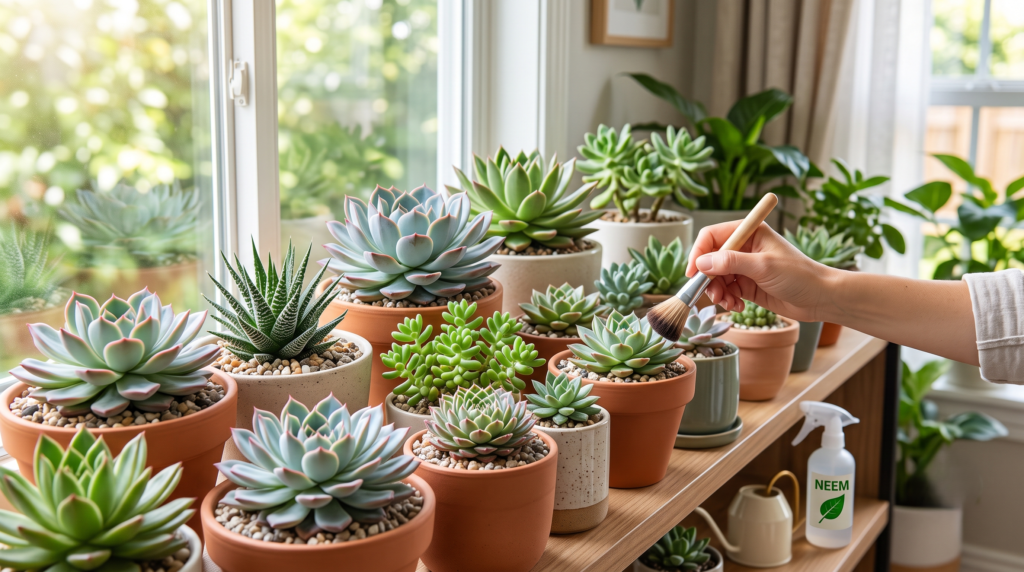
You wake up, coffee in hand, ready to admire your beloved indoor garden. You lean in to check on your prized Echeveria, only to feel your heart sink. Tucked deep within the beautiful, fleshy rosette is a cluster of sinister white, cottony fuzz. Or perhaps you tap the rim of a terracotta pot, and a cloud of tiny black flies erupts from the soil surface. Sound familiar? 💔🪴
If you are a houseplant enthusiast, you have likely experienced the heartbreak and frustration of a sudden pest invasion. While desert succulents are renowned for being drought-tolerant and relatively low-maintenance, our homes often lack the natural predators that keep bug populations in check outdoors. But do not throw your favorite plants in the compost bin just yet! The secret to a thriving collection isn’t just reacting to outbreaks with harsh chemical sprays; it lies in creating a pest-free indoor succulent zone from the ground up.
In my years of cultivating and rescuing succulents, I’ve learned that pest management is about proactive environmental design. In this comprehensive guide, we will break down the science of indoor plant ecosystems, identify the most notorious succulent pests, and build a fortress around your collection so you can enjoy your plants in peace.
Why Are Bugs Attracted to Indoor Succulents? 🤔
To defeat the enemy, you must first understand why they are drawn to your home in the first place. Succulents evolved in harsh, arid climates where intense UV light, strong winds, and natural predators like ladybugs and lacewings keep pest populations strictly balanced. When we bring these plants indoors, we fundamentally change their ecosystem.
The Flawed Indoor Ecosystem
Modern homes are designed for human comfort, which often means stable, warm temperatures and reduced airflow. Central heating and air conditioning can create pockets of stagnant, dry air—an absolute paradise for pests like spider mites. Conversely, poor ventilation combined with the wrong potting mix creates micro-climates of high humidity right at the soil level, rolling out the red carpet for fungal issues and soil-dwelling bugs.
Overwatering: The #1 Culprit 💧
The most common mistake new plant parents make is overwatering, and it is intrinsically linked to pest infestations. Succulent roots are designed to absorb water quickly and then dry out completely. When they sit in soggy, waterlogged soil, the roots begin to suffocate and rot. This weakens the plant’s natural immune system, sending out chemical stress signals that literally attract sap-sucking insects. Furthermore, constantly damp organic matter in the soil is the sole breeding ground for fungus gnats.
Nursery Hitchhikers 🛒
Have you ever brought home a perfectly healthy-looking Haworthia from a big-box store, only to have an outbreak a week later? Most indoor pest problems begin the moment a new, unquarantined plant crosses your threshold. Greenhouses are massive agricultural centers where pests easily hop from pot to pot. Microscopic eggs or dormant pests often hitch a ride hidden in the soil or deep within the tight leaves of a newly purchased plant.
Meet the Invaders: Identifying Common Succulent Pests 🐛🔍
Accurate identification is the foundation of effective treatment. Applying the wrong remedy wastes time and allows the infestation to spread. Here is how to identify the four most common enemies of the indoor succulent gardener.
Mealybugs: The White Fluffy Menace ☁️
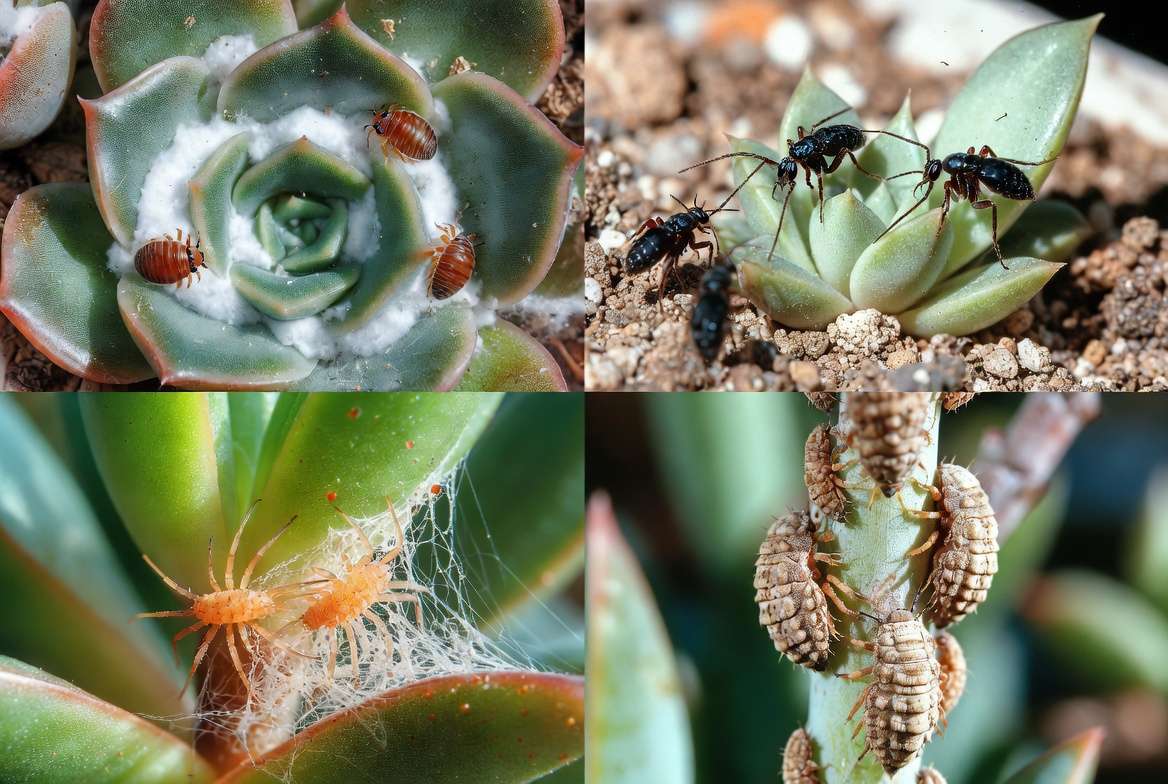
Mealybugs are arguably the most common and persistent succulent pest. They are soft-bodied, sap-sucking insects that cover themselves in a white, waxy, powdery substance that looks highly similar to tiny tufts of cotton.
-
Where to look: They despise direct light, so they hide deep in the crevices of tight rosettes, exactly where the leaf meets the main stem, and occasionally on the roots (root mealybugs).
-
The Damage: As they pierce the plant tissue to suck out sap, they inject a toxin that causes stunted, deformed new growth. They also excrete a sticky substance called “honeydew,” which can lead to black sooty mold.
Fungus Gnats: The Annoying Flyers 🪰
If you see tiny black bugs resembling fruit flies hovering around the base of your plants, you have fungus gnats. While the flying adults are primarily a nuisance to humans, the real danger lies beneath the surface.
-
Where to look: Hovering near the soil surface, especially right after watering.
-
The Damage: The adult gnats lay eggs in moist soil. When the larvae hatch, they feed on decaying organic matter and fungi. However, if the organic matter runs out, these larvae will voraciously consume the delicate root hairs of your succulents, leading to sudden wilting, yellowing, and root rot.
Spider Mites: The Invisible Web Weavers 🕸️
Spider mites are arachnids, not true insects, and they thrive in hot, exceedingly dry, and stagnant indoor air. They are incredibly tiny—often looking like moving specks of red or brown dust to the naked eye.
-
Where to look: The undersides of leaves and at the very base of the plant. The most obvious telltale sign is incredibly fine, delicate webbing stretched between leaves or stems.
-
The Damage: They feed by piercing individual plant cells and sucking out the contents. This leaves behind tiny yellow or white speckles, known as stippling. Over time, the plant takes on a dull, bronzed, or grayish appearance and may drop its leaves entirely.
Scale Insects: The Armor-Plated Sap Suckers 🛡️
Scale insects are masters of camouflage. Unlike mealybugs, adult scale insects do not move. They anchor themselves to a spot on the plant and secrete a hard, dome-like waxy shell over their bodies for protection.
-
Where to look: Stems and the broad, flat surfaces of leaves. They often look like small, raised brown, tan, or black bumps that you might initially mistake for a natural scar or blister on the plant.
-
The Damage: Like mealybugs, they suck the sap and vitality out of your succulents, leading to yellowing foliage, lethargic growth, and leaf drop. Because of their hard armor, chemical sprays often bounce right off them.
Step-by-Step: Creating a Pest-Free Indoor Succulent Zone 🏡🛡️
Now that we know what we are up against, it is time to build our defenses. Creating a truly resilient indoor garden requires modifying the environment to favor the plants while making it incredibly hostile to pests.
1. Set Up a Strict Quarantine Station 🛑
The most vital rule of indoor gardening is to never introduce a new plant directly into your main collection.
-
The Protocol: Designate a separate room, or at least a separate window well away from your other plants, as a quarantine zone.
-
The Timeline: Keep all newly purchased or gifted succulents in this area for a strict 14-to-21-day period. This timeframe allows any hidden, unhatched eggs to reveal themselves. Inspect the quarantined plants every few days with a flashlight before finally giving them the green light to join your indoor succulent zone.
2. Optimize Your Soil and Drainage 🪨
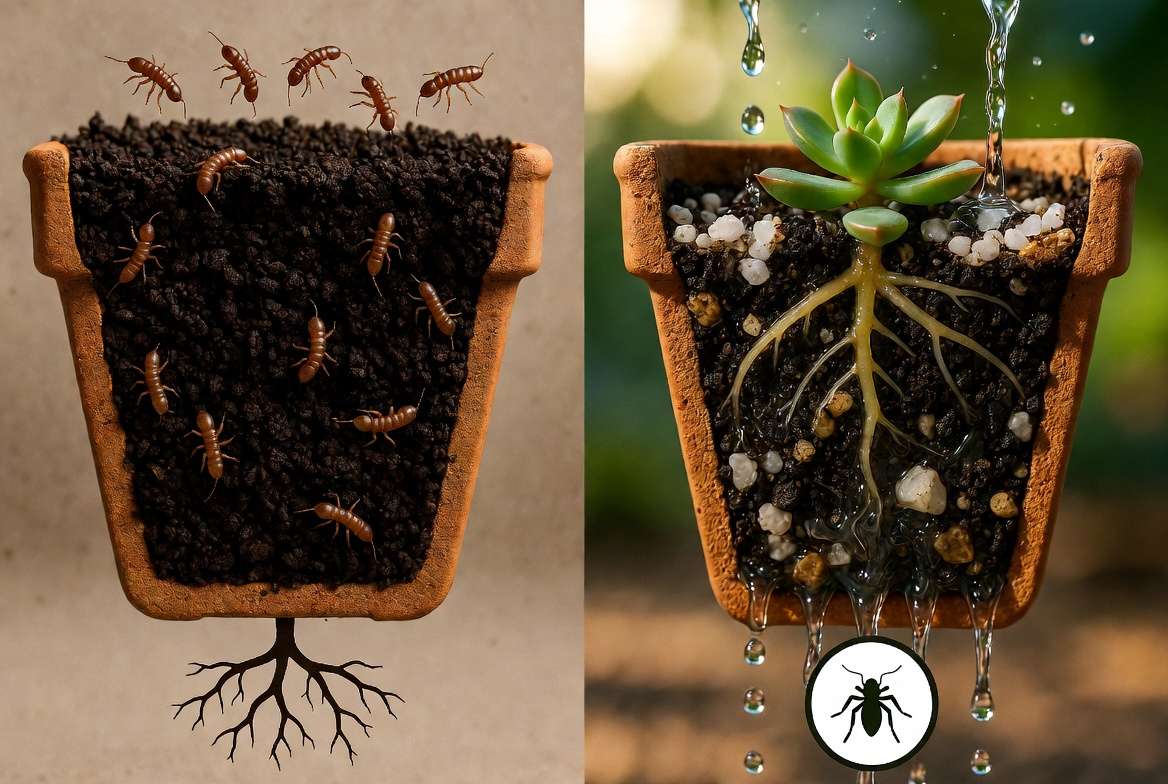
Standard, commercially bagged “potting soil” is a death sentence for succulents and a breeding ground for pests. These mixes are heavy in peat moss, which acts like a sponge, retaining moisture for weeks.
-
The Solution: You must use a highly porous, gritty succulent mix. A fantastic, expert-approved recipe is one part organic matter (like a high-quality potting soil or coconut coir) mixed with two parts inorganic grit (such as pumice, perlite, crushed granite, or coarse horticultural sand).
-
The Benefit: This gritty texture ensures water flushes through the pot instantly, pulling fresh oxygen down to the roots and drying out rapidly, completely robbing fungus gnats of the moist environment their larvae require to survive.
3. Perfecting Airflow and Environment 💨
In nature, the wind carries away excess humidity and physically knocks pests off plants. Indoors, stagnant air allows pest populations to explode exponentially.
-
The Solution: Introduce gentle, continuous airflow to your indoor succulent zone. If your plants are on a designated shelf or inside an indoor greenhouse cabinet, install small USB micro-fans or oscillating desk fans nearby.
-
The Benefit: Good air circulation strengthens plant stems, drastically reduces the risk of fungal infections (like powdery mildew), and makes it incredibly difficult for spider mites to establish their delicate webs.
4. Master the “Soak and Dry” Watering Method 💧
How you water is just as important as what you plant in. Succulents store water in their fleshy leaves and stems, meaning they prefer a cycle of absolute drought followed by a heavy deluge.
-
The Method: Only water your succulents when the soil is 100% bone-dry all the way to the bottom of the pot (you can test this with a wooden skewer or a moisture meter). When you do water, soak the soil completely until water runs freely out of the drainage holes.
-
Bottom-Watering: For an extra layer of pest prevention, try bottom-watering. Place the pot in a basin of water and let the soil soak it up through the drainage holes via capillary action. This ensures the roots get deeply hydrated while the top inch of soil remains dry—effectively starving out any top-soil fungus gnats.
The Plant Parent’s Arsenal: How to Eradicate Existing Pests ⚔️🧴
Even with the best defenses, a breach may occasionally happen. When it does, you need to act quickly and methodically. Here is how to eliminate infestations while keeping your beloved succulents safe.
Natural & Organic First-Response Remedies 🌱
1. 70% Isopropyl Alcohol (For Mealybugs and Scale) This is the holy grail of succulent pest control.
-
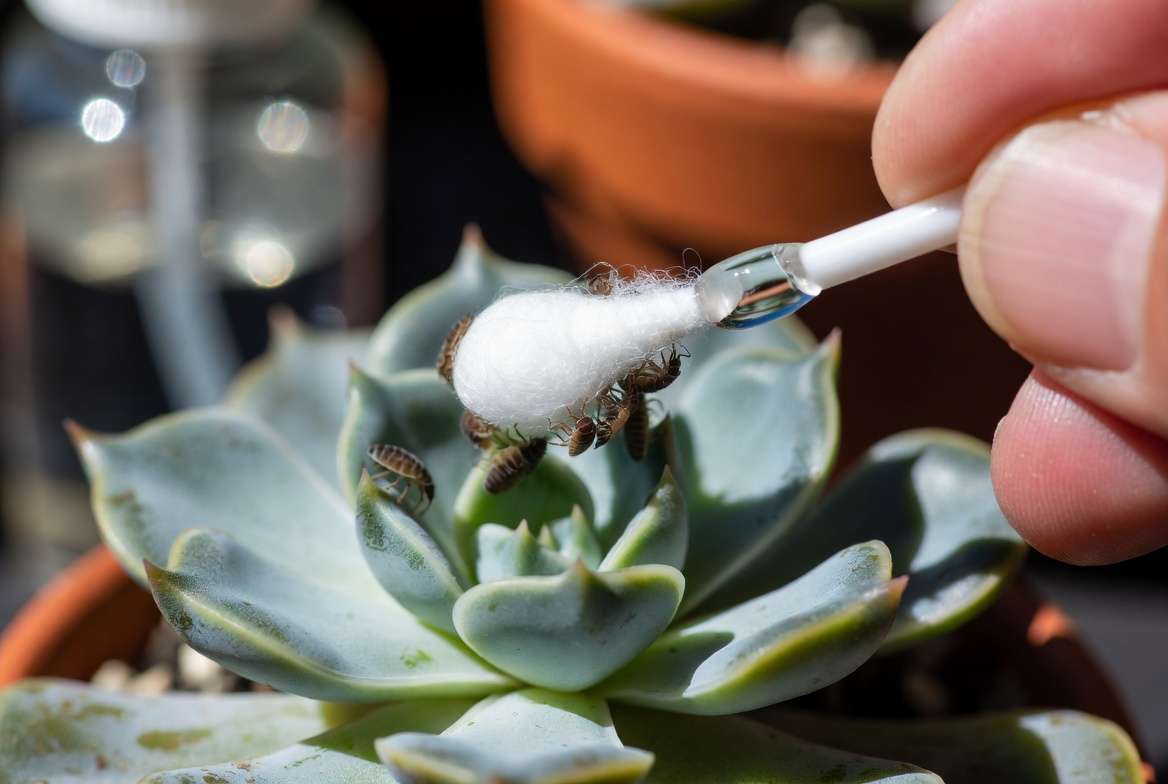
How to use: For light mealybug infestations, dip a cotton swab (Q-tip) directly into 70% isopropyl alcohol and dab it onto the bugs. The alcohol instantly dissolves their waxy protective coating and kills them on contact. For larger outbreaks, put the 70% alcohol in a fine-mist spray bottle and spray the plant thoroughly, ensuring it drips down into the leaf crevices.
-
Safety Note: Alcohol evaporates rapidly, making it safe for the plant, but keep treated plants out of direct sunlight until they are completely dry to prevent phototoxicity (leaf burn).
2. Neem Oil & Horticultural Soaps (For Spider Mites and Aphids) Neem oil is a natural byproduct of the neem tree and acts as a powerful antifeedant and hormone disruptor for bugs.
-
How to use: Dilute pure, cold-pressed neem oil with water and a tiny drop of pure castile soap (to act as an emulsifier). Spray the plant thoroughly, focusing heavily on the undersides of the leaves.
-
Safety Note: Neem oil can linger on the leaves and magnify the sun’s rays. Never apply neem oil during the day or expose treated succulents to direct sunlight or strong grow lights for at least 24 to 48 hours, or they will severely burn.
3. Mosquito Dunks / BTI (For Fungus Gnats) Forget the messy apple cider vinegar traps; you need to target the larvae in the soil. BTI (Bacillus thuringiensis subspecies israelensis) is a naturally occurring soil bacterium that is completely harmless to humans, pets, and plants, but highly lethal to gnat larvae.
-
How to use: Soak a Mosquito Dunk (or BTI bits) in your watering can overnight. Use this BTI-infused water for your normal “soak and dry” routine. As the larvae feed on the bacteria in the soil, they perish, breaking the lifecycle entirely.
When to Bring in the Heavy Artillery (Systemic Granules) 💣
If you are dealing with a massive, collection-wide infestation of stubborn pests like root mealybugs or severe scale, organic methods may not be enough.
-
Systemic Insecticides: Products containing active ingredients like Imidacloprid are applied directly to the soil. When you water the plant, the roots absorb the chemical, making the plant’s sap itself toxic to pests for up to 8 weeks.
-
Crucial Warning: Systemic insecticides are highly toxic to vital pollinators like bees and butterflies. They should strictly be used on indoor-only plants that will never be placed outside on a patio or balcony.
Expert Insights: 3 Common Pest Control Mistakes You Must Avoid 💡🚫
Over the years, I have seen well-meaning plant parents accidentally do more harm to their plants than the pests themselves. Avoid these critical errors:
1. Treating Once and Forgetting (The Lifecycle Trap) This is the number one reason pests return. A single spray of alcohol or neem oil will kill adult bugs, but it often does nothing to the microscopic eggs hidden in the soil or leaf joints. Pests operate on life cycles (typically 7 to 14 days). You must repeat your chosen treatment every 5 to 7 days for at least three to four consecutive weeks to guarantee you are killing the newly hatched nymphs before they are old enough to lay more eggs.
2. Using the Wrong Strength of Alcohol or Neem More is not always better. Using 90% or 99% isopropyl alcohol evaporates too quickly to effectively kill the bugs, but is harsh enough to chemically burn delicate plant tissues. Always stick to 70%. Similarly, heavily overdosing neem oil mixtures can clog the plant’s stomata (pores), suffocating the succulent.
3. Ignoring and Destroying the Farina Many popular succulents, like Echeverias, Graptopetalums, and Kalanchoes, have a chalky, powdery white coating on their leaves called farina (epicuticular wax). This wax is the plant’s natural, built-in defense mechanism—it acts as a powerful sunscreen to prevent UV burns and makes the leaves too slippery for pests to easily attach to. Heavy wiping, harsh chemical sprays, or rubbing neem oil onto the leaves will permanently strip the farina away. Once it is gone, the plant cannot regrow it on those old leaves, leaving it highly vulnerable. When treating succulents with farina, rely heavily on systemic granules or incredibly gentle, targeted Q-tip applications to preserve this natural armor.
Maintaining the Magic: Your Monthly Care Checklist 📅✅
Creating a pest-free indoor succulent zone is an ongoing, rewarding process. By adopting a simple routine, you can catch anomalies long before they become disasters.
-
Weekly Routine: Grab a small flashlight and spend five minutes inspecting your plants. Shine the light under the leaves and into the deep centers of the rosettes. Look for tiny webs, white fuzz, or unexplained sticky spots. Early detection is everything.
-
Bi-Weekly Routine: Double-check your watering habits. Lift your pots—if they feel heavy, there is still moisture in the center of the root ball. Wait another week. Let that soil dry!
-
Monthly Routine: House dust acts as a magnet for spider mites and blocks crucial sunlight. Use a soft, dry makeup brush or a camera lens blower to gently dust off your succulents (this cleans the plant without disturbing the farina). Wash any decorative cachepots to remove hidden fungal spores.
-
Seasonal Routine: During the active growing seasons (Spring and Autumn for many varieties), evaluate if your plants need repotting. Overcrowded roots prevent proper drainage. Refreshing the soil annually with a new, gritty mix prevents compaction and removes lingering gnat eggs.
Frequently Asked Questions (FAQs) 🙋♀️🌱
Can I use dish soap to kill succulent bugs? While dish soap is often recommended in DIY online forums, botanical experts advise against it. Modern dish detergents are engineered to strip grease and heavy oils. When applied to succulents, they aggressively strip away the plant’s natural protective cuticle and farina, making them highly susceptible to bacterial infections and sun damage. Always use a pure, true soap like liquid castile soap instead.
Do cinnamon or coffee grounds keep pests away from succulents? Cinnamon does possess some mild, natural anti-fungal properties and can be lightly dusted on fresh stem cuttings to prevent rot. However, sprinkling it on the soil will not cure a full-blown fungus gnat infestation. As for coffee grounds, never add them to indoor succulent soil. They retain far too much moisture, alter the soil’s pH unpredictably, and quickly develop mold, creating a worse environment than you started with.
Should I just throw away a succulent with a severe mealybug infestation? This is a tough but necessary question. If a cheap, common succulent is completely engulfed in mealybugs, down to the roots, and looks shriveled and dying—it is absolutely best to securely bag it up and throw it in the trash. Cutting your losses on one $5 plant protects hundreds of dollars worth of healthy plants in the rest of your collection. Save your intensive eradication efforts for rare, sentimental, or highly prized specimens.
Conclusion: Reclaim Your Indoor Garden 💚
Ultimately, creating a pest-free indoor succulent zone is a holistic journey. It is about moving away from panic-induced chemical spraying and moving toward thoughtful environmental design. By providing excellent airflow, utilizing a highly gritty and well-draining soil mix, honoring the “soak and dry” watering method, and strictly quarantining new arrivals, you are building an invisible fortress around your beautiful collection.
Remember, finding a bug on your plant does not make you a bad plant parent; it is simply a rite of passage in the indoor gardening world. With these expert strategies in your arsenal, you are fully equipped to show those pests the door and cultivate a thriving, vibrant, and peaceful indoor oasis. Happy growing! 🌵☀️











