
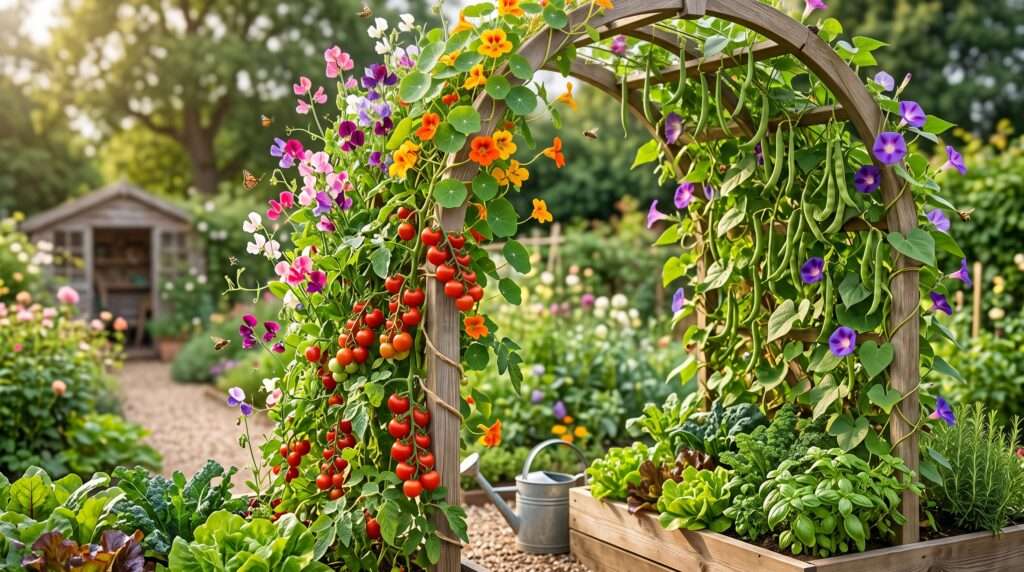
Every gardener has faced the ultimate springtime dilemma: do I dedicate my limited yard space to a vibrant, blooming floral sanctuary, or do I focus entirely on a productive, high-yield vegetable patch? The good news is that you no longer have to choose. The practice of combining ornamental vines with vegetables is the ultimate vertical gardening hack, merging stunning aesthetics with serious edible production.
Historically, ornamental landscaping and vegetable farming were treated as separate disciplines, relegated to different corners of the yard. Today, modern horticulture recognizes the profound ecological and spatial benefits of interplanting. By training flowering climbers alongside your climbing peas or sprawling squash, you maximize your square footage, naturally manage pests, and create a visually breathtaking landscape. Whether you are managing a sprawling homestead or a compact urban balcony, this guide will walk you through the expert strategies needed to create a garden that is as beautiful as it is bountiful.
Why Marrying Blooms and Bounty is a Game-Changer 🌟
Integrating floral vines into your edible landscape is not just about making your garden look good; it is a highly strategic approach to holistic plant care and ecosystem management. Here is why combining these two garden heavyweights elevates your growing game.
Maximizing Square Footage In any garden, ground space is a premium currency. When you grow upward, you unlock a new dimension of planting real estate. Vertical co-planting allows you to harvest massive yields from a fraction of the square footage, leaving the soil level open for low-growing herbs, root vegetables, or nutrient-dense leafy greens.
The Pollinator Magnet Effect Vegetables like tomatoes, squash, and cucumbers rely heavily on pollinators to set fruit. Unfortunately, vegetable blossoms are not always the most brightly colored or fragrant. By interweaving vibrant ornamental vines like sweet peas or morning glories through your edible crops, you create a flashing neon sign for bees, butterflies, and hummingbirds. Increased pollinator traffic directly translates to higher vegetable yields and more uniformly shaped fruits.
Strategic Pest Management Experienced growers know that a diverse garden is a resilient garden. Many flowering vines act as brilliant “trap crops,” naturally luring destructive pests away from your prized vegetables. For example, aphids are notoriously drawn to nasturtiums. By allowing a nasturtium vine to trail near your tomatoes, the pests will congregate on the flowers, leaving your food crops untouched. Additionally, the complex canopy created by mixed vines provides habitat for beneficial predatory insects like ladybugs and lacewings.
Creating Essential Microclimates The intense mid-summer sun can easily scorch delicate cool-weather crops like spinach or lettuce, causing them to bolt prematurely. Broad-leafed ornamental vines can be trained up trellises to cast dappled afternoon shade over these sensitive edibles. This natural canopy cools the soil, reduces water evaporation, and extends your harvest window well into the hotter months.
The Golden Rules of Interplanting (Horticulture Best Practices) 📚
While combining ornamental vines with vegetables is highly rewarding, it requires thoughtful planning to ensure the plants act as companions rather than competitors. To maintain optimal plant health, follow these golden rules of horticultural matchmaking.
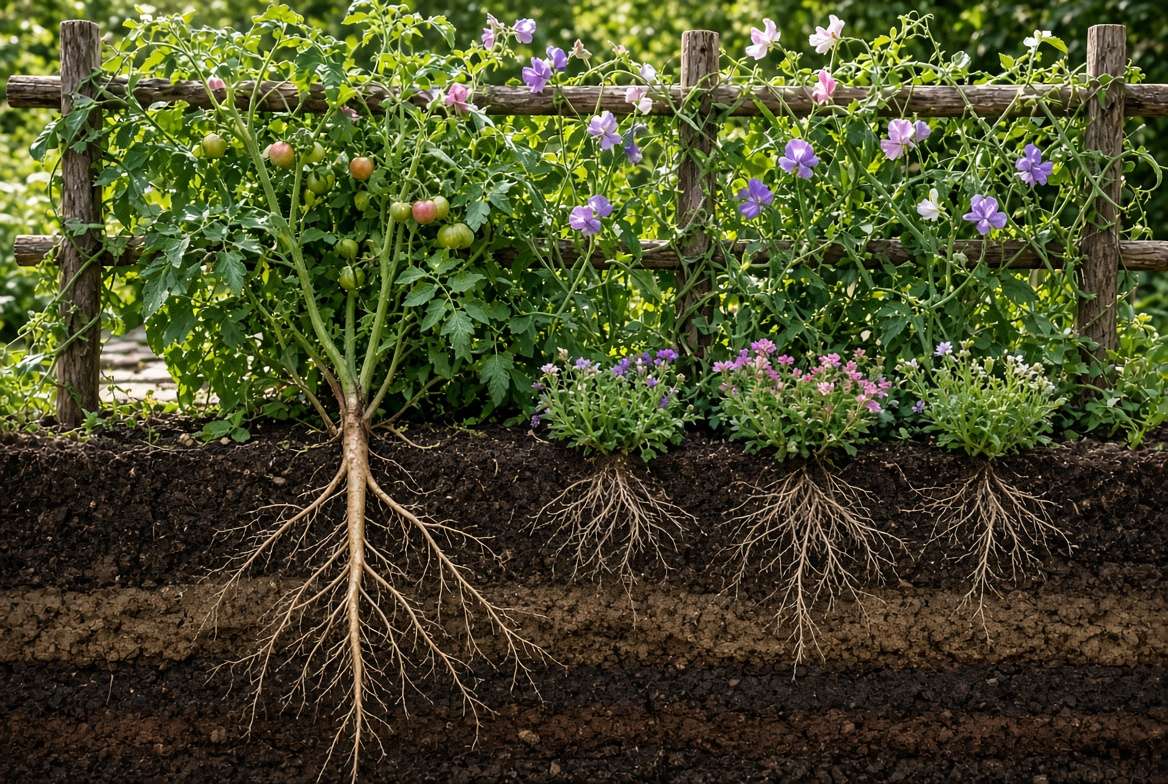
Root Zone Harmony When two plants share the same vertical support, they also share the same real estate beneath the soil. To avoid intense competition for water and nutrients, pair plants with contrasting root structures. Plant shallow-rooted ornamentals alongside deep-taproot vegetables. This stratification allows both plants to pull resources from different levels of the soil profile, ensuring neither is starved.
Sunlight Matchmaking It is vital to pair plants that share identical light requirements. A sun-loving blooming vine will languish if paired with a shade-tolerant vegetable that requires a cooler environment. Conversely, a rapidly growing, dense floral vine could easily eclipse a sun-loving vegetable, starving it of the photosynthesis required to produce fruit. Always check the DLI (Daily Light Integral) needs of both partners before planting them in the same bed.
Growth Rate Management Timing is everything in a co-planted garden. If you pair an aggressive, fast-growing vine (like a mature morning glory) with a slow-to-establish vegetable seedling, the vegetable will quickly be smothered. The key is staging. Plant your slower-growing crop a few weeks in advance to give it a head start, or pair vigorous vegetables (like indeterminate tomatoes) with equally vigorous floral climbers to ensure a balanced, parallel climb.
Top Ornamental Vines for Your Vegetable Garden 🌸
Not all climbing flowers play nicely with edible crops. The best companions are lightweight, attract beneficial insects, and offer secondary benefits to the surrounding soil ecosystem.
Sweet Peas (Lathyrus odoratus) Sweet peas are the quintessential early-season companion. Not only do they offer an intoxicating fragrance and delicate pastel blooms, but as legumes, they are natural nitrogen fixers. They pull nitrogen from the atmosphere and fix it into the soil, acting as a slow-release organic fertilizer for neighboring heavy-feeding vegetables like spinach or early brassicas.
Nasturtiums (Tropaeolum majus) While often grown as a trailing ground cover, climbing nasturtium varieties are arguably the most valuable companion plant you can introduce to an edible garden. Their peppery leaves and bright flowers are entirely edible, making them a great addition to salads. More importantly, they are top-tier trap crops for aphids and cabbage white butterflies, effectively taking the hit so your kale and cucumbers don’t have to.
Black-Eyed Susan Vine (Thunbergia alata) This vine produces a profusion of cheerful, bright orange and yellow blooms with striking dark centers. The primary benefit of the Black-Eyed Susan vine is its foliage structure. It is relatively lightweight and won’t form a suffocating, dense mat, making it safe to intertwine with delicate climbing vegetables like peas or lightweight beans without snapping their stems.
Morning Glories (Ipomoea purpurea) Morning glories are fantastic for creating incredibly fast, dense shade. If you need to quickly cover an arbor to protect cool-weather crops below, this is your vine. However, they require strict management. Because they are aggressive self-seeders and vigorous growers, they should only be paired with heavy, sturdy vegetables (like corn or established pole beans) and require consistent pruning to keep them from taking over the entire plot.

Best Vegetables to Co-Plant with Climbing Vines 🍅
Not every vegetable is cut out for the shared life of a vertical trellis. The most successful edible partners are those that either naturally climb themselves or possess a robust structure capable of supporting a lightweight floral companion.
Indeterminate Tomatoes Indeterminate (vining) heirloom tomatoes are the undisputed kings of vertical gardening. Because they require heavy-duty support systems like sturdy cattle panel arches or reinforced tomato cages, they provide the perfect architectural backbone for delicate climbers. Intertwining a lightweight vine, such as a Black-Eyed Susan vine, through the rigid branches of a tomato plant adds a stunning pop of color without compromising the tomato’s structural integrity or airflow.
Pole Beans and Garden Peas Legumes like pole beans and garden peas are natural climbers that send out vigorous tendrils to grip their supports. They are excellent candidates for sharing a bamboo teepee with flowering climbers. Because these vegetables grow rapidly, they can easily keep pace with faster-growing ornamentals. Pair a purple-podded pole bean with a white or pink climbing flower for a visually striking contrast that makes harvesting incredibly easy.
Squash, Melons, and Cucumbers These heavy-feeding vining vegetables require serious real estate and strong supports. When grown vertically, their massive, broad leaves can sometimes look a bit monolithic. Introducing a bright flowering vine breaks up the endless sea of green. More importantly, when squash or melons are grown on an arbor, the ornamental vines woven through the top can provide a crucial shade canopy, protecting the hanging fruit from intense late-afternoon sunscald.
Leafy Greens (Lettuce, Spinach, and Arugula) While leafy greens do not climb, they are an essential part of a co-planted vertical system. By growing your vines and vining vegetables upward, you create a shaded, cool understory at the soil level. Leafy greens thrive in these microclimates. The towering plants protect the delicate greens from the harsh summer sun, significantly delaying the bolting (going to seed) process and extending your salad harvest well into the warmer months.
Designing a Picture-Perfect Garden Layout 📸
A high-yield garden doesn’t have to look like a messy, chaotic farm plot. With strategic design, combining ornamental vines with vegetables can transform your yard into a curated, breathtaking landscape.
Choosing the Right Support Structures The foundation of any vertical garden is its architecture. To achieve a professional, structured look, vary your support types. Use tall, arched cattle panels to create immersive tunnels of hanging gourds and bright blooms. Incorporate rustic bamboo teepees in the corners of raised beds to add varying heights. For a more formal aesthetic, wooden obelisks or wrought-iron arbors lend a sense of classic English garden charm while easily supporting heavy loads.
Color Coordination Strategy To elevate your garden’s aesthetic, apply the principles of color theory to your plant selection. Pair complementary colors for high-impact visual drama: think deep purple eggplants or purple pole beans juxtaposed with bright yellow climbing nasturtiums. Alternatively, use an analogous color scheme—mixing cherry tomatoes with orange and red floral vines—for a warm, sunset-inspired palette.
Staging for Aesthetics and Media When staging your garden layout, think about the visual hierarchy and framing. Arbors dripping with flowering vines positioned over clusters of vibrant vegetables create lush, dramatic focal points. These thoughtfully structured setups not only look highly professional but are incredibly photogenic. Designing your vertical spaces with clear foregrounds and backgrounds provides the perfect framing for eye-catching Pinterest pins or engaging, click-worthy YouTube video thumbnails. A beautiful garden naturally becomes an asset for sharing your horticultural journey with the world.

Mastering Soil Health for High-Density Planting 🌱
When you combine multiple vigorous growers in the same footprint, you place a massive demand on the soil. Maintaining a thriving ecosystem requires a proactive approach to soil science and plant nutrition.
Feeding the Duo: Managing Nutrient Demands Vegetables, particularly fruiting crops like tomatoes and squash, are heavy feeders that require a specific NPK (Nitrogen, Phosphorus, Potassium) ratio to produce a harvest. Fast-growing vines also require immense energy to push out feet of foliage and blooms. To prevent soil depletion, you must front-load your beds with rich, organic amendments before planting. Use a balanced, slow-release organic fertilizer at the time of transplanting to ensure a steady supply of nutrients throughout the season.
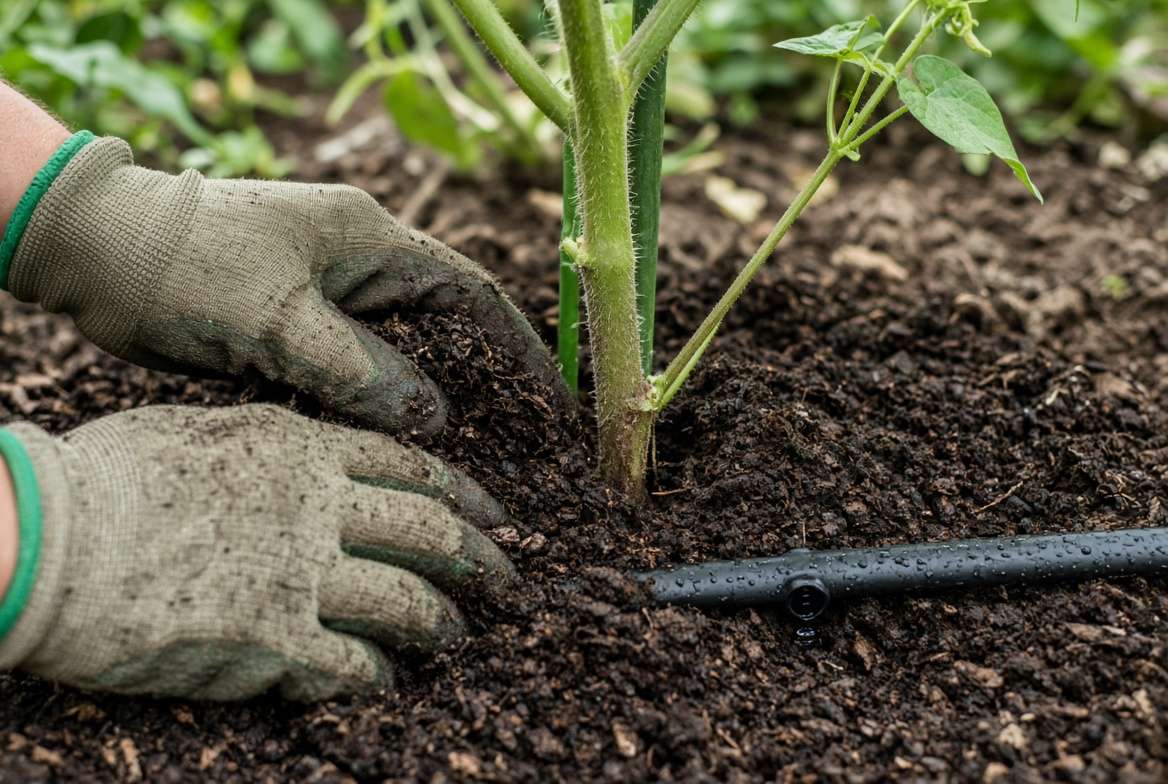
The Power of Compost In high-density planting, compost is non-negotiable. Top-dressing your shared root zones with high-quality, aged compost every few weeks introduces a burst of beneficial microbes into the soil microbiome. These microbes act as the digestive system for the soil, breaking down organic matter and making nutrients immediately bioavailable to the competing root systems.
Mulching Mastery Because you have shallow-rooted ornamentals sharing space with deep-rooted vegetables, preserving soil moisture is critical. Apply a thick, 2-to-3-inch layer of organic mulch (such as straw, shredded leaves, or untreated wood chips) around the base of the plants. Mulch acts as an insulating blanket, regulating wild temperature swings in the soil, preventing weed competition, and drastically reducing water evaporation during the peak of summer.
Expert Tips for Maintenance and Care 🛠️
A co-planted garden requires a keen eye and consistent maintenance to prevent the plants from turning into an unmanageable jungle. Implement these expert practices to keep your vertical landscape healthy.
Pruning for Airflow The biggest risk of high-density vertical gardening is a lack of air circulation, which is an open invitation for fungal diseases like powdery mildew and blight. You must be ruthless with your pruning shears. Regularly thin out the inner foliage of both the vegetables and the vines. Ensure that the leaves dry quickly after a morning dew or a rainstorm. If a floral vine begins to choke out a vegetable’s main fruiting stem, prune the vine back immediately.
Strategic Watering Systems Overhead watering is the enemy of dense, mixed plantings because it encourages leaf diseases. Implement a drip irrigation system or use soaker hoses placed directly under the mulch. This delivers moisture straight to the root zones where it is needed most. Water deeply and less frequently to encourage all plants to send their roots further down into the soil profile, which increases their drought tolerance.
Integrated Pest Management (IPM) When two species are physically intertwined, spotting pests requires diligent monitoring. Check the undersides of the leaves weekly. If your trap-crop vines (like nasturtiums) become heavily infested with pests, do not panic—they are doing their job. However, if the pest population threatens to spill over onto your edible crops, treat the area selectively with organic insecticidal soap or neem oil, being careful to apply it late in the evening to protect foraging pollinators.

Frequently Asked Questions (FAQs) ❓
Can an ornamental vine completely choke out my vegetable plants? Yes, if left entirely unmanaged. Highly aggressive climbers like morning glories or mature wisteria can easily strangle delicate vegetables or block crucial sunlight. Always match the vigor of the vine to the hardiness of the vegetable, and never hesitate to aggressively prune the ornamental plant to keep it in check.
Are there toxic ornamental vines I must keep away from edible crops? Absolutely. This is a critical safety consideration. While sweet peas (Lathyrus odoratus) are wonderful nitrogen fixers and beautiful climbers, their seeds/pods are toxic if ingested. They look very similar to edible garden peas. If you have young children or pets who graze in the garden, do not plant toxic ornamental vines near edible crops to prevent dangerous mix-ups.
What is the absolute best organic fertilizer for a mixed floral and vegetable bed? A balanced, slow-release organic fertilizer (like a 4-4-4 blend) is ideal for the base soil. However, as the plants enter their blooming and fruiting stages, supplement with a phosphorus-rich bone meal or liquid kelp/compost tea. Phosphorus encourages vigorous blossoming in the vines and robust fruit set in the vegetables without promoting excessive, unruly leaf growth.
Conclusion: Reaping a Beautiful Harvest 🌻
The decision to start combining ornamental vines with vegetables is a transformative step in any gardener’s journey. It breaks down the traditional, rigid walls between landscaping and farming, proving that utility and beauty can coexist in the exact same footprint. By utilizing vertical space, harnessing the power of pollinators, and applying intelligent soil management, you can create a high-yield garden that feels less like a chore and more like a lush, living work of art.
This season, challenge yourself to think upward. Pair a cascading nasturtium with your towering tomatoes, or let a delicate sweet pea wind its way up your bean trellis. You will soon discover that a space-saving garden can be the most stunning and productive plot you have ever grown.
Have you ever tried co-planting flowers and vegetables on the same trellis? We’d love to hear about your most successful pairings (or your wildest garden experiments)! Drop your thoughts, tips, and questions in the comments below, and let’s grow together! 🌿✨











