

We’ve all experienced it. You buy a lush, vibrant pot of basil from the supermarket, envisioning weeks of fresh pesto and beautiful garnishes. But fast forward exactly three days, and it’s a wilted, tragic mess drooping on your windowsill. If you suffer from “plant anxiety” or fear you have an incurable black thumb, it is time to take a deep breath. Gardening success is rarely about innate talent; in fact, it is 90% plant selection and only 10% skill.
If you want to build your confidence and transform your kitchen into a fragrant oasis, you simply need to start with forgiving plants. That is exactly why we have put together this comprehensive guide to the top 10 easy herbs for novice gardeners. These are the resilient, fast-growing, and stubborn plants that will gracefully tolerate your beginner mistakes and still reward you with incredible harvests.
🌿 Quick Answer: The Easiest Herbs for Beginners The most foolproof herbs to grow for absolute beginners are Basil, Mint, Chives, Rosemary, Thyme, Oregano, Parsley, Sage, Cilantro, and Dill. These resilient plants thrive in basic containers, tolerate irregular watering, and bounce back quickly from simple mistakes.
2. The Science of “Forgiving” Herbs: What Makes an Herb Easy? 🔬
Before we dig into the list, it helps to understand why certain herbs are so easy to grow. Unlike finicky tropical houseplants (we’re looking at you, Calathea), many culinary herbs are essentially highly evolved weeds.
-
Drought Tolerance & Adaptability: Many of the most popular kitchen herbs—like rosemary, thyme, and oregano—originated in the rocky, harsh climates of the Mediterranean. They evolved to survive baking sun and long periods without rain. Because of this, they actually prefer to be slightly neglected. Overwatering is usually the only way to hurt them!
-
Vigorous Root Systems: Herbs like mint and chives possess incredibly aggressive root systems. When you harvest them heavily, they don’t go into shock. Instead, their robust roots push out new growth almost instantly.
-
Built-In Pest Resistance: Have you ever wondered why herbs smell so incredible to us? Those strong essential oils—the exact compounds that make our food taste delicious—are actually biological defense mechanisms designed to repel garden insects, caterpillars, and grazing animals.
💡 Expert Insight: “The Golden Rule of Herb Gardening: Less love (and significantly less water) often creates more aroma and flavor. Stressing Mediterranean herbs just a tiny bit forces them to produce more essential oils, resulting in a much tastier harvest.”
3. The 5-Minute Starter Kit for Absolute Beginners 🪴
You do not need a greenhouse or expensive equipment to start growing herbs. To set up your first foolproof herb garden, you only need to get four basic elements right:
☀️ Sunlight Essentials
Herbs are sun-worshippers. Most require “full sun,” which translates to 6+ hours of direct sunlight per day. A south-facing or west-facing window is ideal for indoor growers. If your space only gets partial shade (3-4 hours of sun), don’t panic! You can still easily grow shade-tolerant herbs like mint, chives, and parsley.
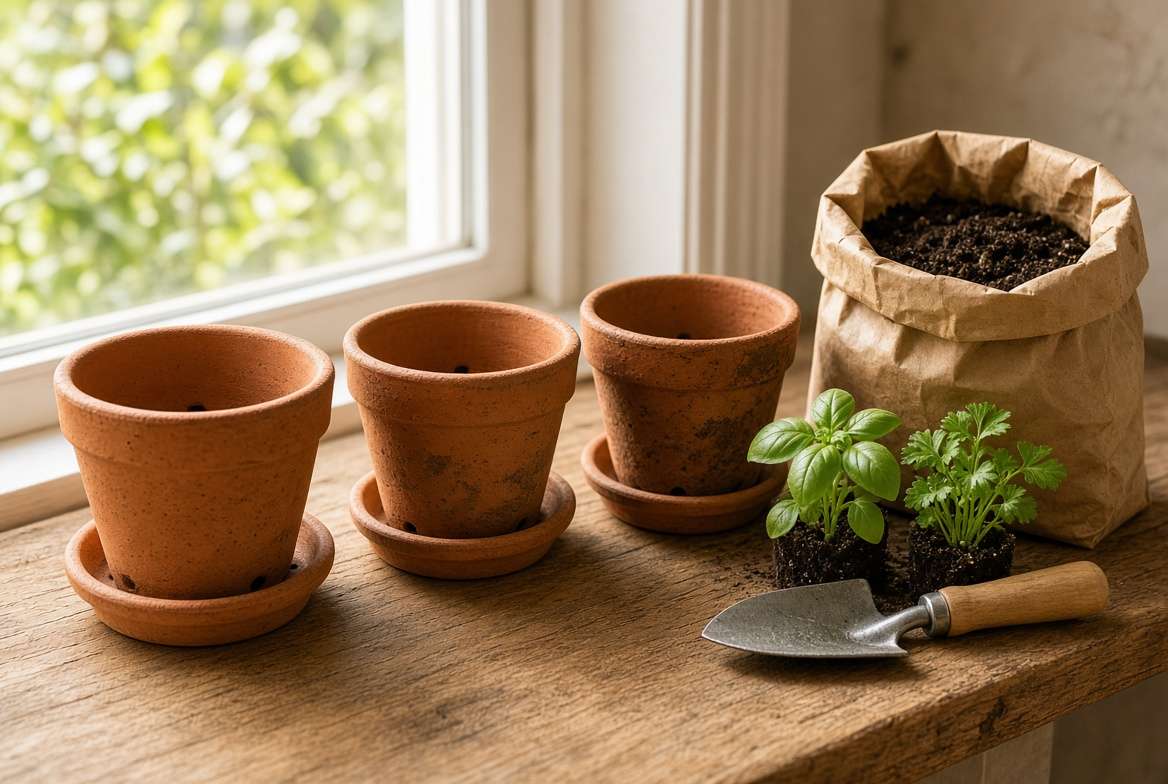
🪣 Containers & Drainage
This is non-negotiable: Your pots must have drainage holes at the bottom. The number one killer of beginner herb plants is “wet feet” (root rot caused by water pooling at the bottom of the pot). Always use a saucer to catch excess water, and empty that saucer 15 minutes after watering.
🟤 The Right Soil Medium
Never use dirt dug up from your backyard. Garden soil is too dense and will compact in a pot, suffocating the roots. Always use a high-quality, lightweight indoor potting mix (preferably one with perlite for extra aeration and drainage).
🌱 Seeds vs. Starter Plugs
If you are a true beginner, skip the seed packets for now. Growing from seed requires precise moisture control, grow lights, and weeks of patience. Instead, visit your local nursery and buy “starter plugs” (small, young plants already growing in 2-inch to 4-inch pots). It gives you an instant head start and drastically reduces failure rates. (Note: Cilantro and Dill are the exceptions—they hate being transplanted and should be grown from seed!)
4. The Top 10 Easy Herbs for Novice Gardeners (Deep-Dive Profiles) 🏆
Let’s dive into the absolute best beginner-friendly herbs, how to keep them alive, and how to harvest them for infinite growth.
🌿 1. Sweet Basil (Ocimum basilicum) – The Kitchen King
Basil is the gateway plant for most gardeners. It is fast-growing, loves the heat, and is highly communicative. If you forget to water it, the leaves will dramatically wilt—but give it a drink, and it will perk right back up within hours.
-
Care Snapshot: Full sun | Moderate water (keep soil slightly moist) | Rich, well-draining potting mix.
-
Difficulty Rating: ⭐ (Extremely Easy)
-
The Secret Technique (Topping Out): Never pick just a single leaf! To make your basil bushy and productive, pinch off the top cluster of leaves right above a node (where two side leaves meet the stem). This forces the plant to split into two new branches, doubling your harvest. Also, pinch off any white flowers immediately to prevent the leaves from turning bitter.
-
Culinary Match: Fresh pestos, tomato sauces, caprese salads, and homemade pizzas.

🍃 2. Mint (Mentha) – The Unstoppable Grower
If you can keep a plastic weed alive, you can keep mint alive. Mint is notoriously aggressive and highly adaptable, thriving even in partial shade and cooler temperatures.
-
Care Snapshot: Partial to full sun | High water (loves moist soil).
-
Difficulty Rating: ⭐ (Practically Unkillable)
-
Crucial Rule (Container Containment): Mint is a garden bully. It spreads via underground runners and will quickly take over your entire garden bed, choking out other plants. Mint must always be grown in its own isolated pot.
-
Best Varieties to Try: Peppermint for teas, Spearmint for cocktails, or even Chocolate Mint for baking!
-
Culinary Match: Mojitos, iced teas, lamb dishes, fresh fruit salads.
🌱 3. Chives (Allium schoenoprasum) – The Cut-and-Come-Again Champion
Chives are an incredibly hardy, onion-flavored perennial bulb. They are frost-tolerant, survive both neglect and overwatering reasonably well, and regenerate at lightning speed after being harvested.
-
Care Snapshot: Full sun to partial shade | Low to moderate water.
-
Difficulty Rating: ⭐ (Extremely Easy)
-
Harvesting Tip: When you need chives, gather a clump in your hand and snip them cleanly with scissors about 1 to 2 inches above the soil line. Never pull them by the bulb! They will shoot back up in just a few days.
-
Bonus Perk: In late spring, chives produce beautiful, purple pom-pom blossoms. These flowers are totally edible (they have a spicy, garlicky bite) and are fantastic for attracting beneficial pollinators to your patio.
-
Culinary Match: Baked potatoes, scrambled eggs, savory scones, and cream cheese spreads.
🌲 4. Rosemary (Salvia rosmarinus) – The Neglect Lover
If you are the type of person who frequently forgets to water your plants, rosemary is your new best friend. Native to the rocky sea cliffs of the Mediterranean, this woody perennial actually prefers dry, poor soil and intense sunshine.
-
Care Snapshot: Full sun (6–8 hours) | Infrequent, deep watering | Sandy, well-draining soil.
-
Difficulty Rating: ⭐⭐ (Easy, provided you don’t overwater!)
-
Beginner Mistake: The most common way a novice kills rosemary is through “too much love”—specifically, overwatering. Treating it like a leafy tropical houseplant will lead to sudden root rot. Let the top two inches of soil dry out completely before watering again.
-
Culinary Match: Roasted root vegetables, garlic butter steaks, sourdough focaccia, and poultry marinades.
⏳ 5. Thyme (Thymus vulgaris) – The Low-Maintenance Cushion
Thyme is a brilliant, low-growing herb that forms a beautiful, fragrant cushion of tiny leaves. Much like rosemary, it is highly drought-resistant and disease-resistant. It is also surprisingly cold-hardy, meaning it can survive frosty winters outdoors effortlessly.
-
Care Snapshot: Full sun | Low water | Sandy or rocky soil.
-
Difficulty Rating: ⭐⭐ (Very easy, low maintenance)
-
Winter Hardiness: Thyme is a tough perennial. Even if it looks a bit woody and dormant during the winter, do not pull it up! With the first signs of spring sunshine, it will burst back into vibrant green life.
-
Culinary Match: Hearty stews, French onion soup, roasted chicken, and compound butters.
🍕 6. Oregano (Origanum vulgare) – The Flavor Booster
Oregano is a wildly vigorous grower that spreads beautifully over the edges of pots and hanging baskets. It is one of the easiest herbs to grow for beginners because it perfectly embodies the rule of Mediterranean herbs: the hotter and drier the environment, the more intense and delicious the flavor becomes.
-
Care Snapshot: Full sun | Low to moderate water.
-
Difficulty Rating: ⭐⭐ (Easy and resilient)
-
Pruning Secret: Oregano is famous for producing lovely little white or pink flowers. However, to keep the flavor concentrated in the leaves for cooking, prune the plant heavily just before it blooms.
-
Culinary Match: Homemade pizza sauces, Greek vinaigrettes, chili, and roasted lamb.
🥗 7. Italian Flat-Leaf Parsley (Petroselinum crispum) – The Workhorse Green
Parsley often gets a bad reputation as a boring diner garnish, but fresh garden parsley is a vibrant, peppery powerhouse. It is highly forgiving because it tolerates cooler temperatures and partial shade much better than heat-loving basil.
-
Care Snapshot: Full sun to partial shade | Moderate water (consistent moisture).
-
Difficulty Rating: ⭐⭐ (Reliable and sturdy)
-
Flat-Leaf vs. Curly: Always choose the Italian Flat-Leaf variety for your beginner herb garden setup. It is vastly superior in culinary flavor, much easier to chop, and significantly easier to wash bugs out of compared to the curly variety.
-
Harvesting Technique: Parsley grows from the center out. Always snip the older, larger outer stems at the base, leaving the inner stems to continue developing.
-
Culinary Match: Authentic chimichurri, tabbouleh, garlic bread, and as an all-purpose fresh finishing garnish.
🧙♂️ 8. Sage (Salvia officinalis) – The Velvety Perennial
With its gorgeous, dusty-green, velvety leaves, sage adds incredible visual texture to any indoor herb garden or patio container. It is an extremely resilient woody shrub that stays evergreen in mild climates and forgives periods of drought gracefully.
-
Care Snapshot: Full sun | Low water | Well-aerated soil.
-
Difficulty Rating: ⭐⭐ (Drought-tolerant)
-
Pest Defense: Sage has a highly pungent, earthy aroma that naturally repels cabbage moths, flea beetles, and other common garden insects. It acts as an excellent companion plant to protect vulnerable vegetables!
-
Culinary Match: Brown butter gnocchi, Thanksgiving turkey stuffing, roasted pork, and butternut squash ravioli.
🌮 9. Cilantro / Coriander (Coriandrum sativum) – The Fast-Action Sprout
Cilantro is a fast-paced, cool-weather herb. Unlike the woody herbs on this list, it has a very short, exciting lifecycle. You can go from planting a seed to harvesting fresh leaves for taco night in under four weeks!
-
Care Snapshot: Cool sun or partial shade | Moderate water (keep moist).
-
Difficulty Rating: ⭐⭐⭐ (Requires a bit of timing)
-
Managing the “Bolting” Phenomenon: Cilantro hates intense summer heat. When it gets too hot, it will “bolt” (rapidly send up a tall flower stalk and turn the leaves bitter). To avoid this, grow it in the cooler months of spring or fall, or keep it in partial shade during summer.
-
Two Herbs in One: If your cilantro does bolt and flower, let it! Those flowers will eventually turn into green seeds. Once dried, those seeds are the popular spice known as coriander.
🥒 10. Dill (Anethum graveolens) – The Delicate Giant
Dill is an absolute joy to grow and brings a whimsical, feathery texture to your pots. It is incredibly easy to grow directly from seed, boasting a 90%+ germination success rate.
-
Care Snapshot: Full sun | Regular moisture | Direct-seeded.
-
Difficulty Rating: ⭐⭐ (Fast growing but hates root disturbance)
-
Companion Planting Superpower: Dill is a superhero in the garden. Its umbrella-like yellow flowers attract highly beneficial insects, including predatory wasps (which eat aphids) and beautiful Black Swallowtail butterflies (which use dill as a host plant for their caterpillars).
-
The Golden Rule: Dill has a long taproot and hates being moved. Skip the nursery pots and sprinkle the seeds directly into their final container.
-
Culinary Match: Homemade pickles, creamy potato salads, smoked salmon, and tzatziki sauce.
5. Summary Cheat Sheet: Herb Care Quick Reference 📊
Take a screenshot of this handy chart! It is your ultimate quick-reference guide for maintaining your foolproof herbs.
| Herb Name | Sunlight Requirement | Watering Frequency | Lifespan | Best Propagation Method |
| Basil 🌿 | Full Sun (6+ hrs) | Moderate (Keep moist) | Annual | Stem Cuttings / Nursery Pot |
| Mint 🍃 | Partial to Full Sun | High (Loves moisture) | Perennial | Runners / Root Division |
| Chives 🌱 | Full Sun / Part Shade | Low to Moderate | Perennial | Division / Seeds |
| Rosemary 🌲 | Full Sun (Dry heat) | Low (Let soil dry out) | Perennial | Stem Cuttings / Transplant |
| Thyme ⏳ | Full Sun | Very Low | Perennial | Transplants |
| Oregano 🍕 | Full Sun | Low to Moderate | Perennial | Cuttings / Transplants |
| Parsley 🥗 | Full Sun to Partial | Moderate | Biennial | Transplants / Seeds |
| Sage 🧙♂️ | Full Sun | Low | Perennial | Semi-woody Cuttings |
| Cilantro 🌮 | Cool Sun / Part Shade | Moderate | Annual | Direct Sowing from Seed |
| Dill 🥒 | Full Sun | Moderate | Annual | Direct Sowing from Seed |
6. Common Beginner Pitfalls & Pro Fixes 🛠️
Even with low-maintenance kitchen herbs, novices occasionally run into trouble. Here is how to troubleshoot the most common blunders like an expert:
-
Pitfall 1: “The Drowning Herb Syndrome” (Overwatering)
-
The Problem: You water your plants every single day. The leaves are turning pale yellow, drooping heavily, and the soil smells slightly swampy.
-
The Fix: Stop watering! Yellowing leaves are the universal sign of suffocating roots (root rot). Only water when the top 1-2 inches of potting soil feel completely dry to the touch.
-

-
Pitfall 2: Planting Incompatible Neighbors in One Pot
-
The Problem: You planted thirsty mint next to desert-loving rosemary in the same container. One is inevitably going to die.
-
The Fix: Group herbs by their moisture and sunlight needs. Mediterranean Group: (Rosemary, Thyme, Oregano, Sage) can share a pot. Moisture-Loving Group: (Basil, Parsley, Cilantro) can share a pot. Mint lives completely alone!
-
-
Pitfall 3: “Giving Them a Haircut” (Improper Harvesting)
-
The Problem: You snip off just the top few leaves of a parsley or chive plant, causing the cut stems to turn yellow and die.
-
The Fix: Know your plant’s growth habit. Cut chives straight across the bottom. Pluck parsley from the outer base. Pinch basil from the top nodes.
-
7. How to Harvest, Prune, and Store Your Herbs for Maximum Yield ✂️
To keep your beginner herb garden setup thriving, you must harvest it regularly. Pruning actually stimulates the plant to produce more foliage.
The 30% Rule: No matter what herb you are growing, never harvest more than 30% (one-third) of the plant’s total foliage at one time. Taking too much removes its ability to photosynthesize, sending the plant into severe shock.
Preserving the Excess:
When your foolproof herbs start producing more than you can eat fresh, don’t let them go to waste!
-
Air-Drying (For Woody Herbs): Tie small bundles of Rosemary, Thyme, Oregano, and Sage with twine. Hang them upside down in a cool, dark, dry place for two weeks. Once brittle, crumble them into glass jars.
-
Olive Oil Freezing (For Tender Herbs): Herbs like Basil, Cilantro, and Parsley lose their flavor when dried. Instead, chop them finely, place them into ice cube trays, cover them entirely with extra virgin olive oil, and freeze. Pop a cube directly into a hot pan for an instant burst of summer flavor! 🧊

8. Frequently Asked Questions (FAQ Section) ❓
Can I grow these easy herbs indoors year-round on a windowsill?
Yes! However, modern windows often filter out the specific UV rays plants need. For a successful indoor herb garden year-round, you must place them in an unobstructed south-facing window. If your home is dark, investing in an inexpensive, full-spectrum LED grow light will guarantee lush growth even in the dead of winter. ☀️
Why did my basil turn brown and develop black spots overnight?
Basil is notoriously sensitive to cold. If the temperature drops below 50°F (10°C), or if the leaves touch a freezing windowpane, the plant suffers from cold shock, resulting in black spots. Keep basil warm and away from drafty AC vents.
Is tap water safe for kitchen herbs, or do I need filtered water?
Tap water is generally fine, but municipal water often contains chlorine, which can harm beneficial soil microbes. Expert Hack: Fill your watering can and let it sit out uncovered for 24 hours before watering. The chlorine will naturally off-gas into the air, making it perfectly safe for your delicate roots. 🚰
Do I need fertilizer for potted herbs?
Use fertilizer very sparingly! While heavy feeding produces giant, lush leaves, excessive nitrogen dilutes the essential oils, resulting in huge herbs that taste like absolutely nothing. Feed your potted herbs just once a month with a half-strength organic liquid fertilizer (like fish emulsion or kelp extract) during the active spring and summer growing seasons.
9. Conclusion & Actionable Next Steps 🌟
Starting a garden does not have to be a stressful, high-stakes endeavor. By choosing the top 10 easy herbs for novice gardeners, you are setting yourself up for guaranteed success. Whether you are adding a few sprigs of homegrown mint to your summer iced tea or sprinkling fresh, peppery chives over your morning eggs, the satisfaction of eating what you’ve grown is unparalleled.
Your Action Plan: Don’t try to plant all 10 herbs this weekend! Pick just two or three that you cook with the most—perhaps a pot of Basil for your pasta and some Thyme for your roasts. Grab a bag of high-quality potting soil, a few pots with excellent drainage holes, and healthy starter plants from your local nursery.
Got a question about a struggling plant, or are you ready to show off your new green thumb? Let us know in the comments below which herb you are planning to grow first! Happy gardening! 🪴💚











